

First They Came for the Socialists
9 years ago
Featured Answer
Sort by:Oldest
Comments (22)
- 9 years ago
 9 years ago
Related Discussions
Which came first? The ants or the Plague?
Comments (13)Here's the White-Footed-Ant page from my favorite pest control supplier: ""Let Reduction & Management Be Your Goal White-footed ants are extremely difficult to eliminate completely from a structure once they have inhabited it. The reasons are: 1) Toxic baits may eliminate individual ants, but won't wipe out entire colonies since they don't take food back to the colony and regurgitate it like most other ant species; 2) Sterile workers lay unfertilized eggs which are fed to the adults in the colony, so even if you successfully eliminate food sources they may still thrive; 3) White-footed ants reproduce at phenomenal rates, and satellite colonies may be established over a wide area as part of one super colony. However, using the following methods over time and with a concentrated effort, you can keep an existing infestation under tight control, or prevent un-infested buildings from new invasion. Step 1) Keep Them Out It is easy for white-footed ants and other small insects to gain access to homes and buildings through tiny cracks or gaps in the foundation (most often around doors and windows.) These areas should be thoroughly inspected and potential entry points sealed up by caulk or other exclusion material. Step 2) Treat Outdoor Ant Mounds All outdoor mounds visible upon a thorough inspection can be eliminating by drenching the mound by the same Talstar concentrate used on door and window frames. This is best done using a gallon sprayer. Drenching simply means applying enough of the liquid insecticide to drown all ants in the nest and surrounding area. Always read the product label for specific directions on mound treatments. Pets and children should be kept away from the treated area until the solution has dried. Broadcasting the entire outdoor property at least 3 times a year with Talstar Granules will also help to manage outdoor mounds. Read more information on how to treat ant nests outdoors and indoors. Step 3) Spray & Dust Treatments Spray Treatments : In addition to treating the colony, do a thorough inspection inside and outside for any additional trails, entry points, and hiding places. Each location where White-footed Ant activity is sighted or suspected should be treated with Talstar to kill any existing ants while preventing new colonies from budding. For outdoor spraying: Spray a good barrier around the home using a one gallon sprayer. A fan spray that is at least 3 feet high on the side of the building and 3 to 6 feet out on the ground will provide excellent protection. Dust Treatments: White-footed are known to respond very weakly to baits, so indoor colonies should instead be treated with a residual dust pesticide. Dust underneath baseboards, and inside cracks, crevices, and voids where activity is suspected, including all areas that cannot be sprayed with Delta Dust Insecticide. This is easy to apply using a professional Hand Duster. Step 4) Baits As stated earlier, toxic baits can only eliminate half of a white-footed ant colony at best, with only half of its workers foraging on food sources outside the nest. White-footed ants will not bait-share so the half of the colony that "stays home" will never be exposed to the poison. If you wish to bait indoors to reduce colony size, try either Advance Liquid Ant Bait or Advance 360A Dual Choice Ant Bait Stations Additional Methods for Ant Prevention & Control After you have applied the appropriate pesticide chemicals, these additional non chemical methods will help you to maintain control and prevent future ant infestations: * Practice good sanitation. * Limit food preparation and consumption to one or two areas of the home that are cleaned daily. Ants will be less likely to invade if food sources (like crumbs and spills) are not available. * Eliminate gaps and cracks in the foundation, baseboards, window frames, and door frames with caulk or other appropriate material to eliminate ant entryways. * Materials such as stacked or piled lumber, stones, bricks, leaf litter, heavy mulch, and other debris that serve as potential ant harborages should be removed as far from the structure as possible. * Trim the branches of trees, shrubs, and other vegetation that may serve as ant highways so they do not touch the structure. * Repair leaky pipes and faucets."" Here is a link that might be useful: DIY Pest Control...See MoreMy first order ever came today!
Comments (9)second to last pic.. the tape should be 6 to 8 inches higher ... right under the leaves .. and if there is s shorty.. ignore it.. and tape higher .... in a few weeks.. the tape will fall off by itself.. or the hosta will break it off ... just force them to stand up tall ... they will not recover if they flop ...and i mean those leaves will not recover ... NOT the plant ... cant kill those if you want .... great haul ... perhaps the first.. but i doubt the last ... lol ken...See MorePlaids-What Came First....
Comments (32)DH has a figure 8 wire in his knee-cap to hold the bones together. When we saw the dr at 8:30 yesterday morning, he said the gap between the broken bones had already separated to the point of needing surgery in just 16 hours. We got to the hospital at the appointed 3pm and he was taken back a little after 9. The anti-nausea meds for the anesthetic was given so early they didn't work and was still affecting him this morning. He said the recovery room nurse was mean.....kept yelling at him to wake up. Little did they know it was waaaaay past his bedtime, plus they had drugged him. We got home around 1am, he went straight to bed and slept straight through....is sleeping again. He's to stay off his leg as much as possible for 14 days and take it easy 4-6 weeks. I told him it's his decision; follow the drs orders or live with a painful knee for the rest of his life. All of this on the day our van was taken in for an oil change and discovered it needed new brakes. The son-in-law wouldn't do it if it didn't need it, so over $600 there. They are still going to the cabin, taking his parents and using our van, so I'm without transportation. DGS is stopping by this evening to see if there's anything he can do. And he and his woman (she's settled him down) plan to be here for Sunday afternoon. She's never had a homemade pecan pie, so I plan to have her make one. :-) Guess that's it for now......no sewing for me for a few days. I was thinking I probably could have hand pieced a quilt top with as much time as I spent in the ER on Wednesday and the Surgery Center yesterday. Am seriously considering something to keep on hand! Just wasn't thinking before heading to the hospital yesterday. :-(...See Morewhich came first? an 'order to do it' question
Comments (13)Is your contractor friend the one doing the backsplash? If he is confident that he can do it before the countertop then let him have at it. Personally I can't see how it would work out unless he leaves out the bottom row and trims it to fit (if needed) after the counters are in. The countertop may need a bit of shimming to get it level which is why I would have the countertop installed first. If it needs to be raised 1/4" along one edge and the tile guy only allowed for 1/8" gap, then problems arise. So, the "typical" answer is to do the countertop first. But, if you have tight time constraints, know exactly what colour you want and have a contractor that is confident that it will all work out then go ahead. Additionally, with the counters in place, the tiler will have a work surface to put things on and lean against. Without the counter, he'll have nowhere to put stuff other than in your drawers and stuff which will be exposed. Thinset and grout may fall into your cabinets etc... and he'll likely be leaning directly on the fronts of your cabinets and may scratch them with his humongous Mack truck belt buckle. Just something to think about. Much easier for them to lay a sheet of cardboard or whatever on countertops....See More 9 years ago
- 9 years ago
 9 years ago
- 9 years ago
- 9 years ago
- 9 years agolast modified: 9 years ago
- 9 years ago
- 9 years ago
- 9 years ago
- 9 years ago
- 9 years ago
- 9 years ago
 9 years ago
- 9 years agolast modified: 9 years ago
 9 years ago
- 9 years agolast modified: 9 years ago
- 9 years ago
 9 years ago
- 9 years ago



Related Stories
MOST POPULARFirst Things First: How to Prioritize Home Projects
What to do when you’re contemplating home improvements after a move and you don't know where to begin
Full Story
MOST POPULARArchitectural Icon: The World’s First Bauhaus House
The Haus am Horn in Weimar is the first architectural example from the famed school, and the only one in the German city where Bauhaus began
Full Story
KITCHEN DESIGNKitchen of the Week: Function and Flow Come First
A designer helps a passionate cook and her family plan out every detail for cooking, storage and gathering
Full Story
HISTORIC HOMESSee the Modernist Home of Colorado’s First Black Architect
The late John Henderson Jr. left behind his striking midcentury home and a pioneering design legacy in Denver
Full Story
KITCHEN DESIGNHouzz Call: Tell Us About Your First Kitchen
Great or godforsaken? Ragtag or refined? We want to hear about your younger self’s cooking space
Full Story
REMODELING GUIDESConsidering a Fixer-Upper? 15 Questions to Ask First
Learn about the hidden costs and treasures of older homes to avoid budget surprises and accidentally tossing valuable features
Full Story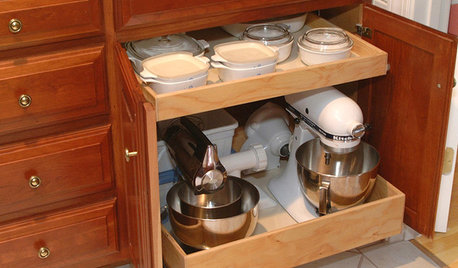
KITCHEN APPLIANCESConsidering a New Kitchen Gadget? Read This First
Save money, time and space by learning to separate the helpers from the hassles
Full Story
LIFESo You're Moving In Together: 3 Things to Do First
Before you pick a new place with your honey, plan and prepare to make the experience sweet
Full Story
KITCHEN DESIGNRestaurant Chefs Put Function First in Their Home Kitchen
The proprietors of San Francisco Bay Area restaurant State Bird Provisions remodel their kitchen for cooking at home
Full Story
HOME INNOVATIONSConsidering Renting to Vacationers? Read This First
More people are redesigning their homes for the short-term-rental boom. Here are 3 examples — and what to consider before joining in
Full StorySponsored
seniorgal