

Food Storage?
9 years ago
Featured Answer
Sort by:Oldest
Comments (20)
Related Discussions
FoodSaver and Dehydrated Food Storage
Comments (2)OK, citric acid for sprouting... ascorbic for breads. Got it. Guess I was thinking they were same thing. Oh, and that's new information for me about sprouting the mung beans under pressure. That's really interesting. I have a vacuum sealer, but I haven't used it very much. I guess I should get it out and try it. I went over on You Tube and did a search for Foodsaver and found several things to watch, also found a few on Pump'n'Seal and maybe that's where my confusion comes from as I've seen a little about both kinds and may have mingled the way the two different systems work. The Foodsaver universal lid doesn't get very high marks on Amazon, I went there some time ago when it was mentioned before. I went to Foodsaver's website and I see that a jar sealer is $9.99. So do you buy one of those for each jar and leave it on the jar till you're ready to use the contents? Or do you have a Pump'n'Seal where you use a regular canning flat, punch a hole in it to vacuum out the air, and then seal up the hole with a little piece of tape? I can see where this method would be 'way cheaper than buying Foodsaver universal lids, if it works as well as they say. Have you used the Pump'n'Seal method and if so, what is your opinion? Foodsaver universal lids cost $24 for a two-pack. If they have to stay on the jar till you use it, it seems like $12 a jar is kind of a substantial outlay of cash unless a person could stumble upon some at a garage sale or something, where the seller didn't know what they had. Or does the FoodSaver have the capability of using canning flats in a way similar to Pump'n'Seal, so that you're only out a canning flat? And I suppose the canning flats could be resealed? It's kind of hard for me to believe that a little piece of what looks like duct tape is all that keeps the vacuum intact, but maybe it does because the vacuum holds it on.... Forgive me, I'm not trying to be critical or troublesome or stupid, I'm just trying to make sure I understand as I don't know anyone personally who uses these. Thanks for your patience and taking the time to provide this information. I do truly appreciate it....See MoreLooking for the best method to cool and dry a small food storage room
Comments (7)Ok so wine storage is a tricky thing. I decided to search for some clarification as to what's needed and what would be considered 'over kill'. Snippets of information below taken from here: 1. Keep it cool Heat is enemy number one for wine. Temperatures higher than 70° F will age a wine more quickly than is usually desirable. And if it gets much hotter, your wine may get “cooked,” resulting in flat aromas and flavors. The ideal temperature range is between 45° F and 65° F (and 55° F is often cited as close to perfect), though this isn’t an exact science. Don’t fret too much if your storage runs a couple degrees warmer, as long as you’re opening the bottles within a few years from their release. 2. But not too cool Keeping wines in your household refrigerator is fine for up to a couple months, but it’s not a good bet for the longer term. The average fridge temperature falls well below 45° F to safely store perishable foods, and the lack of moisture could eventually dry out corks, which might allow air to seep into the bottles and damage the wine. Also, don’t keep your wine somewhere it could freeze (an unheated garage in winter, forgotten for hours in the freezer). If the liquid starts turning to ice, it could expand enough to push the cork out. 3. Steady as she goes More important than worrying about achieving a perfect 55° F is avoiding the landmines of rapid, extreme or frequent temperature swings. On top of cooked flavors, the expansion and contraction of the liquid inside the bottle might push the cork out or cause seepage. Aim for consistency, but don’t get paranoid about minor temperature fluctuations; wines may see worse in transit from the winery to the store. (Even if heat has caused wine to seep out past the cork, that doesn’t always mean the wine is ruined. There’s no way to know until you open it—it could still be delicious.) 4. Turn the lights off Light, especially sunlight, can pose a potential problem for long-term storage. The sun’s UV rays can degrade and prematurely age wine. One of the reasons why vintners use colored glass bottles? They’re like sunglasses for wine. Light from household bulbs probably won’t damage the wine itself, but can fade your labels in the long run. Incandescent bulbs may be a bit safer than fluorescent bulbs, which do emit very small amounts of ultraviolet light. 5. Don't sweat the humidity Conventional wisdom says that wines should be stored at an ideal humidity level of 70 percent. The theory goes that dry air will dry out the corks, which would let air into the bottle and spoil the wine. Yes, this does happen, but unless you live in a desert or in arctic conditions, it probably won’t happen to you. (Or if you’re laying down bottles for 10 or more years, but then we’re back to the matter of professional storage.) Anywhere between 50 percent and 80 percent humidity is considered safe, and placing a pan of water in your storage area can improve conditions. Conversely, extremely damp conditions can promote mold. This won’t affect a properly sealed wine, but can damage the labels. A dehumidifier can fix that. -------------------- So my first impression was the humidity control was more important and now after reading that information realize temperature is more important. Ideally 55 degrees. Avoid sudden fast temperature changes. Humidity is less of a concern, except in the event corks dry out. So because you typically want a higher humidity with wine storage it may be better to separate that from the dry food. (You can purchase small wine coolers that are designed to store wine in, if you don't have a large storage of wine that is. That's an option to look into.) Your goal to store wine at 65 may be too high. I'm not a wine storage expert so this information are things to consider. ------------ The difficulties in making this work with a mini split. The small room in which this sits puts what ever system you choose to cool it at the disadvantage of load changes. A load in air conditioning or refrigeration for that matter is heat. To expel that heat --- what ever heat there is to expel from the 'conditioned box' the appliance is more efficient when expelling heat to a cooler air temperature. In other words a cooler air temperature will marginally increase the performance and capacity of the mini split. Because heat moves from hot to cold, much more freely than hot to hotter. There is additional heat from the operation of compression that aids in this sequence. As the temperature outside increases there is less and less heat that can be expelled. This is primarily the reason AC equipment is sized for what is typically the hottest days / month of the year for a given climate. If you try to compensate for this problem in your case upsize the unit to say 9000 BTU to alleviate a potential problem of a heat wave then the unit may be over sized the rest of the time and short cycle, because the load inside the conditioned box is low --- and the outdoor temp is cooler providing better thermal transfer. Because you are trying to use a mini split outside of it's design specs there will be challenges to over come. It's a tough call here. If you can find a 9000 btu inverter mini split that lowest speed settings the unit can operate in 3000 btu capacity then that may be the better bet. Inverter technology allows compressors to run extremely slow. This will limit short cycling. Short cycling is detrimental because it kills compressors, which can get expensive in a hurry. Another option may be in how you control it. If it's cooler outside drop the temp inside the room to 55 forcing the cycles to be longer. The extra capacity of the 9000 btu mini split comes into play if temperatures get hotter out doors. It really depends on the load in the box. I don't think there is any go between from 6000 to 9000 BTU sizes. So maybe ask your company what they think about a 9000 BTU mini split and dropping the temp a bit to say 55 or 60 degrees as a possible work around to the sizing issue....See MoreNative American food, cooking, and food storage
Comments (18)I have made maple syrup and maple sugar. Boil and boil and boil early spring sap until you have syrup. A cup of syrup starts as about 40 cups of sap. Maple sugar has even more water removed and needs to be watched carefully to keep it from turning into a hard mess. It is good to boil syrup outside or in a sugarhouse to keep the steam and heat out of your home. Special evaporating pans and reverse osmosis systems are used by those who make syrup commercially today. I was looking for cookbooks with Indian recipes (curry, dal, etc.) through my local library's website. One listing that showed up in an Indian cooking search was for Native American Indian recipes. It is The Sioux Chef's Indigenous Kitchen by Sean Sherman. I have it at home now. Sean's recipes use no European staples such as wheat flour, dairy, sugar, and domestic meat. He uses ingredients that were available in North America prior to the arrival of European settlers. The recipes feature wild game such as bison, rabbit, venison and native fish. They also use native plants such as beans, assorted herbs, blueberries, wild turnip, plums, purslane, wild rice, etc., etc. The author is promoting indigenous restaurant food and catering. Here's some more info: https://sioux-chef.com/...See MoreDog Food Storage
Comments (14)Great conversation. I learned something on how to store dog food (after all these years). We keep our dog food in a sterilite rubber tub but I didn't realize that the fats and oils from the food could collect at the bottom and become rancid (I wipe out the tub but sometimes the food might be in there for two months) or that the nutritional value goes down after six weeks of being open. We empty (2) 3-lb bags of dachshund food for two dachshunds into the tub. Food for thought on this one although I don't think our dogs are nutritionally deficient. http://www.dogfoodscoop.com/pet-food-storage.html @jim mat ever consider that the powdered detergent leeched into the plastic bucket which then will leech back into your dry kibble?...See More- 9 years ago
- 9 years ago
- 9 years ago
- 9 years ago


Related Stories
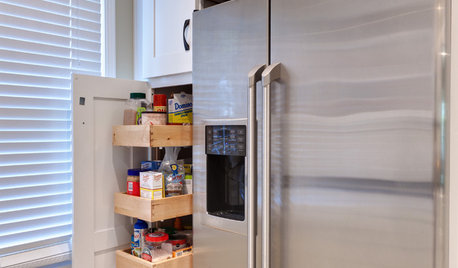
KITCHEN STORAGEPantry Placement: How to Find the Sweet Spot for Food Storage
Maybe it's a walk-in. Maybe it's cabinets flanking the fridge. We help you figure out the best kitchen pantry type and location for you
Full Story
KITCHEN DESIGNDeliciously Simple: Food Photographer Warms Up a Rental Kitchen
See how a San Francisco cook and blogger makes her small kitchen shine
Full Story
PRODUCT PICKSGuest Picks: Oven-to-Table Food Service
Serving food in the same dish it was cooked in means more time with guests and less time cleaning up
Full Story
HOLIDAYSShow Us Your Party-Time Food and Drink Station
Entertaining season is upon us, and we want to see photos of how you keep guests refreshed
Full Story

LIFEYou Said It: ‘Art Is a Lot Like Food’ and Other Houzz Quotables
Comments, advice, popular photos, lessons and spectacular views from this week
Full Story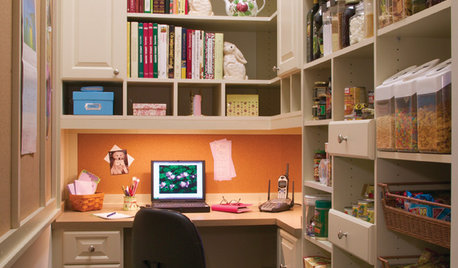
KITCHEN DESIGN11 Ways to Wake Up a Walk-in Pantry
Give everyday food storage some out-of-the-ordinary personality with charismatic color or other inspiring details
Full Story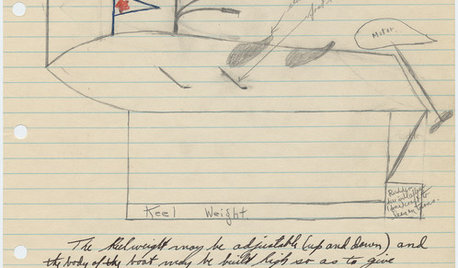
Sketches of Earl S. Tupper’s Pre-Tupperware Inventions
See the early concepts Tupper worked out before striking it big with his plastic food storage containers
Full Story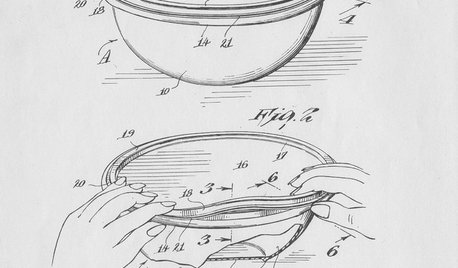
FEATURESHow Tupperware’s Inventor Left a Legacy That’s Anything but Airtight
Earl S. Tupper — and his trailblazing marketing guru, Brownie Wise — forever changed food storage. His story is stranger than fiction
Full Story
INSIDE HOUZZInside Houzz: A Walnut Wall of Storage Opens Up a Kitchen
A 30-foot wall of storage frees up cooking areas and counters for food prep and entertaining
Full Story
Anglophilia