Houzz Logo Print
wantonamara

Seeding grasses in an unfriendly site

9 years ago
last modified: 9 years ago
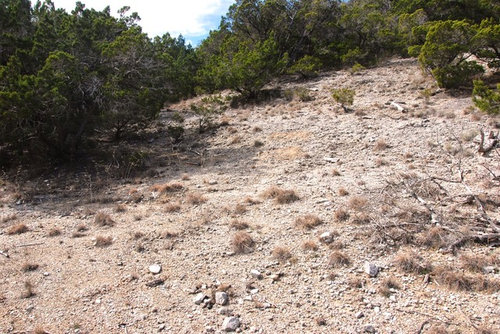
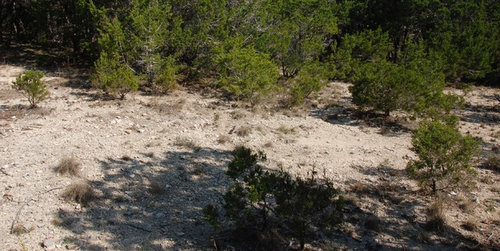
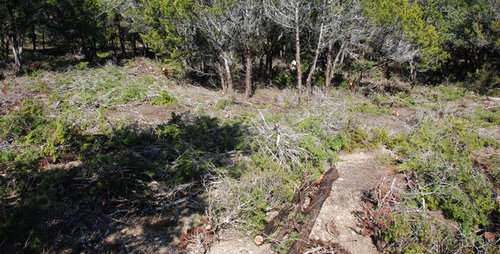
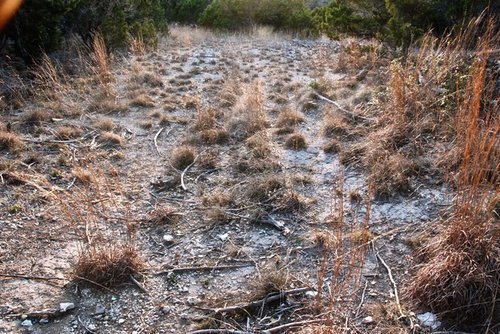
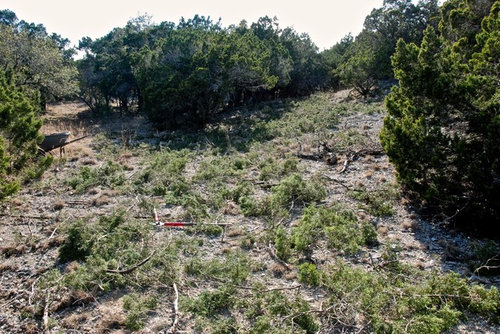
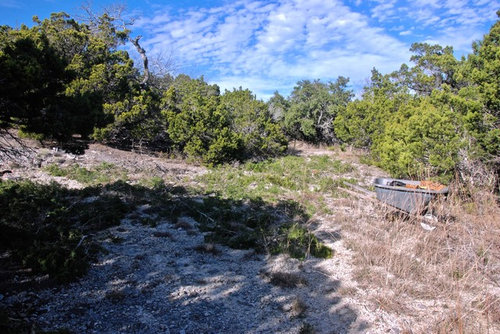
I always do this with my fingers crossed. I took a couple of pounds of grasses and clawed them into this marly caliche soil . I often feel like I am just throwing money out on these hills and the bills just blow away in the wind. I have failed on this hill before. I made seedballs once years ago and I think the cows ate them. I seeded it with bags of seed from TxRanger. True , we were in a drought. This time, I added more locally obtained Bluestem and sideoats gama (bouteloua curtipendula) to the Black Grama grass (Bouteloua eriopoda) that was already there but there very sparsley. This time I added the slash to hopefully keep the birds away , hold the seed, moisture AND SOIL back on this slope. Here are some before and after shots


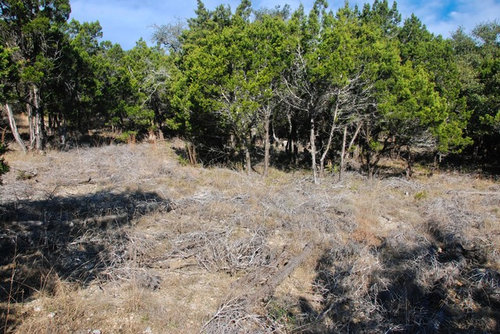
Last year, I did this to another wash that never got even a thin coverage of Black Grama . The slash and logs that I placed seem to make the difference. I got lots of new green coming up between the slash. Actually, I did this in reverse because I did the slash 2 years ago and then put the seed in last year between the logs in some collected dirt that had built up behind the slash.

And then here it is this morning. There are gobs of beginning grasses. I think that disturbing the soil also brought up old seed and it captured seed from the Bluestem from an opening above. I am hoping for some bluebonnets in this wash. I spread some there this fall. I see a few rosettes but the are anemic at best.Hopefully they will be good enough to throw seeds. Bluebonnets supposedly like disturbance.

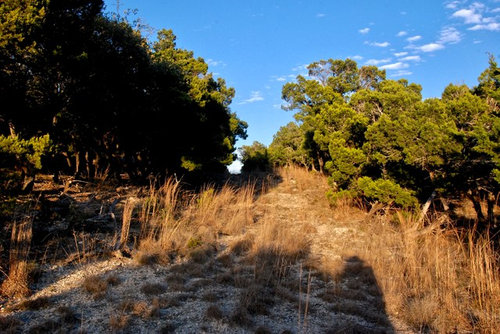
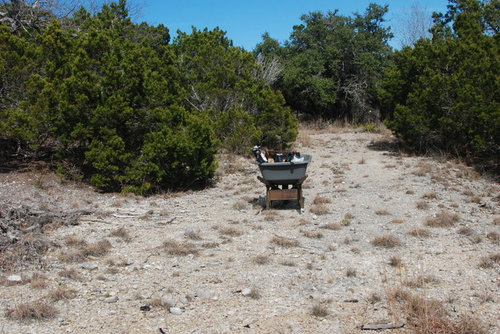
This area (below) was, also, a bald wash and I placed just a few branches and slash to slow the water and no seed added about 10 years ago, and I got grass starting but it took many years to get a thin coverage , but I did get a good start finally. i just put down more Sideoats gama seed here also and I need to get back there and put some slash out .


I will end with a sunset.

Comments (10)

  • 9 years ago

    Several of those photographs could have been taken on my land. I recently spread the recovery mix from Native American Seed. I suspect much of it washed away, but maybe I'll see a few sprouts later in the spring. The cedar trimmings are a great idea and I have no shortage of them, so I'll try that for protecting seed.

  • Related Discussions

    Grass for new pond site

    Q

    Comments (1)
    I'm not sure I see the logic for planting the rye now. Are you planning on overseeding with Rye each Fall then? I've never built a pond of that size, only smaller ones (15x25 is what I have now), but I'm not sure it makes sense to spend the time and energy planting grass in the pond and around it now. Seems like planting the rye might cause you water quality issues later. If you don't need grass until next Spring, I think I'd just wait and plant the final grass then.
    ...See More

    Were to buy quality grass seeds?

    Q

    Comments (6)
    Last year I overseeded with Scotts Sun/Shade. I was thinking of going to lesco or looking online to see who already has the seeds mixed. I was looking at my neighbors grass that seems tall and thick and was wondering that it was probably tall fescus. Would it work if I purchased a bag of tall fescus and poored some in a bag of Sun/Shade mix. Most of the Sun/Shade do not have tall fescus in them only fine fescus. Would this look a mess?
    ...See More

    wild hay grass seen everywhere in contruction and highway sites

    Q

    Comments (8)
    It is true that if you (a homeowner) puts down some wheat straw (that is what it is called, not sure if it is really wheat), some seeds germinate and send up some tall grass. This is an annual and will disappear after a time (especially once you start mowing). There is another thing ... when road work is done, the crews spread down a mat of pre-seeded "stuff" on slopes and that sprouts and grows like crazy. Hopefully that is a combination of fast growing "grass" and long term grass, but I don't know what it is. You might could call DOT or some county department of roads and ask them if it is edible (and I imagine they will say No for liability reasons) or at least ask them what kind of seed it is. Or you could look on the web and see if you find any definition of these products. See link below. Here is a link that might be useful: Section 716Erosion Control Mats (Slopes)
    ...See More

    Propagation of Nassella laevissima "Golden Hair Grass" from seed?

    Q

    Comments (3)
    I bought a plant from Annie also. Still has not bloomed. I am hoping for Z8b hardiness but I am not going to test it until it blooms and I have some successful germination. The information is very indistinct and inconclusive. I hope it is not too difficult to germinate.
    ...See More
  • 9 years ago
    last modified: 9 years ago
    Spring isn't much of an option even here in cool UK, Mara. Any seed sowing needs to be done in the autumn...in fact anything going into the ground has a teeny, tiny window without any irrigation apart from what comes from the sky (and it isn't much in dry East Anglia). Unfortunately, sowing time also coincides with leaf-fall...so there is a ridiculous gamble that the first 2 weeks of September will get the seeds germinated and of reasonable size to survive a poplar wood descending on top of it. It's a hit and miss, sporadic sort of thing, that's for sure. Missed my window this year due to dead truck and empty purse so am just going to fling a whole heap of ludicrously innappropriate annuals to cheer myself up - the persistent leafage does leave some nice clear bits of empty(ish) soil once raked aside so have put serious conservation to one side and getting frivolous this spring with red and blue flax, cornflowers and larkspur. and poppies.

    Also, our cool and damp summers sometimes encourage us to fling spare grass seed - we just need a couple of rainy days and quick germination to make continual scattering OK...but I buy seed in 20kilo sacks instead of mere ounces...and time the first grass cuttings after seed set so I can strew the cuttings around. Its a sort of multi-directional, many options plan.

  • 9 years ago
    last modified: 9 years ago
    I buy seed in LBS and I do it in a patch work affair. I need to get seed from local reputable people. Bluestem from Oklahoma doesn't grow well down here ...beleive me , I have dug in a lot from TxR.. Some grasses are touchier than others about their calcium tolerance and bluestem does seem to vary even within the species..They recommend to get you bluestem from a 200 mile radius... Also some off the cheaper places are riddled with invasive grass seeds.

    Camp, interesting about the whys and the whens of planting in UK. Summertime would be a good time to sow some grasses because your summers are so cool compared to here. I am putting in the seed now. The seed will theoretically sit till warm enough and wet enough for germination. That could be three days from now ( rain and upper 70's-80's) I see tons of grasses germinating right now but theoretically it should be later. I collected three LBS off one area of my land and planted it on this area . I also bought some LBS. This coming year , I will be collecting some of the Black Gamma Grass . I got to it too late this year. The "eyelashes' were still on it, but they were mostly devoid of seed. I need to collect them earlier. My neighbors have given me permission to wander on their areas. I never take the majority of the seed off any plant. I am judicious about leaving seed.

  • 9 years ago

    I bought the recovery mix because there's a lot of overlap with the caliche mix and the benefit of wildflowers. There was a fire in the area previously, but long before we bought the property. The cedars had no problem coming back and some tufts of grasses here and there (that I haven't taken the time to identify). I'm looking to *slowly* build some life there - preferably without trucking in soil. I haven't trimmed up many cedars yet to comply with firewise guidelines, but know from experience the boughs will help for microhabitats more conducive to seed starting than the natural conditions. For me, it's primarily an experiment - but I'd like immediate and positive results :)

  • 9 years ago
    last modified: 9 years ago
    Oh God, I am in the same experiment. When I first came here, and got this wildlife exemption, I did a lot of cedar burning because my husband likes things neat. He is from a military family of European German/Russians. He likes neat woods and he tends to over do things. He does not see the soul of the tree.. I am your ADD center of the storm of chaos kind of gardener. I do work now with systems in my mind but I see my mess as my major tool. My favorite saying (attributed to me) is "Nature Rewards a mess". I am amazed at how much a cut log holds back on a slope in a couple of years. The branches and twiglets become the bones of the soil and then the carbon. I like to think in idiom. I used too leave logs parallel to a slope but I also saw that one could direct waterflow and soil with a slanted log and end it ibn a V. I noticed how the criss crossing of natural branch patterns work to build things up. I was fascinated in this one stump that had a radiating collar of branch at its base and how that aged . Logs and slash is effective even on a flat. uses small logs and sticks amongst the slash there.

    My husband was so against this approach at first. I found that the power of result was in the doing. I set 2 rules. If you cut it down , you move to the final resting place, be it the burn pile or the ground arrangement. 2) if you want it neater, you pick it up because I like where it is at once I am done. Laziness won the day. Less is more , YEA..Before, I was the one moving his mess to his expectations when I was hearing that to keep the slash in the forest does not remove the nutrient load of the forest. I removed my resentment by removing my behavior. Things remained where I left them and with the last few wet years, he has seen that the run off was so much less where there was mess and puddles, wet spots, tanks, and small streams lasted for days, weeks longer where slash was left than where it was stripped clean. I love my husband but the land work did bring out tension of goals and he did not go to any semenars, chase down botanists to munch off of their learned points of view, , readings, Bamberger ranch and county agriboard workshops or troll wildlife forms for info, so through the years this has become my department.. I am sorry if this sounds like a bitch. We are both strong personalities. We find ourselves good at different things and we have learned to give breathing room.. He also is approving of how things look 4 years after I have been through an area.It just took awhile to bring him around. He saw how nature removed the bad hair cut look.

    The general opinion in the land restoration world is changing about cedar too. When I started. cedar was the bad kid on the block, supposedly naturally only in the the stream gorges only and we had an Oak savanna park on the rest. That opinion has changed and now the botanical historians are changing their tune. Being out on this land, it does not surprise me.They say now, that this was a cedar brake for ever around me that was stripped for railroad ties in the second half of the 19th century and then the ranchers continued where the lumber guys left off. Cedar was seen as a valuable commodity.. Some old growth cedar has been measured to 900 yrs old! I did not know that. The old ones on my land ones are getting a beauty and stateliness. The very young ones are darn good soil makers on difficult slopes. I have gone from trying to encourage grasses to encouraging diversity in the shaded areas. The slowest thing is to get a diverse understory that is not just small cedar. I have some toothache tree, agarita, evergreen sumac coming in . Getting new red oaks to succeed is hard. I am always saying Less is more. I have grown to like those far ranging low lateral cedar branches that keep deer away and incourage seedlings. I am starting to leave them as a natural deer cage and trim back the higher midrange branches to encourage sunlight to the wee ones, but not too much sunlight. I will deal with the awkwardness of the cedar at a later date if I get some teenage trees going. Cedar has become my number one tool.

    What kind of trees do you have amongst your cedar? Is your cedar mountain ashe ,or red berry cedar? I have a fair amount of young madrone escarpment black cherry, Lote tree, toothache tree, and red Oak. How do you manage your undergrowth?

  • 9 years ago

    Let me interrupt your good discussion to cheer on your soil building efforts. I sowed a 10'x20' patch of native fescue grasses last fall and the only ones that germinated were in an area where I had leftover compost from a compost pile I moved. The rest of my seed was sown on bare clay soil which I lightly raked and it's still bare.

  • 9 years ago

    Late summer is a bust for sowing...i sow clover right up until June but although our summers are cool, they are certainly not wet...by the time precipitation arrives from the Atlantic, it has dropped the entire load in Wales, Lancashire and Devon/Cornwall (helped along by our weird geology which ensures East Anglia is like a temperate Kansas without the blows. And the poplars slurp up any damp leftovers.

    Soil, on the other hand, is not lacking, after 50 years of totally undisturbed annual leaf-fall and rich alluvial soil from the leeward side of a tight oxbow and a deep, fast tidal river, means my little pocket wood is quite literally like a miniature hillfort of deep soil, nicely drained through a moraine of pure shelly sand. When things germinate and grow...they get bloody immense. Nitrification(agricultural run-off) has some parts of the Yare valley practically eutrophic...while most of it is peaty wetland, a quirk of geography keeps my wood dry (I have grass and umbels)while the neighbouring poplar wood, on the opposite side of the river bend, with permanent sedge, reed, hemp agrimony and flag iris throughout. The amount of nitrogen and depth of soil means most of the familiar english wildflowers of my youth are a fail - I get nettles the size of bamboo stands and impenetrable mats of chickweed (as a knitter, I fantasise about nettle yarn). It is still a long way out of my comfort zone...but the isolation means no-one sees (or judges) my fumbling and bumbling around.

  • 9 years ago

    It's common practice for AZ desert gardens to lay out a light covering of branches over wildflower seeds to improve the germination rate. A bit of shade, keeps the birds from eating so much of the seed, and keeps the seed from blowing away.

    Slowing down water and trapping dirt would be a bonus.

    I'm trying to get a native grass lawn going, and it was too barren to hold seed. Because it's a small area I'm using jute erosion control mesh, which seems to be working. My weed crop is thriving, and the grass is starting to sprout.

  • 9 years ago

    I don't have a single weed growing on the bare soil where I seeded the grass last fall. It can't be sterile soil as I've grown annual rye there the last couple of years so I'm not sure why it should be so barren. I did make a big effort to pull the last crop of rye before it went to seed and I am a very obsessive weeder, but still.....

Sponsored
Peabody Landscape Group
Average rating: 3.5 out of 5 stars8 Reviews
Franklin County's Reliable Landscape Design & Contracting
More Discussions