

Would you support a wind energy program?
9 years ago
last modified: 9 years ago
Featured Answer
Sort by:Oldest
Comments (41)
Related Discussions
Three Energy and Money Saving Tips You Can Use TODAY
Comments (39)Happy new year! I would normally have replied much sooner, but everything has been so busy with Christmas, then new year and all the rest. Anyway, I have to agree that conservation is by far the best thing we can do right now, and I believe that it will allways be useful as almost all energy comes with a penalty. Both environmental and financial. I've been thinking about conservation quite a bit recently as I'm trying to get a rough idea how much it would cost to build an affordable house (you might have seen my posts about it?) and I want it to be economical to live in. This is partly an environmental concern, but also because it would be misguided to build an affordable house that isn't also affordable to live in. The majority of most anyone's wages go towards their house, so if I can build a house that uses minimal energy I can spend the money in other more enjoyable ways. I can also design it in such a way it comes in to the lowest possible tax category, but that's beyond the scope of this forum. One of the things that surprises me is when I say I want to build a low energy house that uses renewable energy, people tend to picture something very expensive and custom built. When I researched it I found that commonly they're high end houses built for wealthy customers who were willing to spend a lot of money to have luxury items, like solar PV panels and houses built half underground. I don't however see why houses that use very little energy have to be reserved for wealthy people building custom houses, after all one of the main attractions of a low energy house is the very small monthly bills. A low energy house design/concept that comes within (preferably below) average house prices is long overdue, and also has a massive market potential. Admittedly domestic energy use is a fraction of that used by industrial processes, and also accounts for a similarly small percentage of pollution, but I know nothing about industrial processes and (thankfully) don't pay the bills for them either. At least not directly. I do however know something about houses and how I believe they could work better. My main aim is to build it smaller, but use the space in such a way it's relatively spacious with plenty of storage. I also want to exchange traditional and generally energy wasting and expensive materials for newer materials that cost less. Insulation, and lots of it, is important. I also want high quality finishing materials, but avoiding ornate details and using a more minimalist style should keep the costs reasonable. The other main issue is using the most energy efficient appliances possible, and also installing some renewable stuff like solar hot water heating. At least in concept it seems to work, and hopefully one day I will be able to try it out....See Moredeciding to do energy star program, or just hvac
Comments (65)You should post your question in the fireplace forum to get lots of opinions. There is such a forum on gardenweb. My neighbor had some sort of deluxe fireplace installed. Not sure if it was an upgrade or if he never had one. He goes through mountains of wood but says it heats his whole house. He has a family room with a cathedral ceiling that has an opening to the second floor hallway and since heat rises...I think he said he used 5 cords of wood. I'm not sure, but I do recall thinking it was a lot of wood and it wasn't free (maybe one batch was free). I don't know how healthy that is to heat your house all the time with wood. Maybe it has doors and a filter...I don't know. He just got his gas bill and it was $50. Mine was $115, but I did have my mother-in-law here for a week with her "thin" FL blood so we had to keep the heat at 70-72 rather than 66-68. Neighbor and I both have tankless water heater. You might consider wood as a cheaper back up option and also ask on the other forum about a unit that can use gas and/or wood. That's what I would do if I had the $. On another note...MY gas usage on the current bill was higher than last year. Last year we used 65 ccf for a 28 day bill period with avg temp on bill listed as 49.6 This year we used 82 Ccf on a 33 day cycle with a temp of 45.5. The longer bill cycle, lower temp and mother-in-law makes it hard for me to see if my 97% heater,air sealing and tankless SAVED me anything over my old 91% furnace without air seal and my 57% water heater. I have to wait for a bill cycle that more closely matches the temp etc to tell if it helped or not....See MoreInsulation/sealing, NJ Clean Energy program
Comments (9)you can learn a lot by simply googling blower door test. in a nutshell blower door testing is a testing method that puts the house into a negative pressure. while depressurized the leaks in the house suck in air. gages measure amount of leakage at a set pressure. duct testing is done by sealing off supply registers & depressurizing duct system through the return. leaks suck air in, gages measure leakage amount. pressure pans are also used to test duct leakage, I perfer a flow hood...but it isn't an approved method. testing ducts these ways tests ALL duct no matter where they are located. with two systems, two tests are conducted one per system. we test, you seal. hire someone to seal or perhaps the rater you have test has recommendations or can do the work themselves. testing is done at 50 pascals (unit of measure) & leakage is measured in cfm (cubic feet per minute). I think in other states they test ducts @ 25 pa..but we use 50 pa. here in my part of the country we put equipment & ducts into attics, no basements. so our duct loss is a huge issue. duct leakage in basements...from what I read not all ducts in basements are sealed or insulated...which just seems crazy to me...knowing how much hard pipe ducting leaks! with duct losses minimized there is more pressure to push the air to other areas. so if the duct loss is 25% or higher, sealing ducts may put more air to second floor. attics are the greatest heat loss. so sealing at the ceiling plane to create an air barrier between living & attic is a good investment. we cut holes for recessed lights & put in unsealed IC rated cans rather than ICAT, oversize cuts in ceilings for bath fans, stove vents etc. sealing the openings, then insulating is key. adding insulation over an opening into the conditoned space de-rates performance of insulation & allows entry of insulation into living space. as for air sealing in basements..you'd have to get info from someone who works in areas with basements. you never know all the leakage areas until you test, as each house is different. about second floors...do any of the second floor walls share walls with attic space? it is often the heat/cold gain from attics into these rooms that make them so difficult to condition. if this is the case...are these walls insulated on the attic side? we often insulate these walls & use foam/foil sheathing to air seal them. a diy project for sure. a more expensive, but much faster & less labor intensive is to foam seal either the roofline, or at minimum the walls of these upstairs rooms. like with the sheathing, the foam has to cover walls from top plate to bottom plate, and between floors. best of luck....See MoreDo you have an alternate energy supplier?
Comments (24)We used to have one provincially owned company, which we've traditionally called "Hydro" ("The Ontario Hydroelectric Power Commission"), that generated the power, originally from Niagara Falls, and delivered it to cities, factories, businesses and homes. Quebec has a lot of rivers in the north and great generating capacity, so sells it in to other agencies for a lower cost than they can generate it themselves, though there is a small line loss during delivery. Some years ago our electrical system was required to allow other agencies to sell power, and other entities went around signing up retail customers at whatever price per kilowatt, - and they bought the power wholesale from the generating and distributing entity. We did not sign up with the others, still dealing with the retail segment of the original system. Something like a quarter to a third of my monthly bill is for the actual power ... and it used to include the allowance for line loss. The rest is for other factors, the major one, usually about half of the bill, is for delivery cost and recently the "line loss" factor was included in that, rather than in the actual power that I used. There's also administration, payment of the debt incurred prior to the split-up, consumer tax ... and our province offers a reduction, currently, of 10% of the bill ... but has made deals with alternative generating agencies for sometimes up to 40 cents or more per kilowatt ... so we're expecting major increases in our power bills. Upwards of ten years ago my landlord made a large shed with two big doors into his shop, warmed, which he hadn't had before: not much fun cutting sod in summer ... and fixing equipment in winter, in an unwarmed rather rudimentary shop. They said that if he installed a separate service, that it'd cost about $40.00 per month more ... so he told me to tell him how much he owed me - we usually agree on about 15%, settled yearly. Recently they installed smart meters, so we have one price for peak usage hours (about 12 - 13 cents kwh), a second for mid-peak (about 11 cents kwh) and a third (about 8 cents) for off-peak hours - nights and weekends ... and the rates change during the summer months. Up until now our cost has been about $100.00 per month. BUT if I/we were to agree to go with an alternate supplier, my understanding is that the change in price would relate only to the amount that we pay for the power used, about 1/4 - 1/3 of the total cost ... but would not include delivery, admin, debt retirement, etc. I've been known to be wrong, on occasion, as well: I'm offering the story about our situation as I understand it to be. ole joyfuelled ... with a power-operated, oil-fired furnace to help, on occasion: regularly in winter P.S. In the light of what someone said, that their alternate energy supplier was a generator ... wouldn't it be a good idea for about a half dozen people who have freezers or water pipes prone to freezing in a cold house in winter, to go together to buy a generator which they could use alternately to operate the freezer or the furnace (or air conditioner ... but four hours of service in 24 wouldn't help them much)? o j...See More- 9 years agolast modified: 9 years ago
- 9 years ago
- 9 years ago
- 9 years agolast modified: 9 years ago
- 9 years agolast modified: 9 years ago
- 9 years ago
 9 years agolast modified: 9 years agomoonie_57 (8 NC) thanked catspa_zone9sunset14
 9 years agolast modified: 9 years ago
- 9 years ago
- 9 years ago
- 9 years agolast modified: 9 years ago


Related Stories
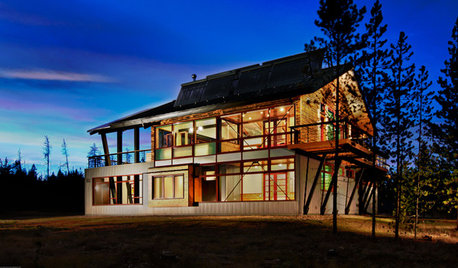
GREEN BUILDINGZero Net Energy: A Hardworking-House Term to Know
Homes that consume only as much energy as they produce by renewable means are a goal for builders. Learn what ZNE means for you
Full Story
CONTRACTOR TIPSBuilding Permits: What to Know About Green Building and Energy Codes
In Part 4 of our series examining the residential permit process, we review typical green building and energy code requirements
Full Story
GREEN BUILDINGOff the Grid: Siting and Building to Conserve Energy
Look to low-tech solutions for big energy savings when you’re constructing a home
Full Story
GREEN BUILDINGWhat's LEED All About, Anyway?
If you're looking for a sustainable, energy-efficient home, look into LEED certification. Learn about the program and its rating system here
Full Story
GREAT HOME PROJECTSUpgrade Your Windows for Beauty, Comfort and Big Energy Savings
Bid drafts or stuffiness farewell and say hello to lower utility bills with new, energy-efficient windows
Full Story
GREEN BUILDINGHouzz Tour: An Energy-Efficient Home for 3 Generations
This Australian house takes sustainability and accessibility to a new level
Full Story
GREEN BUILDINGEasy Green: 10 Ways Toward a Zero-Energy Home
Imagine never paying an electric bill again. With a zero-energy home, it's possible — and anyone can make it happen
Full Story
GREEN BUILDINGHouzz Tour: Pickle Factory Now an Energy-Wise Live-Work Space
A charming but poorly insulated 1880s Philadelphia commercial building becomes a spacious energy-efficient home and studio
Full Story
GREEN BUILDINGHouzz Tour: See a Maine House With a $240 Annual Energy Bill
Airtight and powered by the sun, this energy-efficient home in a cold-winter climate is an architectural feat
Full Story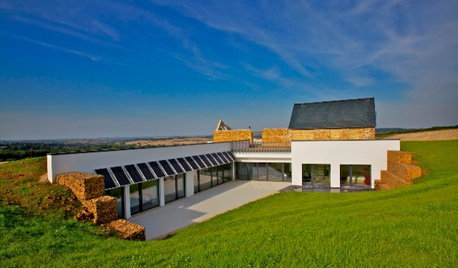
CONTEMPORARY HOMESHouzz Tour: A Stunning Low-Energy Home in the Cotswolds
Tucked into a hill next to a once-derelict barn, this new home follows a Passivhaus approach with contemporary flair
Full Story
hoovb zone 9 sunset 23