

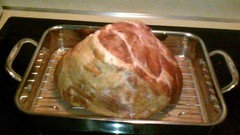
Clueless ham question(s)
9 years ago
Featured Answer
Sort by:Oldest
Comments (32)
 9 years ago
Related Discussions
Hmmm, just realized I'm clueless - please help
Comments (3)Tastefully, Let me tell you my plans in a similar situation & same zone. I currently have plants throughout my house under 27 shoplights. By this weekend with moderating temps I'll need to make room for the next generation of seedlings by moving many plants to greenhouses. I will heat the greenhouses at night to keep plant from freezing. but the daytime events are as critical. When first moving plants from artificial light to direct sunlight they need a period of modified light adjustment...much like us going onto the beach in Florida after residing in cloudy north all winter. I place them under benches or keep moving them out of direct sunlight and mist them often if leaves start to wilt. They almost always will recover as the sun sets. The hardening process will usually only take a few days to a week. Often plants may be injured by transporting greater distances outside when temperatures are below freezing or in windy weather so minimize exposure by waiting for the right time to move plants. Try to have your heating and ventilation system in operation a day or more before moving plants into the greenhouse so you can trust it to perform. Monitor the temperatures and condition of your plants frequently during their first few days(and nights) in the greenhouse. Listen to weather forecasts and make a disaster plan that may be a simple as moving everything back to your basement/livinroom/bedroom for a few nights....See MoreI'm a Ham! :) - pictures
Comments (23)Rosemary, You already did the hard part, now you are off in search of the fun part... After you passed your test the volunteer examiner sent your application with their endorsement to the FCC (Federal Communications Commission). Within about 2 to 4 weeks you will receive a letter from the FCC with your actual license. Your call sign will be printed on the license form. When you get the letter from the FCC you will see that is has both a Station License, which should be framed and hung in your radio shack, and a wallet size that you must have on your person when operating ham radio transmitters. Now to answer your question on how to find an Elmer. Contact the ARRL via email and tell they you just passed your test, still awaiting your "Ticket" and you would like ot meet an elmer or get info on the local radio club in your area. Contact the volunteer examiner who gave you your exam. He/she will be able to set you up with somebody or at least tell you when & where your local Ham Radio Club meets. Stop by your local Red Cross chapter house and talk to their emergency service director. Whenever a major disaster occurs generally the local electrical service and commercial commnunications systems are knocked out so the Red Cross works very close with hams to be able to get a commincations network up and running immediately. In addition to home stations most hams have radio equipment in their vehicles so if a disaster occurs a ham could drive up and provide world wide commnunications within moments. In fact, after most major disasters the only news we get for the first day or two is via ham radio. Now to answer your question, where do you get the equipment? Sadly, due to the high cost of the equipment and the limited market ham radio dealers are few and far beteen. When the FCC issues your license they will also notify a number of dealers who will be sending you catalogs, but I would strongly advise you to hold off buying anything until you meet someone who can help you select what you need. For the moment I would encourage you to look for a 2meter Hand Held Transceiver. With that you could add a mobile cigarette light cord and a mobile antenna, then you could use that radio both as a hand held portable or a mobile in your car. You could also get a small 12volt power supply and a base antenna and use that radio at home. You can find brand new 2meter handheld transceivers on Ebay for about $150 to $200 and that would be all you need to get started. (I would not encourage you to buy a used radio on Ebay until you know a bit more about them, but if you meet someone in your local club who has a used rig they will sell cheap ask them to give you a working demonstration and if it works grab it.) When you contact the ARRL you should also order a copy of the ARRL Repeater Directory. The ARRL Repeater Directory is a small vest pocket sized book that lists all the VHF & UHF repeaters in the USA. You can then look up locations near where you live, or along your route when traveling and find the operating frequencies of the repeater towers. VHF & UHF is what is called "line of sight" communications, which means your range is to the optical horizon plus about 20%. In order to extend the range we have a newtwork of repeaters set up on high elevations or towers which will allow you an average of 75miles or more with a simple hand held radio. Keep in mind that is 75miles from you to the tower but you could also be talking to someone that is 75miles from the opposite side for a total of 150miles (In open terraine such as Texas, Oklahoma or the southwestern desert the range is sometimes 300 miles or more.) Actually hams started using repeaters back in the late 50's and it took ma bell well into the 80's before they copied the technology to give us cell phones. In fact, nearly all ham repeaters have a "Phone Patch". You key your transmitter and say...This is (your call sign) opening the patch, then hit the * on your radio keypad. Release your transmit button and you will hear a dialtone, now key your radio, punch in a phone number for a phone that is within the local dialing range of the tower and you make a phone call, then when finished you announce you are closing the patch and hit the # key, the patch is off. The limitation is that the number you call must be a local number from the repeater tower and it must be a personal phone. You may not call a business, but the up side is, the call is free.. Actually it is not exactly free. In ham radio it is considered a matter of respect to be a member of your local "Repeater Association" at about $30/yr (the ham radio club) and it is an unwritten rule that when your traveling you may use another clubs repeater....See Moreblack beans and rice... I'm clueless!!
Comments (14)Cuban Shredded Pork Ingredients 1 1/2 pounds boneless pork chops 1 pint water to cover 1 lime, juiced 1 sprig fresh thyme 8 black peppercorns 1 tablespoon garlic powder, or to taste 1 tablespoon onion powder salt to taste 2 tablespoons olive oil 1 large onion, halved and thinly sliced 3 cloves garlic, peeled and sliced 1 lime, juiced 1/4 cup chopped fresh cilantro Directions 1 In a large saucepan, combine water, juice of one lime, thyme sprig, peppercorns, garlic powder, onion powder and salt. Bring mixture to a boil. Add pork chops, reduce heat to medium-low and simmer for 1 to 1 1/2 hours, until meat is very tender. Add more water as necessary to keep chops covered. 2 Turn off heat and let the chops rest in the broth for 30 minutes. Remove chops from broth and shred, removing excess fat; set aside. 3 In a large frying pan, heat olive oil over medium-high heat. Add the shredded pork and fry until it is almost crisp, about 5 minutes. Add the onion and garlic and continue to cook until the onion is just tender yet slightly crisp, about 10 minutes more. Add the juice of one lime, mix though and toss with cilantro. Serve and enjoy. Serve with Black Beans and rice GRANDPA ARROYO'S CUBAN BLACK BEANS & RICE 2 lbs. black beans 2 lg. bell peppers 1 c. olive oil 1/2 c. sugar 2 lg. onions 8 oz. diced pimentos 1 c. vegetable oil 1 1/2 c. sherry 1 1/4 to 1 1/2 c. vinegar (to taste) 2 c. rice Salt & pepper to taste Soak black beans overnight. Cover in pressure cooker with water 2 inches over top of black beans. Cook in pressure cooker for 45 minutes. Do not drain any remaining fluid. Dice onions. Cut bell peppers into 1/2 inch by 3/4 inch slices. Add all ingredients to black beans. Simmer for 2 to 4 hours. Beans should make their own broth. Add liquid when necessary to prevent drying out or burning, but keep broth thick. Serve over rice. Use as side dish to chicken or steak, or main dish on its own. Also, try in flour tortillas to make unique Cuban burritos....See MoreI’m enthusiastic, but basically clueless!
Comments (20)Vladimir..thx for the input. I do plan on following the Tapla formula. The only real variable I can see is the nature of the bark fines. We all are rather constrained by what is available to us, so fingers crossed the Soil Pep product will work I'm glad to hear you don’t have to water every day, because that is my main concern with this mix. Every 2-3 days I can handle. Of course I will keep a close eye on things especially during very hot spells. Debbie..my thought on soaking , since I am going to be making a rather large amount, is to mix everything in a large tub and wet it thoroughly. Probably put a tarp over it. Stir it periodically to make sure the bark is evenly wet. I am doing this because it seems one would want the mix uniformly hydrated before use, and to start having the lime do whatever it is supposed to do...See More- 9 years ago
 9 years ago
 9 years ago
 9 years ago
- 9 years ago
- 9 years ago
- 9 years ago
 9 years ago
 9 years ago
- 9 years ago





Related Stories

FEEL-GOOD HOMEThe Question That Can Make You Love Your Home More
Change your relationship with your house for the better by focusing on the answer to something designers often ask
Full Story
KITCHEN DESIGNHouzz Call: Tell Us About Your First Kitchen
Great or godforsaken? Ragtag or refined? We want to hear about your younger self’s cooking space
Full Story
DECORATING GUIDESDecorating 101: Do It Yourself or Hire a Pro?
Learn the advantages and disadvantages of decorating alone and bringing in skilled help
Full Story
REMODELING GUIDESConstruction Timelines: What to Know Before You Build
Learn the details of building schedules to lessen frustration, help your project go smoothly and prevent delays
Full Story
STAIRWAYSHow to Get Your Stair Runners Right
Add peace and quiet, beauty (and safety) with a pretty carpet on the stairs
Full Story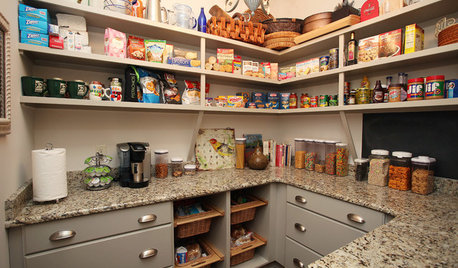
LIFEHow to Prepare for and Live With a Power Outage
When electricity loss puts food, water and heat in jeopardy, don't be in the dark about how to stay as safe and comfortable as possible
Full Story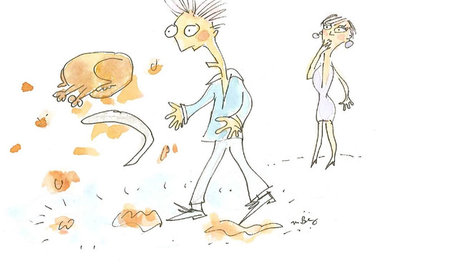
MOST POPULARThanksgiving Tales: When the Turkey Tanks
Houzz readers prove adept at snatching victory from the jaws of entertaining defeat
Full Story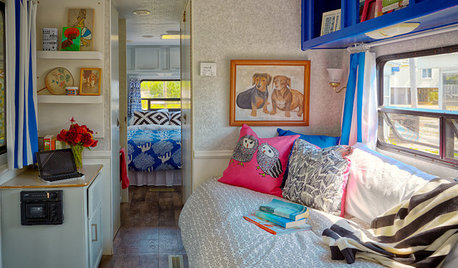
MOST POPULARBudget Beach House: A Trailer Gets Ready for Summer Fun
Punchy prints and colors star in a creative approach to Jersey Shore living
Full Story
DECORATING GUIDESHere's How to Steer Clear of 10 Top Design Don'ts
Get interiors that look professionally styled even if you're taking the DIY route, by avoiding these common mistakes
Full Story

arcy_gw