

Making Crème Fraiche : how to keep it warm while culturing?
9 years ago
Featured Answer
Sort by:Oldest
Comments (12)
 9 years ago
- 9 years ago
Related Discussions
Any Aussies? Culture for Den. falcorostrum
Comments (9)Thank you Howard, and again, corymbosa, for adding additional thoughts. Howard -- I like to avoid pots as much as possible in my collection, but there are cases when they are, of course, necessary. Most dens and catts I have in clay slatted pots with arcillite, to provide good drainage and maximize air flow. However, I believe that clay and Den. falcorostrum may not be a good combination, because it sounds like it prefers a gentle "evenness" to the dampness the roots encounter -- which clay pots do not easily provide. They're either very wet, or very dry, with little "in-between" time. My experience with plastic pots (as the plant is now contained) is that especially with organic mixes, plastic pots remain much too wet inside, given the necessary watering practices within a moderate-sized mixed collection to keep everything "happy". Without fail, every single plant I've ever received from a nursery potted in plastic ALWAYS has an excessive amount of rotted roots. I don't have the luxury of watering things differently, so, I adjust the type of mix, pot, mount, etc., to compensate for the even dispersal of water. (I have hung a temporary plastic curtain to keep my nobile dendrobium and Cyrtopodium punctatum dry during the winter months.) I have a ramshackle greenhouse made of a 2x4 frame with UV-resistant greenhouse fabric stapled to it. Because of the compromises of such a flimsy design, I can't exhaust very well, and temperatures can soar up to 105F (40.5C) in the summer (90s near the floor) during the warmer months. In the winter, I try to button it up tight and double-insulate with a second interior layer of plastic, so that my 1500-watt heater can keep things from freezing. I have to watch carefully, because when the sun hits it during the day and I have it tightly closed, temps will shoot back up to 100F unless I prop open the door. It's a nightmare, but I'm trying to make it work until I can build a better one. I know too well the benefits of humidity, which is one of the reasons I have to compromise with the tightness of the enclosure. If I open it up more to help it cool off, I let the often extremely low outside humidity in, which is bad when coupled with air movement. So, I was thinking during the warmer months I'd bring the falcorostrum inside, although, the A/C will cause it to dry out quickly. (I also keep a Holcoglossum amesianum indoors for the same reason.) However, I don't want to make this a "precedent", because the care required for orchids such as these indoors is more than I want to do for more than one or two. Corymbosa -- it would definitely simplify things if I could trust this orchid outside, but our conditions are anything but moderate, even though we get quite cold during the winter. The worst part is the extreme dryness when it hasn't rained in a while. You wouldn't expect that with us living so near the Gulf of Mexico, but I've taken readings as low as 18% in the springtime. Even when things are damp after a rain, we never approach the humidity I would expect in one of your temperate rainforests. My proposed greenhouse is going to have an active "chiller" to cool and humidify incoming air (my own design), with a solar floor to help heating in the winter. Thermostats instead of timers, so things will be more precisely controlled. I believe I can keep midday daytime temps even in the hottest months below 85F (29C) and better than 75% humidity. I'm not too concerned about the nighttime winter temps -- my collection has gone down to 32F (outside temps into the low 20s) with no ill effects. But the solar floor will certainly ease the expense of running the heater constantly, and I won't have to live in fear of the heater failing and losing my collection. Thanks for finding that reference about mounting falcorostrum. I have the best luck with my collection when things are mounted or in baskets, and it's my preferred method of culture. I'm loathe to experiment with falcorostrum, though! I remember another member, CharlesB, growing his specimen in a large basket, but I don't know the details. I think that's the way Aussie "Keith" grew his too, as well as in rotting logs on the ground...although I can't remember the exact details. His outdoor conditions were pretty close to perfect, so it actually wasn't very helpful for me to try to relate his setup to mine, because he didn't have to modify his growing conditions that much. Thanks again! Bruce...See MoreHow do you keep track of your Orchid data?
Comments (16)Thank you Bryan(Jacamar) for the praise. As Bryan mentioned....Pictures are taken of the plants when they first arrive showing their roots. Another picture of the roots on each repotting, to check for root growth. I take yearly pictures of the plants to keep track of their growth, and to see which plants are doing welll and which plants are not. The ones that are not I try to figure out what I am doing wrong and try and change that. Pictures of each plant as they flower and on the last day of flowering to check the length of flowering. I have files for each orchid on my laptop. Data wise I keep track of price paid, seller and date acquired in one file. In Microsoft word name, seller, the picture off the tag, potting date(all of them), flowering start date, flowering end date, pot size, potting medium, deciduous/evergreen, minimum temperature for use in determining when I can put the plant outside, location of plant(hard to keep up as I keep moving the plants around). Currently I am making tags for each plant which have a picture of the plant(my own picture if the plant has flowered for me or one off the web if it has not) on the one side with the name on it and on the other side it has a picture of the plant as it looked when it was purchased with the first pot date and first flower date - the tag is laminated. I also research each plant in OrchidWhiz software, eAOS software, and on the web and keep various pieces of information like warm/hot/cool grower, time of flowering, length of flowering, size of plant, height and spread, flower size, fragrant and type e.g. vanilla, number blooms, awards, etc. I have tried many different things but never found one method that holds all of the information that I want to keep on my plants. As you can see I spend a lot of time on this....comes from being bedridden for many years.....hopefully my reply is not too confusing. Sorry for the lengthy reply....See MoreKim Rupert on making roses hardy and how to make fruits sweeter
Comments (11)Hey, Kippy, believe it or not, we have a burgeoning wine growing industry here in the UK. I think much depends on the variety of grape (we tend to grow sparkling whites here in the UK, often very similar to German wines). Not even the most optimistic weather-watcher could claim we have long hot summers but there are varietals which will do well in the cool and damp english climate. We can certainly manage outdoor dessert grapes too (Boskoop Glory is a good one for me) so why not have a go? There is a lot of fun to be had training the vines - the major fiddly bit is thinning out the bunches of grapes - and they look quite fabulous over a pergola too (although mine is on a couple of posts and wire). Mind, the growing of them is easy - the making a good wine is likely to be beyond me. I had a period, years ago, of making horrid brews such as nettle wine, parsnip wine and so on - I still drank them though - after the first few gulps, they slipped down OK and they were certainly poky (shudder)....but anyway, I prefer beer (ale, NOT lager). I too wondered if Kim was going to write a book. He should. Failing miserably with my Meyer lemon (and I had wanted one for ages) - looking sad, pallid and completely growthless - sulks in the greenhouse, weighing me down with guilt and bafflement. Swinish fruit....See MoreHow to make roses hardier and make fruits taste sweeter
Comments (1)Great article/message, I enjoyed that, thanks for sharing!...See More 9 years agolast modified: 9 years ago
- 9 years ago
 9 years ago
 9 years ago
- 9 years agolast modified: 9 years ago
- 9 years ago
- 9 years ago
- 9 years agolast modified: 9 years ago
 9 years ago

Related Stories

DECORATING GUIDESPop Culture Watch: 12 Home Trends from the '80s Are Back
Hold on to your hat (over your humongous hair); interior design elements of the 1980s have shot forward to today, in updated fashion
Full Story
HOMES AROUND THE WORLDHouzz Tour: Local Cafe Culture Inspires a Melbourne Makeover
An Australian family renovates its bungalow to connect with relatives, friends and community
Full Story
HOUZZ TOURSHouzz Tour: Cultural Adventure in Newfoundland
Lovingly renovated coastal cottages enhance a trip of a lifetime
Full Story
DECORATING GUIDESHouzz Tour: Clever DIY Tricks Warm a Rustic Rental Cottage
An interior designer finds ways to beautify her family’s temporary home — and still keep the landlord happy
Full Story
DECORATING GUIDESCity View: Miami Design Keeps an Open Mind
Culture, color, climate and fashion factor strongly in this vibrant port city's design aesthetic
Full Story
DECORATING GUIDESColor of the Week: Decorating With Warm Gray
Tired of tan? Getting gloomy from cool gray? Make warm gray your new go-to neutral
Full Story
ARCHITECTURECity View: Atlanta's Design Style Warms to Many Tastes
Outdoor living and hospitality? Of course. But Atlanta's architecture and interior designs express much more than just traditional notions
Full Story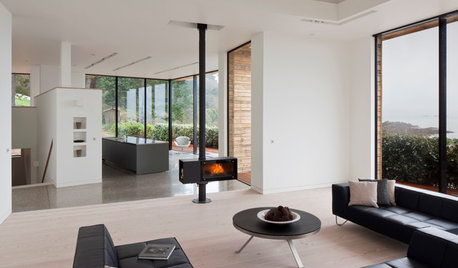
FIREPLACESUpdated Woodstoves Keep Home Fires Burning
Better technology means more efficiency than ever for modern woodstoves
Full Story
GREEN BUILDINGThe Big Freeze: Inventors Break New Ground to Keep Things Cool
Old-fashioned fridges can be energy guzzlers, but there are more eco-friendly ways of keeping food fresh, as these global innovations show
Full Story
CONTEMPORARY HOMESMy Houzz: Modern Update to a 1960s Ranch in New Jersey
Outdated home decor is replaced with modern European-inspired elements, all while keeping true to the family’s rich culture
Full Story
Olychick