

No-Poo revisited!
9 years ago
Featured Answer
Sort by:Oldest
Comments (54)
 9 years ago
 9 years ago
Related Discussions
Things to avoid in your compost: grease, meat, pine, citrus, pet
Comments (38)Hmm, well, there is that Chinese drywall problem. I was always curious what actually caused that. It does not seem particularly harmful - at least on the sulfur side. According to that Wiki article, Chinese drywall gives off sulfur containing gases as a result of a particular bacteria attacking the unusually high levels of pyrite in the formula. Pyrite is nothing but iron sulfide, quite harmless. In an aerobic composting environment, I suspect that particular bacteria would decrease as others compete. Also, any gases that are produced will waft away outdoors. In fact, those bacteria probably already exist in most soils and compost. I did notice that the Chinese drywall also had more fly ash in it than American drywall. I do have some concerns about metals in fly ash, especially any fly ash from China. I would think this problem has been cleared up so any new drywall isn't going to have these problems anyway. But I would probably not put Chinese drywall, new or old, in my compost. As for fiberglass, it's first I've heard of that. There can't be much in there since you don't see it, and it's not a toxic risk. It's tiny glass fibers, which are made from silica and other harmless minerals, and would disappear into the soil. Of course it's up to everyone to make their own choices. I just try to clarify the facts....See MoreHVX Rears Its Ugly Head
Comments (24)UPDATE: Just wanted to let anyone who cares know that a small difference was made here...I contacted the Colorado Dept. of Agriculture about the infected plants on this thread. That was in May. Last Tuesday, I revisited this garden center a couple of miles away from my home here in Westminster. I got the opportunity to speak with the owner of this garden center (he owns a second one near North Denver) and I brought up the virused hosta that were in stock the last time I was there. Turns out the inspector that came out and tested the plants was, according to the owner, a 'hosta grower' and gave him a good (but short) lecture on HVX (I'm so glad the owner was on the premesis when the inspector showed up)!! The owner told me he took a 'crash-course' in making himself familiar with signs and symptoms of the virus, and actually HAD HIS MANAGERS AND EMPLOYEES FROM BOTH STORES take a mandatory 'working lunch' where he had Subway come in and cater lunch, and during said lunch, he presented a power-point collection of pics he found on the internet of HVX-infected plants. WOW, RIGHT?? LOL It was right around this time he asked me if I was the person who called in the infected plants; I admitted I'm the guy, and he shook my hand, thanked me for caring. I told him (not pointing out anyone) I wouldn't have, but that his guy on duty at the time didn't get what I was trying to tell him about the HVX. I'm very happy to say that the owner has committed to buying only from wholesalers who are aware of the virus, and sell guaranteed HVX-free plants. He has no hosta in his shops at the present time, but plans to sell them when he's got a wholesaler who he'll buy from. I name-dropped Q&Z and Walter's Gardens as the two I know of that make appropriate efforts to make sure their plants go out HVX-free. The property was loaded with customers when the State Inspector showed up, and the owner was embarrassed, both that he was ignorant of HVX, and that so many customers witnessed the plants getting pulled off the display tables. So....Something very good happened here. If it happened here, in my neck of the woods, it can happen in other places as well. I'm just a second-year hosta beginner, but this is what can happen when the right people are contacted with the right information, and the others involved, from the inspector to the owner on down, go the extra distance and do what's right, do what they know they SHOULD do. Happy 4th Of July, Everyone! Don B....See MoreYou be the jury - HVX- guilty or innocent
Comments (19)A little history on the garden I've found the hosta in question. Bobbi & Terry had an almost continuous bunch of ventricosa growing along that garage. They had been there seemingly forever. She'd told me she was going to tear them out so she could get more varieties and if I wanted some to take what I wanted. That was in 2010. In photographing what is in there now I find she had kept 3 ventricosa and added 2 clausa var. normalis and 2 Stiletto given to her by a girlfriend. All of these plants appear the picture of health. All the rest of the hostas are young plants she purchased in 2010and 2011. I am not sure where she bought them. She loves hostas but is not that knowledgeable about them and kept no tags; hence my involvement. So this hosta, if she is Janet and appears as Ken stated to be, has been purchased probably in 2011. Is Janet a recently TC'd variety? I have to double check HL data base re: its history. I don't want to panic Bobbi. I doubt they will spend $ on a test kit. But I will leave that open to her if she wants to. I could be wrong. Terry is now a dilligent Trapper Terry and twice I almost caught a toe in his vole trap-line. It isn't likely they have spent much $ on these new hostas. In essence they are in a quarentine bed. Every hosta in it is planted WAY to closely to another. In the next 2 years she is going to have a real problem if she hasn't anticipated where she can place them. Her rear yard is South facing without a ton of shade. Though she has 3-4 minis, others will be crowding each other out and/or burying the minis. That is one reason I offered to do the catalog with ID's to give them an idea of how large the individuals might become. I think if it were my hosta I would chuck it on ken's driveway. I see it as questionable enough to not risk contaminating 20 or so hostas with the virus. In the lower pic the leaf at the 9:00 position appears to have tissue collapse. If you look closely, the puckered appearance is actually concave instead of the normal convex puckering. The leaf at the 5:00 position looks to me like ink bleeding. The one just above the 9:00 leaf appears to have the striated look of tissue between veins that I have seen in HL's photos of HVX virused hostas. I might be wrong on all three counts, but to even have 3 questionable leaves on one plant is hard to overlook as is the generally poor condition when compared to the other hostas in the bed. Offsetting the above is the unique habit of Janet to lose its chlorophyll and turn almost totally white. This on it's own merit would make it very sesceptible to this years heat and drought conditions. with recent rains most of mine are showing regrowth and this one isn't. The prosecution rests after my closing arguement. :( Les...See MoreWhen do you stop trusting the vet?
Comments (33)Secondary bacterial infections are a very common sequela to inflammation of any body system. If Kitty's GI tract was inflamed for any reason, such as food allergy, that makes it much easier for bacteria to overgrow and cause problems. Most animals (including people) have Campylobacter in their GI tract, and it does not cause any problems. Inflammation causes changes on the surface of the affected body system making it easier for it to be colonized by opportunistic invaders, such as Campylobacter. Once the invader is colonized it can reproduce and the numbers get out of control, causing clinical signs. Don't worry about the campylobacter too much- it was probably always there and probably is still there just not in detectable or problematic numbers. There are lots of reasons that kitty's GI tract could have been inflamed, allowing the campylobacter overgrowth. Food allergies, inflammatory bowel disease, irritable bowel syndrome, parasites, dietary indiscretion (eating something she shouldn't have), stress, and medications especially antibiotics (not so much metronidazole, but the penicillin derivatives are notorious) among other things. Although not having an overgrowth of campylobacter is good, not having ANY GI flora is bad. All animals need GI bacteria to help digestion. I hope they meant that she doesn't have any more bacterial overgrowth, not that she doesn't have any bacteria. I agree that this isn't a recurring problem. She didn't have a bacterial infection in September. And she's had diarrhea since December, which is a continuing problem, not a recurring one. The only thing recurring is you having to take her to the vets. Is kitty spayed already? If not, it may be a good opportunity to get her spayed, do an abdominal exploratory, and take some intestinal biopsies while they have her under anesthesia and are in the abdomen anyway. It may help figure out what is going on, and even though I think a tumor is highly unlikely, that would be a good way to both look and remove it. If she is spayed, might consider doing an exploratory anyway. It sounds like you are getting more and more worried, as anyone who cares as much about their kitten would be, and it may be worth it just to go whole-hog and find out once and for all what is going on. Sometimes it's worth just going in instead of playing around with treatments and tests forever. If you didn't want to do exploratory surgery, then I would definitely deworm. Then try canned pumpkin on the food in case of fiber-responsive diarrhea. If that doesn't work, then try the elimination diet, which would help food allergies. If that doesn't work, maybe try tylosin in case it's antibiotic-responsive diarrhea. If that doesn't work, try some low dose steroids to control inflammatory bowel disease and irritable bowel syndrome. There's still plenty of trial and error treatments to try... Gaining weight is a good thing. When animals have chronic diarrhea, we usually worry about them losing weight. It's also good that she has an excellent appetite. You are right to worry about your kitten. If the vets are not as concerned about her as you are, that is a SURE reason to not trust them. After all, if they don't care, why are they vets?...See More 9 years ago
 9 years ago
 9 years ago
- 9 years ago
- 9 years ago
 9 years ago
- 9 years agolast modified: 9 years ago
 9 years ago
- 9 years ago
- 9 years ago
- 9 years ago
- 9 years ago
- 9 years ago
- 9 years agolast modified: 9 years ago
- 9 years ago
- 9 years ago
- 9 years ago
- 9 years ago
- 9 years ago
- 9 years ago
- 9 years ago
- 9 years ago
- 9 years ago
- 9 years ago
 9 years ago
- 9 years ago
- 9 years ago
- 9 years ago
 9 years ago
- 9 years ago
- 9 years ago
- 9 years ago
- 9 years ago
- 9 years ago
- 9 years ago
- 9 years ago
- 9 years ago
- 9 years ago
- 9 years agolast modified: 9 years ago
 9 years agolast modified: 9 years ago
- 9 years ago
- 9 years ago
- 9 years ago
- 9 years ago
- 9 years ago
- 9 years agolast modified: 9 years ago
- 9 years ago

Related Stories

DECORATING STYLESIs Your Home Ready for a 1970s Revival?
Seventies chic is a trend that’s been brewing for some time, but this year it could hit big — with a few modern tweaks
Full Story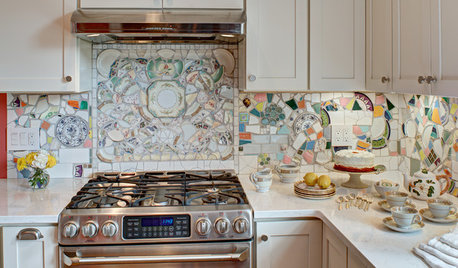
MOST POPULARKitchen of the Week: Broken China Makes a Splash in This Kitchen
When life handed this homeowner a smashed plate, her designer delivered a one-of-a-kind wall covering to fit the cheerful new room
Full Story
HOMES AROUND THE WORLDStorybook Cottage Gets an All-Glass Kitchen
A showstopping addition to a traditional thatched cottage houses a contemporary kitchen
Full Story
Marilyn Sue