

How much food do you keep on hand - and why.
10 years ago
Featured Answer
Sort by:Oldest
Comments (59)
Related Discussions
What kind of hand pruners do you prefer and why?
Comments (9)I'm interested in the Felcos too, but I'd like to know why you think 50 bucks (more or less) is worth it for that tool. I've had two pairs of 20 dollar Coronas for 10 years, plus a couple of other failed experiments. The second pair of Coronas have lasted me the longest. However, in ref. to sumala's post, I had a pocket knife (genuine Swiss Army knife) that had a tiny pair of scissors on it. I always kept them in my pocket (much to amusement of some of my co-workers at the time - a girl with a pocket knife ya know, well whatever LOL). Anyway, I swear that was the best rose pruner I ever used! I never got cane dieback and those little guys were really sharp, but after a year I had to abandon them as I couldn't hone them....See MoreHow much food is too much food?
Comments (4)In the interest of redundancy, here it is again: With horse manure it is almost impossible to give them too much. Let the cow manure pre-compost, and it is almost impossible to give them too much. When we talk about too much food, we are usually talking about kitchen scraps. Too much food in the form of kitchen scraps will create a pretty yucky environment. The moisture in the food will cause the bin to go anaerobic, and the high nitrogen will throw off the bin's environment. Whatever you feed them, worms will consume about half their body weight each day. Under good conditions, they will eat their own body weight each day. Too much food is simply more than they can eat. Another factor that determines over feeding is the tendency of the food to heat up as it is breaking down. Both horse and cow manure can heat up quite a bit. If they have been aged to the point where they will no longer heat up, you won't have this problem. Any food you put in the bin should be totally consumed by the worms in about a week. Additional food can be added before that to give it a chance to break down before the worms attack it. You are feeding too much if it is not all consumed within a week. So our rule of thumb is to add about 1/2 pound of food for each pound of worms per day. You don't need to feed every day. You could feed 2 pounds of food for each pound of worms every fourth day. Then watch to see how fast the worms eat it and adjust the amount you feed accordingly. Aged horse manure is an ideal worm food. I would add about a pound of horse manure for each pound of worms and see how fast they eat it. You won't need bedding. Your only concern is for over heating. With cow manure, you will need some bedding. I would add about a pound of aged cow manure plus bedding for each pound of worms and see how fast they eat it. Feeding is as much an art as it is a science. In time you will figure it out. If you are feeding aged horse manure, or even small amounts of fresh manure, it is hard to make any big mistakes. You could fill your entire bin with aged horse manure, and your worms will be very happy. Weighing food isn't practical, and weighing your worms is nearly impossible, so add no more than an inch of aged manure over the top of the bin and see what happens. If the manure is still fresh, only cover half of the bin surface. That way, if the manure gets hot, the worms can escape to the other side of the bin. In a few days it will cool off, and the worms will be all over it. Really. Worms devouring horse manure is a sight to see. Your bin will be less than 8 inches deep, so this is what I would do. If the manure is well aged, fill the entire bin with horse manure, and feed enough to keep the depth between 6 and 8 inches. If you are feeding cow manure, you will need a bedding source as well. If there is any question as to whether the manure has aged enough, fill the bin with some form of bedding, and feed enough manure on the top to keep the depth between 6 and 8 inches, only feeding half of the bin surface at a time. If the manure is fresh, you could start with a mixture of manure and bedding and let the bin sit for a couple of weeks before adding worms. After a couple of weeks, turn the whole thing and make sure it does not heat up. If it does heat up, wait another week and try again. This is getting long. Time to post it. If I missed anything, someone else will fill in the holes....See MoreHow Do You Keep Your Food Warm.......
Comments (22)It's a matter of planning and timing the cooking: Wednesday night - saves time and cleaning up: Candied yams get boiled, put in pyrex casserole with lid, cover with molasses and put in refrig. White potatoes are peeled and cut, placed in pot with water...ready for cooking, also in refrig. Make cranberry sauce, put in serving dish,cover with plastic wrap...also in refrig. Make my bread and sausage stuffing, put in refrig. Make cole slaw, cover and put into refrige. Set dining room table. Lay out bowls, platter and serving utensils for all the food. Thursday morning: Stuff turkey and put into the oven. 1 hour before eating. Put pot of potatoes on stove to boil. 1/2 hour before eating. Take turkey out of the oven and pan onto carving board (to rest before carving). Lay a clean, warm damp towel over to to prevent skin from sticking to the bird. Put pan on stove burner, add water... make gravy. Casserole with yams into the oven. Put frozen peas into bowl into microwave. Cranberry sauce, slaw and butter onto dining room table. 10 minutes before. yams out of the oven, to table rolls into the oven stuffing out of the turkey, into bowl..cover with a lid or heat proof plate and put on table drain potatoes and mash....cover with a lid or heat proof plate and put on table hit button on microwave to cook peas Yams on the table carve turkey and move turkey and gravy onto the table put peas on the table remove lids from stuff on table rolls out of the oven , to the table. Amazing how fast it all goes. BUT...I have to admit that I have a reputation for forgetting the rolls...er, well done rolls are almost expected from me....See MoreWhat kind of stuff do you keep on hand for cold/flu season?
Comments (16)I don't really do OTC meds, never have, and I've never understood why people would use them. If anyone has a fever, it is treated with acetaminophen or ibuprofen. Severe coughing is treated with warm tea with honey and lemon or vitamin C drops, I don't even buy cough drops. I don't carry or use allergy medications of any kind. Rest, warm baths, soft foods and lots of fluids is how basically every illness is treated at my house. One of my kids doctors seems to think it is bizarre that no one in my family has allergies; I can't tell if that is really that rare or if people tend to over-medicate themselves all the time to the point of being convinced they need these treatments. As far as the new job and preventing illness, the number one best thing to do is to wash your hands like people in the medical field do. Wash after using the restroom of course but, the most important is to wash before you touch your face or eat anything. Eyes, nose and mouth are the primary entry points for viruses....See More 10 years ago
 10 years ago
- 10 years ago
- 10 years ago
- 10 years ago
- 10 years agolast modified: 10 years ago
- 10 years ago
- 10 years agolast modified: 10 years ago


Related Stories

GREEN BUILDINGThe Big Freeze: Inventors Break New Ground to Keep Things Cool
Old-fashioned fridges can be energy guzzlers, but there are more eco-friendly ways of keeping food fresh, as these global innovations show
Full Story
BATHROOM DESIGNPowder Room Essentials to Keep Guests Happy
Set out these bathroom necessities (hello, hand towels) to make your company comfortable and your parties run smoothly
Full Story
SHOP HOUZZShop Houzz: Holiday Food-Prep Essentials
Create culinary magic with these kitchen tools, small appliances, cookware and more
Full Story0

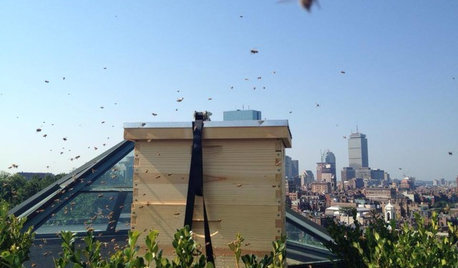
FARM YOUR YARDHello, Honey: Beekeeping Anywhere for Fun, Food and Good Deeds
We need pollinators, and they increasingly need us too. Here, why and how to be a bee friend
Full Story
HOUSEKEEPINGDishwasher vs. Hand-Washing Debate Finally Solved — Sort Of
Readers in 8 countries weigh in on whether an appliance saves time, water and sanity or if washing by hand is the only saving grace
Full Story
FARM YOUR YARDTo Get the Food They Believe In, These Urbanites Grow Their Own
Home gardeners farming on their city lots find that local, organic food isn’t the only reward
Full Story
FARM YOUR YARD6 Things to Know Before You Start Growing Your Own Food
It takes time and practice, but growing edibles in the suburbs or city is possible with smart prep and patience
Full Story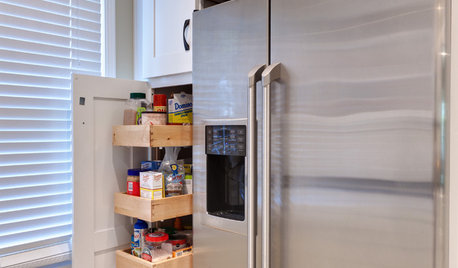
KITCHEN STORAGEPantry Placement: How to Find the Sweet Spot for Food Storage
Maybe it's a walk-in. Maybe it's cabinets flanking the fridge. We help you figure out the best kitchen pantry type and location for you
Full Story
PRODUCT PICKSGuest Picks: Oven-to-Table Food Service
Serving food in the same dish it was cooked in means more time with guests and less time cleaning up
Full StorySponsored

Columbus Design-Build, Kitchen & Bath Remodeling, Historic Renovations
dedtired