

I have a question about Milkweed.
10 years ago
Featured Answer
Sort by:Oldest
Comments (8)
 10 years ago
Related Discussions
question about milkweed
Comments (23)Hi Linda; I am not that far from you in the Dayton area. There are lots of milkweed to choose from. All have different properties. So you are wise in asking questions instead of putting any old thing in and regretting it later. I will give you the info I have on the "big four" that most people grow and we grow up here at the Butterfly house at Cox. I also have grown most of these in my yard. 1) Asclepias curassavica - a.k.a. tropical milkweed, scarlet milkweed, blood flower. For us, we consider it an annual. I have only had it reseed once during a very mild winter. It produces a lot of seeds and can be collected to replant every year. It is loved by monarchs and has a medium high cardiac glycoside (CGs) level (the chemical that makes monarchs distasteful). The levels are important for a variety of reasons. Too high, bad for caterpillars, too low, they are not protected from a variety of things, including parasitic wasps and flies. The only bad things this milkweed is that it is an annual, so you have to replant it. Also in some parts of the country, mainly Florida, it does induce some migrating monarchs to stop migration and start reproducing. Comes in a yellow flower form as well. 2) Asclepias syriaca - A.K.A common or field milkweed. This is the McDonalds of the milkweed world. It has medium levels of CGs. The pros; It has large profuse blooms that attract all kinds of pollinators. The fragrance is unbelievable at times. Monarchs use it fairly well. Comes up pretty reliably year to year. The cons; it is a beast in the home garden, meaning that it can easily take over your yard, your neighbor's yard, etc, through "runners". The sap is profuse if a leaf or stem is broken and some people are very allergic to the sap(as it has tons of latex). Not the best monarch host plant due to the sap (young caterpillars can die from it easily). 3) Asclepias incarnata - a.k.a. swamp milkweed, ice ballet, rose milkweed. Medium to low CGs. Pros: Favorite of monarchs. They will use this one over a lot of the others. Pretty pink blooms. attracts a lot of pollinators. Fairly reliable (some people have trouble getting it to return year to year). Reseeds reliably and does not form "runners". There are not too many seedlings and I can transplant them. Cons; prefers moist soils. If you grow it in full sun, in clay, you need to keep it watered. I have it in high organic soils in partial shade and it does well without me watering it. It can get a little funky as the plant ages. It may truly be a long lived perennial. meaning it really only comes back 2 - 4 years. I am watching that in my garden. Milkweed aphids seem to really like this one. 4) Asclepias tuberosa- A.K.A butterfly weed, shorter milkweed up to 24 inches. Medium CGs Pros; good color, prefers drier sites. great nectar plant. Cons; does not do well in wet soils ( I have lost many to wet winters and springs). Because it is a dry prairie plant, the leaves do not contain as much moisture as other milkweeds. Caterpillars have to consume twice as much leaf material as on other milkweeds to grow the same amount. That is one reason mom will lay her eggs preferentially on other plants. Some of the others we have used are A. physocarpa (similar properties to A. curassavica), A. verticillata, A. purpurascens, A. viridis. If you have any other questions feel free to ask....See MoreQuestions about milkweed seeds and garden...
Comments (1)1. This is the first year I have seed pods on some of the plants. How do I harvest the seeds, and what do I do with them so that I can plant them in the new garden. And WHEN and HOW do I plant them? The best way is to put a kneehigh or tie a netting aoround the pod so when they open, your seeds dont; all take off. Once you retrieve the seeds, seperate them from the white fluff. Then what i have been doing this season is soaking the seeds in warm water for a few days. the seeds will "Pop" and you will see a little sprout. At this point, i just stick it in the soil and let them go. 2. Does milkweed need full sun or can it tolerate partial shade? The new garden will not be as sunny as the current one, but it gets good morning sun. Mine does wonderful in partial shade. it is in the sun in the monring but then the passionvines end up shading them. I have milkweeds growing under my porterweed so they can grow under things to which has a lot of shade. i think yours will be fine. 3. Can I transplant the existing milkweed, and when is the best time to do that? I know milkweed has a long taproot... is it hard to transplant? Hard to transplant. better to try to transplant little tiny ones than big ones as they usually go capoot. Flutter...See MorePosted 2 questions on Milkweed on the milkweed forum...Plz help
Comments (2)I didn't even know there was a milkweed forum! I would have to assume it's some type of night-emerging slug/snail. If it were the milkweed/tiger tussock moth, you'd definitely see them during the day. Sherry...See Morehave you heard this about Tropical Milkweed and Monarchs?
Comments (3)I've been raising Monarchs for nearly 10 years and my property is a Monarch Waystation and yes I've heard this about tropical milkweed. There may be problems growing in the southern zones where Asclepias curassavica is perennial but not here in zone 6 (in my experience). Our season just isn't long enough - often the tropical milkweed doesn't even have enough time to produce mature seed pods, before it's killed with a hard frost. What's more, as soon as it gets cold at night the Monarchs are out of here pronto (usually around late Sept/early October). There is no chance whatsoever they are going to hang around because of the tropical milkweed. I grow common, swamp, purple, and orange (butterfly weed) milkweeds and it is a finicky genus - not all species do well every year, it is a target for insects, and it randomly dies back, so I grow a fair amount of the tropical because it attracts egg laying females to the garden. I then collect the eggs and raise them on whatever cuttings are doing well, the caterpillars are adaptable, and if I've got a lot of hungry 5th instar caterpillars to feed, will sometimes collect extra common milkweed cuttings from wild sources....See More 10 years ago
- 10 years ago
- 10 years ago
- 10 years ago

Related Stories
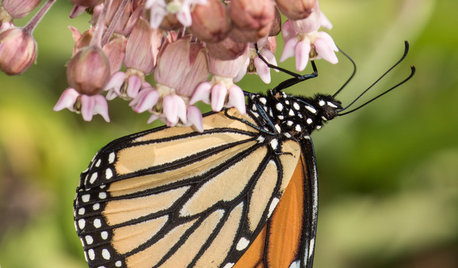
FLOWERS AND PLANTSHelp Monarchs and Other Butterflies by Planting Common Milkweed
Summer-blooming Asclepias syriaca is an important larval host plant for the monarch butterfly and attracts a number of pollinating insects
Full Story
GARDENING GUIDESGreat Design Plant: Milkweed
Quit cringing. This not-weed plant is a sight to behold in the garden, has a delicious vanilla scent and is a magnet for butterflies
Full Story
GARDENING GUIDESGreat Design Plant: Butterfly Milkweed, a Beacon in the Prairie
Vivacious orange flowers for you, nectar for the butterflies and bees. Asclepias tuberosa is worth planting for more reasons than one
Full Story
FUN HOUZZEverything I Need to Know About Decorating I Learned from Downton Abbey
Mind your manors with these 10 decorating tips from the PBS series, returning on January 5
Full Story
WORKING WITH PROS8 Questions to Ask Yourself Before Meeting With Your Designer
Thinking in advance about how you use your space will get your first design consultation off to its best start
Full Story
TASTEMAKERS5 Questions From ICFF: Lindsey Adelman
The inventive designer takes a break from New York's International Contemporary Furniture Fair to talk about her artistic lighting fixtures
Full Story
ORGANIZINGPre-Storage Checklist: 10 Questions to Ask Yourself Before You Store
Wait, stop. Do you really need to keep that item you’re about to put into storage?
Full Story
GREEN BUILDINGConsidering Concrete Floors? 3 Green-Minded Questions to Ask
Learn what’s in your concrete and about sustainability to make a healthy choice for your home and the earth
Full Story
REMODELING GUIDESConsidering a Fixer-Upper? 15 Questions to Ask First
Learn about the hidden costs and treasures of older homes to avoid budget surprises and accidentally tossing valuable features
Full Story
EXTERIORSCurb Appeal Feeling a Little Off? Some Questions to Consider
Color, scale, proportion, trim ... 14 things to think about if your exterior is bugging you
Full StorySponsored
More Discussions
xiangirl zone 4/5 Nebraska