Houzz Logo Print
pam_merrill

ID Please?

10 years ago
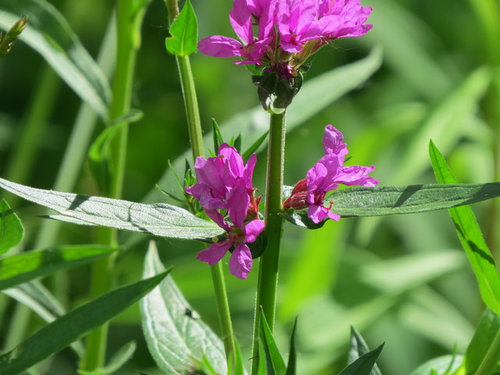
Found this in our 'prairie' in Illinois...been looking at photos trying to identify...large flowered Beardtongue possibly???

Comments (19)

  • 10 years ago

    Is it a bachelor button?

  • 10 years ago

    no, but thank you


  • Related Discussions

    Need Quick ID, please!ID, Please!

    Q

    Comments (21)
    Well...I appreciate all your responses, and I'm going to assume it's a common garter snake...for my OWN peace of mind...LOL I believe he was so grumpy because of the flash from the camera...it probably scared the bejeezus out of'm. Plus...I'm wondering if it isn't the onset of hibernation time. I mean, afterall, he WAS way down under some pretty hard, clay covered by about 4" of mulch. He was probably sleeping...or getting his last full meal of night crawlers when I uncovered him. *I'm in SE PA, not Florida at the moment. He's gone now and I don't know where...hehehe...but I covered the hole back up with the mulch. BTW: When I let Picture it! automatically tweak the color and brightness levels, the colors of the snake were changed a bit. Here are two pics showing actual color...
    ...See More

    Id please and question please.

    Q

    Comments (2)
    Looks like what I've been seeing in the stores lately called Opuntia Emerald Wave. Who knows what that means;)?Maybe Opuntia cochenillifera. I've seen that on Opuntias, well I've seen it on some of mine, where the new growth looks dehydrated. Once the pad gets bigger it should plump up.Remember these guys can take the sun. The more sun the merrier for this plant;).
    ...See More

    ID please, pretty please

    Q

    Comments (4)
    Maybe i have it tho i have been staring at plants with orange berries on google for awhile so my eyes might be crossed but could it be two leaf nightshade? Anybody familar with that plant to confirm that?
    ...See More

    Hens and Chicks ID, please

    Q

    Comments (4)
    There are numerous Sempervivums but the webbing points to S arachnoideum.
    ...See More
  • 10 years ago

    Yes, Lythrum salicaria, Purple Loostrife. A lovely native for me, an invasive nuisance for you I'm afraid.

  • 10 years ago

    Its not a nuisance to me...I don't mind it at all even if it is on the invasive list..... :)


  • 10 years ago

    That one is just getting started. What I mean is that ultimately, a much larger panicle of blooms is the norm. I have a fondness for this plant, even though it is pretty much the poster plant for invasive plant species. And as Zach alluded to, I have cited some iconoclastic research here which I felt strongly questioned the very notion that this plant displaces native plant species and communities. I know full-well that many, if not most conservation biologists, ecologists, etc. would jeer at this very notion, but I thought the paper I sourced my argument from raised some good points, including that a great deal of the "evidence" for this plant's being ruinous to the environment here in N. America is simply echoing of other reports-not new research at all....and that far too often, the "source material" for these pronouncements turned out to be magazine articles! In other words, not science at all.

    I do have to be honest though-I love magenta flowers, always have. No other color quite does it for me like magenta. And "purple" loosestrife does magenta better than most.

  • 10 years ago

    Thank u! Well said!

  • 10 years ago

    I have never seen it in my digs but my sister says that she has problems with it in the coastal areas of alaska.

  • 10 years ago

    To be fair, as early as the late 1970s, one could see entire huge wetlands in northern Wisconsin ablaze in this color. The effect was magnificent, if troubling. But even here, I wonder how those very wetlands look today. Did the Lythrum really ruin things? Of course, now we've got the imported beetles which are apparently doing a pretty good job of keeping this plant in check. So now, we've got Phragmites to deal with! Makes loosestrife look like child's play!

  • 10 years ago

    I heard in one study found that MORE diverse fish life lived under them. Do not know if this is true.

  • 10 years ago

    Yeah, I saw stuff to that effect too. I have to tread carefully on this one: We are required by permit to control it in our mitigation wetlands. And there's also the fact that I know myself. In other words, I know I'll give a pass to one of great beauty! This is one such case.

    Still, that one report I read was most interesting. Methinks a great deal of effort may have been-and may still be-wasted. Of course, here in Wisconsin, now that we have Phragmites coming up in every ditch and wetland, the focus has changed. That giant reed makes loosestrife look like a picnic!

  • 10 years ago

    We have Salt Tamarisk taking over riparian zones in Texas , especially on the Rio Grande that has much more bird and bug life in it than the native groves. BUT it has the Arunda donax invading and that one is a monster . Biologist talk about chemicals making it angry. LOL. Drug dealers, Mexican immigrants and human traffickers love it. Police have been known to have gun battles trying to overtake gangs using the groves as hideouts and when they finally get in there there is no one. Stuff is thick. They still sell it at the big box stores. The floods on the BLanco River last year tore up existing groves of it and spread it EVERYWHERE and made the remaining roots VERY ANGRY. It is a real focus of crews around here, and I am right there with them on this one. Salt tamarisk is not talked about as much.

  • 10 years ago

    Yes, I've followed the changing views of the tamarisk. This is yet another area of much nuance. Of course, we're mostly living in a society with no appreciation of nuance!

  • 10 years ago

    I was reading a report if disturbed areas of a place I was working at. Often times invasive plants t communities (such as the cheat and mullein fields we get here) are seral and over time will be replaced by natural succession, often by native plants. Is this true in every case, probably not, but we can see as with modern agricultural practices, nature doesn't reward monocultures which most infestations are.


  • 10 years ago

    Eventually I would think that the designation of an invasive, exotic plant would have to shift to native. How long had the plants we think of as native existed in their pre-settlement ranges? I recently saw this on a native/invasive plant FAQ:

    Native species are those that naturally occur in the region in which they evolved.

    That can't really be true, though, considering that significant portions of the northern hemisphere were covered by ice sheets at various times in the past, and as recently as 20,000 years ago. Certainly some evolution has occurred since then -- local ecotypes, etc. -- but I'd have to think that many of the species in glaciated areas moved there from farther south after the ice sheets retreated.

    Think far out into the future, say ten thousand years. At what point does the pre-settlement range of species in North America no longer matter? Campanula has said something to the effect that it's not really practical to think in those terms for the British Isles anymore.

  • 10 years ago
    last modified: 10 years ago

    Well the State of Virginia better talk to the Feds because the Feds are so confused. During my googling about African Weeping Love Grass, you have a wing of one department saying that it is a dangerous invasive and another wing of the same department saying it is a great plant to use for erosion control.

    I think that as we change our ways , we become like recent converts in anything, overly reactive. I do think that many are changing their way of looking at things and starting the conversation and saying wait a second. I hear it coming from all directions from people in the field and with way more know how than me.

    Several years ago, I was talking to a woman from Australia who founded and ran a large 1900 hectare station in the Kimberly region since '78 and she was all about land restoration since her's was a degraded site when she started. She was a very pragmatic Chinese/Scottish/Aborigine. She considered the US fascination of taking the land back to a mythical pre contact state laughable. She saw it as a highly arrogant battle against impossible odds of an always CHANGING and reactive ecosystem. She liked to maintain health and sustainability as a standard to strive for. She was for control of imported plants and understanding choices available because of globalization. We talked about the grey line. We were both chain saw gals. She spent 1/3 of her man/woman hours spent on restoration spent whacking wattle like I whacked cedar. A girl after my own heart. I waited too long in visiting her place . I morn her passing. Sorry to get off topic.

  • 10 years ago
    last modified: 10 years ago

    At last year's workshop of the Southeastern Wisconsin Invasive Species Coalition-there's a mouthful- a young man with dreadlocks and the overall air of being just perhaps a bit of a stoner-type raised his hands-actually in response to something I had said-that while probably quietly provoking jeering from that ultra-conservative-looking crowd, made great sense to me. He struggled just a bit to frame what he had to say, but in effect, it was pretty much like what WoodsTea posits above.......that maybe this is all just a matter of time, that we're in the middle of something, the endpoints of which we can't see. I can't quite remember his exact words but while I sensed that many in the room were mostly annoyed with the guy, I gave him cred for outside-the-box thinking. More of that please.

    And Wanto, there's a lot of that dichotomy: After all, things like crown vetch-used the world over to hold highway embankments, etc. are also now bad invasives in prairie plantings. So it ever goes...what works for one narrowly-defined purpose may run amok within another.

  • 10 years ago

    The rancher blogger that I follow in west Texas has left Yellow star Malta thistle to go at its own will in one spot and found that after a decade it had dwindled back to almost nothing. He has changed his policy to it. If it works , he will continue, if it doesn't , he will revise it. He manages 35,000 acres so many of his decisions are made out of pragmatism. But he gets to watch things over time. I had a yellow star patch out by the drive and I picked it last year before flowering and it did not come back this year.

  • 10 years ago

    Watching things over time......What a concept!

Sponsored
More Discussions