

LA Times Article - Too poor to retire and too young to die
10 years ago
Featured Answer
Sort by:Oldest
Comments (68)
 10 years ago
 10 years agolast modified: 10 years ago
Related Discussions
Help! Poor drainage in L.A. yard - to auger, till or other?
Comments (9)Thanks for the responses. To Kimmsr: I may have been unclear as to the drainage time. None of the holes that I dug were drained after 60 miinutes. The test involves filling the holes twice, and I guess the second time is more important (as the first filling of the soil eliminates to bias from the surrounding soil being dry and gives a "truer" indication of drainage). On the first filling, some of the holes were down to an inch of water after about 60 minutes, but that last inch wasn't really budging, so I just did a second fill at that time and waited another hour, at which point the holes all had MORE than an inch of water in them after 60 min. (but were less than half full). The County guide-book I'm using basically says if it's taking over 60 minutes to drain, you have a problem and need to look into augering or tilling, so I did not keep timing to see how long over 60 min. the holes took to drain. Since I'm taking this info from my LA County planting guide-book, I am reluctant to second-guess or ignore it. Hmmm...maybe the rate of perculation varies by area and is "naturally" supposed to be faster in my area, and that is needed for the Guide's recommended plant list, which is why they want 12" per hour or less for drainage? (I'm guessing.) I would also note that the water seemed to go down reasonably quickly at first, but then slowed considerably as the water got below the halfway point in the holes, which I gess means there's reasonable side-ways drainage from the 6" mark and up, and it is below that that the walls and floor of the hole were more like a bowl than a strainer (or more like a brick than sponge). Basically, for all I, it would take over 3 hours or over 6 hours, or who knows, to wait till the holes were totally empty, so I'm not really sure how bad my drainage problem is. To Ken_Adrian: You suggest getting my County Extension's "guide," but I'm pretty sure that's what I'm using, and what I linked to above. Did you look at that guide, and is it NOT the same thing? Note, with budget cuts and a big city and stuff, it's nearly impossible to get a County person on the phone in Los Angeles, at least when I've called to talk about other stuff, like permits and tree trimming and stuff, so I'm not real confident in my ability to find some one in the County to pick their brain my questions... to Toxcrusadr: Thanks for that reply, I learned some stuff. It sounds like I can till and then use lasagna method without fear of grass sprouting everywhere. If we did til, then add the lasagna layers, we'd then be walking over the soil to some extent to do our planting (cutting through all the layers and planting in the "real" soil that the grass is in, as I understand it), so I am a bit concerned this would cause compaction at least in some areas, and even if we till the soil when it's not wet, the lasagna method calls for wetting down the various layers as you add them, so I'm still not sure if this approach would lead to compaction problem. Maybe my biggest concern, though, is that the tiller I saw for rent at Home Depot looks like it'll only go maybe 6-8 inches deep, whereas the 1-man power auger they rent will go 16 inches deep, maybe more. If I've got a compaction problem below the 8 inch depth, I am wondering if tilling will help that issue at all? Lastly, there's a suggestion that the lasagna method, standing alone, should fix a drainage / compaction problem organically, as the right mixture of ingredients in the soil will lead to thriving organism or micro-organism or whatever, that naturally keep drainage good. (Sort of like imagining if you cultivate worms in your yard, and they will dig holes as they move through the earth creating a healthy amount of porousness and drainage for the soil, but on a bigger level since I'm sure the healthy soil has a lot of living stuff going on apart from worms.) If my image/analogy is correct, and the lasagna method -- done right -- will ultimately fix the drainage issue, do I really need to do anything? It would be nice if the answer is "no," EXCEPT for the fact that the County Guide I'm following SAYS to do augering or tilling before Lasagna if the drainage is slower than 60 min for a 12 inch hole. My main concern with doing the lasagna method without improving drainage is that, if water does not drain fast enough from the lasagna layers, will that sabotage the whole lasagna process? Ken...See Moreis there such thing as too much rain in my garden?
Comments (10)Robbie, The short answer, of course, is that yes, there is such a thing as "too much rain" but the sticky issue is just how much is too much, and it varies from plant to plant as well as the plant's stage of growth and how fast the soil drains, etc. Rarely will too much rain harm lawnturf unless the puddles are so large that the roots/stolons are underwater for a very prolonged period. Even in that case, you are likely to see yellowing and maybe fungal diseases on grass blades, but not actual death of the lawn grass. With ESTABLISHED trees and shrubs, if the soil is at all well-drained or even moderately slow-draining, long-term damage is unlikely. With perennials and annuals, too much rain can be a problem and plants that prefer well-drained soil and drier soil may indeed rot. Generally, though, if your rainy period is only a week or two, followed by a drier period, the plants won't suffer long-term harm. (Last year, with weeks and months of excess moisture, a lot of us DID lose plants,) With veggies, the effect of too-much moisture relates to the growth stage. As you correctly believe, unsprouted seeds are in the most damage, especially since they can wash away before they sprout. Carrot seeds, and other similar tiny seeds, are MOST prone to do this. Even sprouted seeds can get rot, especially if the rainfall is accompanied by cold temperatures AND if the seedlings don't have at least 3 or 4 true leaves and some well-developed roots to absorb that water. The corn should be fine. It is at the PERFECT stage for a lot of rain and will respond by growing like mad, which is terrific. The only trouble I ever have with excess moisture and corn is corn smut, and your corn is not at the stage to be affected by it, so that's a good thing, and corn smut is more likely in spring than in fall too. Well, sometimes the combination of hard wind/hard rain will cause cornstalks to lodge (fall over) but not with corn so young. If your corn were a couple of feet tall, lodging might be an issue, but it is too short at this point for rain or wind to knock it over, I think, You might check your corn roots and make sure soil hasn't washed away from that. It SHOULDN'T have, but might have if your rain fell very quickly and very hard. How many ears you get off of one corn stalk varies depending on the variety and insect pressure and how closely the stalks are planted to one another AND also depending on whether you have raccoons, deer, corn earworms or corn borers. In a perfect world, you should get two ears per stalk. With a very few varieties, you might get 3 ears, or even 4 (though rarely) although anything beyond the 2 ears usually will be very small and perhaps not large enough to bother harvesting. There are a very few old varieties (Six-Shooter is one that comes to mind) that consistently produce more than two ears per stalk. So, hope for two, expect one and be thrilled if you get three. Getting the ears to grow is not the hard part--getting the ears to survive the predators and ripen is the hard part. Pumpkins and squash, if they don't rot, love water, guzzle it like crazy and grow with wild and reckless abandon. If they are up and have true leaves, it is hard to give them to much water. These seeds also are not especially prone to rotting as long as the soil is relatively warm (above 70 or 75 degrees), which it is. Turnips and carrots like water and don't mind wet soil, so they ought to be fine, except for the issue of carrot seeds washing away, which could happen. Just watch your soil and make sure it doesn't "crust over" as it dries, because those tiny carrot seeds/sprouts have a hard time breaking through the crusty soil as they sprout. One way to prevent that (next time) is to interplant radish seeds every couple of inches in your beds of carrot seeds. The radish seeds will sprout first and will break through the soil surface, thereby paving the way for the carrot seeds. And, radishes mature fast, often in as little as three weeks, so you can harvest them and the carrots wil have plenty of space to grow. In the future, you can keep carrot seed from washing away in rain by covering the entire seedbed with cardboard, newspaper, plywood, or a thin layer of straw. If you use the cardboard, newspaper or plywood, lift it and look underneath it every morning and every evening to check for your first green sprouts. As soon as you see those first sprouts, remove the cardboard, newspaper or plywood. The covering keeps the seed in place if it rains and also prevents wind from blowing away the top soil/seed and keeps the soil from crusting over too. To me, the only hard thing about growing carrots is getting them to sprout before the seed washes away or blows away or rots (only an issue in cold soil). Turnips are easy. They'll sprout and grow and seldom wash away and seldom rot, so be patient and you should see leaves soon. The temperatures are in the perfect range for tomatoes to bloom right now. The only issue is the humidity and rain. With the larger fruited (NOT cherry, grape, currant or most plum) tomtoes, excess humidity and moisture, especially in combination with higher temperatures, can inhibit the pollen and cause it to be "sticky" or, sometimes, infertile. Just keep shaking the blooming plants, and you should see small tomatoes in 7 to 10 days. If the flowers drop and small fruits haven't formed, your plants aren't happy with either the temperatures or the humidity. In time, though, blooms will set fruit. Some of my summer tomatoes (those that survived the drought after I stopped watering) have new leaves already, and a few have blooms. We've had at least three days of 99-100% humidity, though, so I know that the blooms may not set fruit, but once the rain stops, it should happen. Dorothy can address your asparagus issues. I had it in Texas, but not here, although it (and a million other things) are on my "one of these days" list. I think the harvest window here is a little later, and perhaps a little longer, that what we had in Fort Worth. As long as you keep the GRASS out of your asparagus beds, all should be well. If grass ever infiltrates, especially bermuda grass, it is nearly impossible to reclaim the asparagus bed from the grass. I am assuming your soil drains well to moderately well. In those conditions, it would take a LOT of rain to hurt a veggie garden when the soil is warm. Excess moisture PLUS cold soil (below 55 to 60 degrees) is much more damaging than excess moisture plus warm soil. Even if you have very slow-draining clay, I don't think the recent rains are enough to hurt much of anything. The biggest issue in the next few days for many Oklahoma gardeners will be the possible appearance of moisture-loving fungal and bacterial diseases. These will mostly show themselves via leaf spots. Damping off of very new and young seedlings is a possibility too, and it is hard to prevent when rainfall is heavy. IF you have a prolonged rainy spell, like Scott, Dorothy, Ilene and a few others had in the spring, then you might see a few nutritional issues caused by the inability of root systems to take up nutrients because excess water clogs up their roots. It usually takes at least 4 straight weeks of extremely wet soil for that to even begin to be an issue though. Some of us experienced that last year, but only because the heavy rainfall occurred while the plants still had pretty small root systems. Finally, sometimes a VERY rainy period causes some physiological problems, such as cracking and splitting of tomatoes or melons. This occurs because the fruits'/veggies' flesh grows more quickly than the skin so the skin can't keep up and literally splits open. Also, with tomatoes, alternating wet-dry cycles can cause problems with calcium uptake that leads to blossom end rot of the tomatoes (and peppers and eggplants as well, though less often). So, after the rain ceases and your soil dries out, strive to keep it evenly moist, but NOT sopping wet, to reduce the incidence of BER. Did I cover everything you were wondering about? If not, let me know. And, feel free to pick our brains some more if you want. It may be too wet to be out in the garden right now (words I have NOT been able to say in months), but we can talk gardening! Dawn...See MoreDo you make 'too much money'?
Comments (44)wow, i havent been in here in a while and was surprised to see this thread is still alive. so i read through the last few responses and heres mine: Posted by lindac If you are sick and can't work I feel it is my moral duty to feed you....but not buy you cigarrettes nor a movie so you don't get "depressed". Where did this sense of entitlement come from? You really think society owes you money for small luxuries? Aren't you ashamed to accept a handout? Don't you feel guilty using government money for smokes and a DVD when there are people out there choosing between the medicine that keeps them alive or having a telephone? first, YOU are not buying me ciragetts and dvd's. I AM. WITH MY PAYCHECK. "You really think society owes you money for small luxuries?" absolutly not. but i do owe it to my kids to provide some sort of life to them other than playing with their toys (oh wait, should we sell those to buy dinner?????) and staring at the walls. "Aren't you ashamed to accept a handout?" no i am not. i do what i have to do to feef my family. "Don't you feel guilty using government money for smokes and a DVD when there are people out there choosing between the medicine that keeps them alive or having a telephone?" i do not feel guilty because i am NOT using gov't money to buy these things. in case you forgot, I WORK 3 JOBS. i pay taxes on ALL 3 INCOMES. i am a tax paying citizen of the greatest country in the world. me and my family DO NOT DESERVE TO BE TREATED LIKE CRIMINALS IN JAIL BECAUSE WE RECIEVE A LITTLE HELP!!!!!!! have you people never had someone come over to your house to help you with something? have you never moved and asked a few friends to give you a hand? you have never been in a store and couldnt find something so you ask an employee where it is? oh you have. were you embarassed? no. hmmm... when you asked your friends to help you move, did they tell you that because of that you cannot buy ANYTHING because if ou couldnt PAY someone to move you stuff, you definatly dont have the money for a USED $7 dvd from the video store??? just make sure you read my words carefully and fully understand what i am saying before i am stomped for needing a little freakin help. maybe i can look into selling a kidney or 2....See MoreFrom L.A. Times: Bad design trends we hope die in 2009
Comments (87)Brutuses, I like your counter and agree with your reason for choosing it. I still have the Formica "butcher block" counters that my kitchen has had since 1978. They are in very good condition and blend well with my kitchen. They certainly aren't up-to-date, and eventually we will change them out....but not until there is truly a need. And, the photos below show just where my practical (stubbornly so? ;) streak began. This is the house where I grew up, and my father still lives there. These photos were taken just a few Christmases ago. Yes, those are the *original* coppertone appliances, Formica counters, and a faux brick backsplash in their kitchen. In that second photo of their living room, the wool carpet and drapes are also original to the house (1965), and still look nice and timeless. Can you tell that they loved and were influenced by their visits to Williamsburg? :) My parents have always taken good care of their things (that carpet is spotless), and remembered the lessons from the Great Depression. They didn't see a need to replace something until it was required (and neither did most of their friends)...my mother said that those coppertone appliances would outlive her, and sadly they have. They didn't criticize if others liked to keep up with the "latest and greatest", they just didn't feel that need themselves. She and my father enjoyed their "antiquing" trips and found lots of goodies (almost always at a bargain price) on their jaunts, went out a lot with family and friends, and my mother enjoyed hosting events for her various ladies' clubs, so they did have some fun with a little of their money. They just didn't replace things just to replace them. That house may be full of older (working) appliances and some out-of-date finishes, but somehow it still "works". It is a warm home full of laughter and fun, and everyone always feels welcome there. I hope that my kids will remember my home the same way, regardless of the finish. :)...See More- 10 years ago
- 10 years agolast modified: 10 years ago
- 10 years ago
- 10 years ago
- 10 years agolast modified: 10 years ago
- 10 years ago
- 10 years ago
 10 years ago
- 10 years ago
- 10 years agolast modified: 10 years ago
- 10 years agolast modified: 10 years ago
- 10 years agolast modified: 10 years ago
 10 years agolast modified: 10 years ago
- 10 years agolast modified: 10 years ago
- 10 years agolast modified: 10 years ago
- 10 years agolast modified: 10 years ago
- 10 years ago
- 10 years ago
- 10 years ago
- 10 years ago
 10 years agolast modified: 10 years ago
- 10 years ago
- 10 years ago
 10 years ago
- 10 years agolast modified: 10 years ago
- 10 years ago
- 10 years ago
- 10 years agolast modified: 10 years ago
- 10 years ago
- 10 years agolast modified: 10 years ago
- 10 years ago
- 10 years ago
- 10 years ago
- 10 years ago
- 10 years ago
- 10 years ago
 10 years ago
- 10 years ago
- 10 years ago
- 10 years agolast modified: 10 years ago
- 10 years ago
- 10 years ago
- 10 years ago
- 10 years ago
- 10 years ago
- 10 years ago
- 10 years ago
 10 years ago
Related Stories
DECORATING GUIDES10 Popular Home Design Trends — Timely or Timeless?
Weigh in on whether these of-the-moment decorating elements will have staying power or become a memory of these times
Full Story
LIFETime Travel to Houzzers' Childhood Homes, Part 3
See postwar homes built by family members, rural farmsteads, cold-water flats and much more
Full Story
LIFERetirement Reinvention: Boomers Plot Their Next Big Move
Choosing a place to settle in for the golden years? You're not alone. Where boomers are going and what it might look like
Full Story
HOUZZ TOURSHouzz Tour: Prairie Grain Bin Turned Bucolic Retirement Home
An agrarian structure and a big dream combine in this one-of-a-kind home that celebrates 250 acres of Montana grasslands
Full Story
ARTShow News: Rare Quilts Get Museum Time
See 6 intricate designs from a California exhibition and get tips for building your own quilt collection
Full Story
BASEMENTSDesign Workshop: Is It Time to Let Basements Become Extinct?
Costly and often unnecessary, basements may become obsolete — if they aren’t already. Here are responses to every reason to keep them around
Full Story
ARCHITECTUREGet a Perfectly Built Home the First Time Around
Yes, you can have a new build you’ll love right off the bat. Consider learning about yourself a bonus
Full Story
LANDSCAPE DESIGNIs It Time to Consider Fake Grass?
With more realistic-looking options than ever, synthetic turf can be a boon. Find the benefits and an installation how-to here
Full Story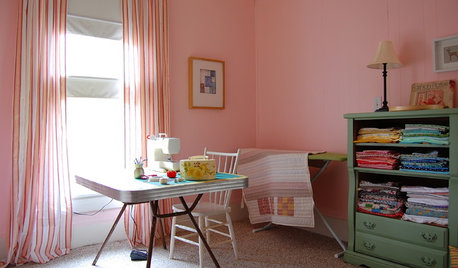
STUDIOS AND WORKSHOPSA Stitch in Time: Creative Sewing Spaces
Sewing rooms have become popular again as people of all ages embrace simple crafts they can do at home
Full Story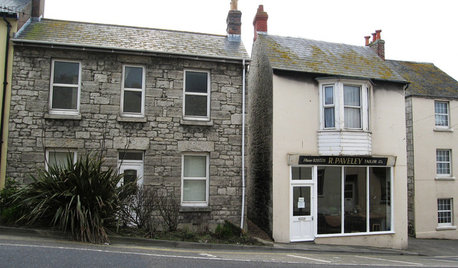
LIFETime Travel to Houzzers' Childhood Homes, Part 2
Catch a glimpse of kit houses, bungalows, Tudors and more just as they were way back when — and listen in on the intriguing personal stories
Full StorySponsored

Embothrium