

A treat, so simple, but so good!
10 years ago
Featured Answer
Sort by:Oldest
Comments (13)
- 10 years ago
Related Discussions
Disease? And if so, how to treat?
Comments (4)The rust color is probably dead leaf. It can be caused by sun, wind or cold. If sun it will hit the top and most exposed leaves most and will affect the center of the leaf. If it is wind cold it will affect the edges of the leaves. Leaf spots have several origins: * Brown, reddish-brown or purplish leaf spots that occur on many cultivars, including R. 'Blue Ensign' and R. 'Mrs. G. W. Leak', are physiological and not disease caused. These spots are generally purplish and are inherent in the cultivar. Environmental stress may increase their appearance. They do no harm to the plant. * Some leaf spots are caused by a virus thought to be a potexvirus, the most common ailment being called Necrotic Ring Spot. The symptoms are reddish-brown rings or spots on the leaves. It generally occurs only on the two year leaves of a few rhododendron cultivars such as R. 'Unique', or on Kalmia latifolia. It also appears on the first year foliage of some R. 'Loderi' clones. Little is known about the disease and a does not seem to spread from one cultivar to another. No control is known or generally necessary. * Leaf spotting can also be caused by chemical injury, such as drift from cleaners, paints, or chemicals used to kill moss on roofs as shown in the photo on the right. Sometimes the results of such injury may not show up for weeks or months. * There are a number of leaf spots or burns caused by fungi such as Botrytis cinerea, Pestalotia rhododendri, Phyllosticta, Septoria and others. Many are secondary infections happening after mechanical damage or environmental stress, such as sunburn, drought, winter damage or windburn. They generally occur during wet weather and many times are self limiting with drier weather. Good sanitation is helpful, so remove brown and fallen leaves. Also provide good air circulation. Spraying with Benomyl or similar fungicide can be useful, but is frequently not necessary. * Young Azalea Leafminers, Caloptilia azaleella: (also known as azalea leafroller) larvae tunnel inside leaves and form elongate blotches in April or May. These blotches may resemble leaf spot diseases. Older larvae exit the tunnels, curl the leaf tip and feed inside the curl. Large populations cause the leaves to turn brown and drop from the plant. Leaves developing brown lesions and eventually the entire leaf will brown and separate from the stem is a symptom of Rhizoctonia Web Blight. It causes dieback of interior leaves of compact tightly-growing azaleas within irrigated landscape beds. Rhizoctonia web blight is often seen during the warmer, humid summer months. Infection begins in the interior of the plant as the fungus survives in the soil or container rooting medium. . The affected leaves often remain matted together by the funguss web-like growth (hyphae) that holds the brown leaves within the canopy. As the temperature cools in the fall, the fungus stops growing and the matted leaves drop from the plant. The disease is only a problem in landscape azaleas that are sprinkler irrigated. Wet foliage and high humidity favor infection. Use drip irrigation or soaker hoses to irrigate landscape beds. Also, remove fallen leaf debris from beneath plants. Fungicides can provide some control but should not be relied upon solely. Apply fungicides at the first sign of disease and continue through the summer months....See MoreGlass Tile Install - So far so good
Comments (15)Lordy lordy. Sad to hear that. Especially over Kerdi, as the fleece surface that the tile adheres to or the polyethylene core that makes up the membrane of the Kerdi can easily be damaged in a demo. Some basics, and I'm not saying you isntaller did anything wrong. Just some basics knowledge here: The thinset should have been "thinset" and not mastic. Mastic is water-soluble and should never be used in a wet area to adhere tile to a substrate. When exposed to air it will dry and harden, when exposed to water it'll absorb water and turn soft again. Thinset would have come in dry powder form and it would be mixed on site, mastic comes in a tub and is premixed. Unmodified thinset cures via hydration. It's a chemical reaction that consumes water. It does not need air to harden. Modified thinsets also need air to fully cure, as the "modified" part of the mix needs to "dry" in addition to the chemical hydration cure that doesn't require air. I'm going to get a bit persnickety here, but I'm also offering generalities and taking a few liberties with my words: Glass tile is usually installed with a modified thinset. Air can't pass through glass. But glass is usually installed over porous cement backer board, and with the combination of cement backer board, small mosaic glass tile sizes, plenty of grout lines, and the "porous" cement board, air can get to the additives in the modified thinset to allow it to dry. For warranty reasons, Schluter specifies what types of thinsets can be used with their products. They usually want an unmodified thinset due to the non-permeable nature of the Kerdi. When I talk to their tech guys, they do allow lightly modified thinsets, but when used judiciously. If you sandwich modified thinset between glass tile and Kerdi, you take away some of the exposure to air. Still, it's not usually a problem. If using modified, most installers will use a lightly modified thinset instead of a heavily modified thinset. What all that means is that it just may take a bit longer for a modified thinset to fully cure and harden in a mosaic glass tile over Kerdi installation. An installer would not want to use a heavily modified thinset to adhere a non-porous large format tile over non-porous Kerdi or Ditra. The pan had a proper preslope, right? I was curious but didn't ask earlier...do you know what the black stuff is that is on the Kerdi on the inside corners of the floor pan and the ceiling? Is that a topical membrane of some sort? I hope the reason for the demo isn't catastrophic and simply turns out to be a hiccup. Probably information that doesn't apply to your specific situation, but what the heck. I typed it anyway... Good luck with this, Mongo...See Moreso so so so so excited!!!!!!!!!!! Pics
Comments (50)The chairs are entirely different story. I bought them off some antique dealers site on ebay from New York. Got all them for like $125 but it cost me a total of almost $600 by the time shipping factored in. Still a deal in "chair world". They had some hideous old gold brocade fabric on them. I refinished and recoverd them myself. They are two arm chairs too. DH was so worried that they wouldn't go with the table. "How can you know" he asked? And I told him... " I just know they'll be perfect... trust me". When they delivered them it was funny. they came at night when my husband 60's style band was practicing at night at my home. These boys have been together for over 40 years... since they were kids. Anyways, the delivery man was a Jamaican man who was not familiar with the music. So I told him to stay and have some dinner. (Had made baked ziti for the boys). "what's baked ziti" he asked. Well I sat that young man down to a big plate with home made bread.He devoured it and kept asking... "this is called baked ziti"... "seconds please"... He got up and sang some wiht the guys and was dancing. I gave a big fat tip and he left a happy kid. DH will no longer question me on my choices at all. He'll say, I never would have picked those colors/whatever... but it looks tremendous....See MoreSo far, So good
Comments (23)I'm just finishing up my 3rd day of the chemo regimen. As we are treating this out of town, I'll be glad to get home. I'm a bit fatigued today, but other than that still doing fine. Again, thank you to everyone for your thoughts and prayers. It means so much to me....See More 10 years ago
 10 years ago
- 10 years ago
 10 years ago
- 10 years ago
 10 years ago
- 10 years ago
- 10 years ago
- 10 years agolast modified: 10 years ago
 10 years ago

Related Stories
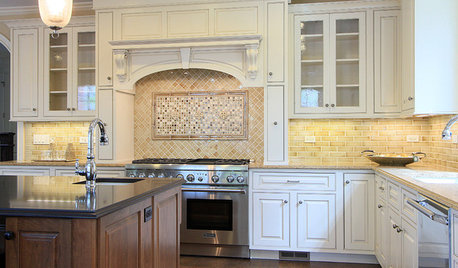
KITCHEN DESIGNThe Cooking Hearth Never Looked So Good
Today's Range Hoods Have High Style to Match Their Function
Full Story
BUDGET DECORATINGSimple Pleasures: Treat Yourself to Cut Flowers
Enjoy priceless beauty with just a few inexpensive stems — and you don’t need fancy vases, either
Full Story
FEEL-GOOD HOMEHow to Treat Your Home to a January Health Kick
Your house is an extension of you, so give it a reboot this month to ensure that it’s fit, happy and ready for the year ahead
Full Story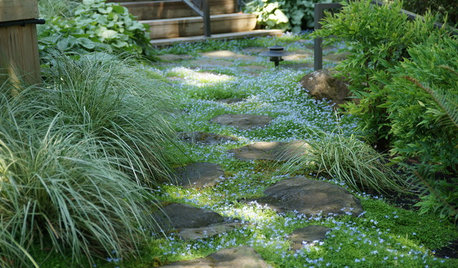
LANDSCAPE DESIGNWhy the Art of Restraint Is So Good for Your Garden
Drifts of naturalized plantings offer the perfect inspiration for your home landscape
Full Story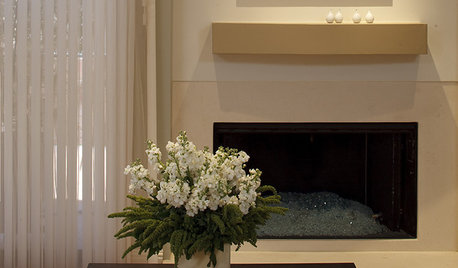
MODERN STYLESo Your Style Is: Minimalist
Leaving chaos and clutter to the world outside, minimalist interiors convey absolute calm. Find out if the look of less is right for you
Full Story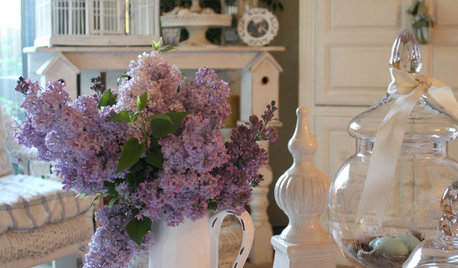
DECORATING GUIDESSo Your Style Is: Romantic
Sweet but not saccharine, romantic design style celebrates the idealistic side of life. Find out if it's the look that makes you swoon
Full Story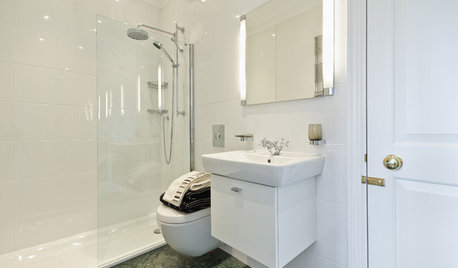
BATHROOM DESIGN9 Ways to Create a Not-So-Standard Bathroom
Make a small bath more interesting with color contrast, natural light, bright tile, transparency and more
Full Story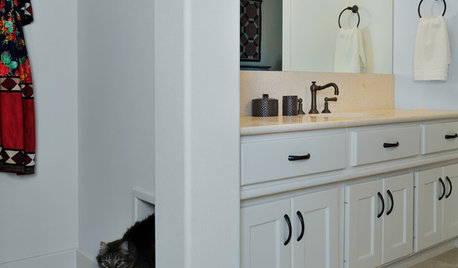
PETSSo You Want to Get a Cat
If you're a cat lover, the joys outweigh any other issue. If you haven't lived with one yet, here are a few things to know
Full Story
KITCHEN DESIGNSo Over Stainless in the Kitchen? 14 Reasons to Give In to Color
Colorful kitchen appliances are popular again, and now you've got more choices than ever. Which would you choose?
Full Story
DECORATING GUIDESSo Your Style Is: Tropical
Easygoing and natural with an exotic allure, rooms designed with a tropical feel exude warmth and graciousness
Full Story
sephia_wa