

Refinance Questions
10 years ago
Featured Answer
Sort by:Oldest
Comments (10)
 10 years agolast modified: 10 years ago
 10 years ago
Related Discussions
refining list - a few more questions
Comments (2)Hi I'm in Colo and my friend who lives in Denver planted Cherokee Purples along with a ton of other heirlooms last year. Of course most of the heirlooms aren't always as productive as hybrids but she had a wonderful crop and the CP was one of her favorites! Another friend of mine in Boulder had an awesome turnout with her Brandywines--that's all she planted, 30 brandywines and each plant had tomatoes falling on the ground. She couldn't keep up. Colorado weather is as you know often unpredictable and weird but I've always had success with any tomato I've ever planted here. I've heard great things about Kellogg's Breakfast but I've never planted or tasted it. Maybe next year, I've got my hands full with too many seeds as it is. Good luck!...See MoreRefinance question! Please advise!
Comments (10)Hi Eosinophil, FIRST of we need to back away from the minutiea... up, up, up to get some bigger picture perspective, like an architect starting with very simple pencil sketches on a blank piece of paper... so that we can THEN come back down to the nitty-gritty and micro-fit the situation to your specifics. What is more important to you; Eliminating your outstanding leverage balances on an accelerating basis, or stopping the monthly bleeding? (These are at counter-points for you currently.) Are you more concerned about the balances on one property versus the other... or about your overall family position on balance? How much accrued liquid cash reserves do you have socked away? How much is your gross family monthly revenue? How much is your current gross (including minimum payments for all debt and homes) family cost of living? You are paying to rent the money you are using for retaining the ownership of the old home (the interest costs.) This interest is a "sunk cost" each month you pay it, if you have no tenants paying you for its useage. Is your continuing ownership giving you *any* appreciation currently? (Keeping in mind that market appreciation is a VERY tentative guess, at best, in the current environment... and if it is negative, you need to honestly figure it that way as well.) IF so, how much is the appreciation when calculated into monthly dollars? How much of your sunk interest costs are being ofset by your potential monthly appreciation gained? Whatever your sunk costs of interest, minus your dollars from appreciation (or plus the dollar costs, if depreciating currently,) is what you can call your "monthly burn." This is the consumption of your net worth you are incurring to continue carrying this property. NOW... this home CAN be sold (gotten under contract with a 30 day escrow period, or less) within a 2-6 week marketing time, AT SOME LEVEL OF PRICE, AND ADVERTISED EXPOSURE. This "price level" is what we call the "quick-sale price value." If your agent were to (honestly) determine the realistic quick-sale price level in that local market... it would likely be lower (perhaps much lower) than where you are holding out right now... and the agent would likely need to ramp up some significant marketing costs... which they might only be comfortable doing with some funding (or guarantees) from you. All of this, naturally, is going to be a revenue burden off of what you were previously hoping to sell your home for. NONETHELESS... this is a numeric exercise that is CRITICAL to do... RIGHT NOW... because it will give you the numerical difference between where you are right now in realistic net worth, were you to do this immediately..... VERSUS how much you are "burning through" on your monthly burn rate if you simply close your eyes, cover your ears, pray really really hard, and just keep waiting it out. KNOWLEDGE AND AWARENESS IS POWER... and you can't make an objective financial decision unless/until you have the actual facts in front of your face to review and think about. ========================================================= OK... soapbox aside..... *IF* you decide that you have reason to believe that simply waiting longer will actually be worth your while in a higher sale price... then there *is* investment property financing available in the range of 3.5% to 4.5% APR, on an interest-only basis, up to 70-75% LTV, strictly on a fully documented (income, employment, assets) basis... which could very significantly reduce your monthly burn overall. Its something I have at my firm... but not to be 'spammy' there may be other brokers (perhaps your regular loan broker) who have it as well. Its not a retail program, so you'd definitely need to connect with your broker for it. ========================================================= ALL THINGS CONSIDERED... (And in truth, we haven't seen enough details to truly consider all things...) I would *PROBABLY* be leaning toward advising you to take a deep breath, swallow hard, plug your nose... and have your agent re-price the home to the local quick-sale price... and get it over with while we're in the summertime "moving & home-buying season." All the best! Dave Donhoff Leverage Planner...See MoreAnother cash-out refinance question
Comments (5)Billl, yes you ask some good questions about plans changing. That's always something to consider, in any endeavor one embarks upon. The credit card, by the way, I already mentioned would be paid off before doing a refi. As for 70% ROI, actually, a number of the trades will be done by us (sweat equity). If we were completely contracting the build out, it would be closer to $140, so I actually considered the 70% ROI when estimating the after-build value. Additionally, though you didn't ask about our particular market, the property is just a couple of blocks from the ocean. The main house has a very nice view, and thus enjoys a preimium in value (and even in this down market, I get unsolicited offers to sell). And the new apartment would have a 270-degree, unobstructable view, again adding a premium that I'm not counting on, but know it's there. If house values continue to stagnate, which is a very real possibility, we can choose to rebuild equity by taking the rental income and using it for accelerated mortgage payments. Your first comment, "I guess some people never learn..." Well, I'll take that with a grain of salt. I too am frustrated by the economic mess. But I also know that to get out of the mess, those that can move forward with building projects, business expansions, and other entrepreneurila activities will be those that are part of turning things around. On this project alone, I would be putting two laid off friends to work (both skilled building tradesmen) for about 4 months. That in turn keeps them able to pay their mortgages. And when neighbors stop by to see the construction project, maybe they'll think of projects at their homes that need doing (especially when they see the quality work these 2 guys do)! And then maybe these guys have enough work so they're making a living again and their homes are not in jeopardy. So maybe they'll buy some new tools to expand their business capabilities, and it continues to spiral upward from there. Just think if people started thinking that way for a change instead of waiting for everyone to wait for someone else to fix the economy?...See MoreChoices! Stay with oil, get gas, propane?
Comments (4)Would help to know cost of each fuel. I'd guess natural gas overall would be best bet with heat pump too. Watch Trane carefully. They are notorious for not delivering the efficiency & capacity you would expect. For example, the 16i "4" ton with that oil furnace gives 43,500 to 46,500 BTUs of cooling, definitely shy of 4 tons which is 48,000 BTUs. In heating, it's even worse giving a pathetic 40,500 to 42,500 BTUs of heat. That means colder air from the register and higher backup costs. SEER from the 16i and that furnace can only reach 14.75 and HSPF is a measily 8.50. You can do MUCH better. The 15i has NO ratings for using with the oil furnace which means no utility rebates or tax credits, not that it would qualify anyway. Most SEER ratings with variable speed gas furnaces are 13.50 to 14.50, well shy of 15 you'd expect from a model so named and far from giving you the tax credits. Most matches you'll find heating capacity closer to 3.5 ton from the 048 unit. HSPF figures are better with the 15 than the 16. So if you want Trane, look at the specs carefully. Odds are you'll never get the tax credits. And prepare to need more backup heat and having cooler supply temps in heating. Not sure on Carrier, doesn't look like they were quoting higher SEER units. At least you tend to get full capacity from them....See More- 10 years agolast modified: 10 years ago
- 10 years ago
- 10 years agolast modified: 10 years ago
- 10 years agolast modified: 10 years ago
- 10 years agolast modified: 10 years ago
- 10 years ago
- 10 years agolast modified: 10 years ago
- 10 years agolast modified: 10 years ago
- 10 years agolast modified: 10 years ago
Related Stories
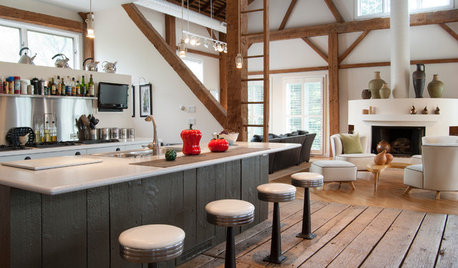
HOUZZ TOURSMy Houzz: Rustic Meets Refined in a Converted Ohio Barn
Intelligent reuse and innovative engineering create a modern family home that’s anything but typical
Full Story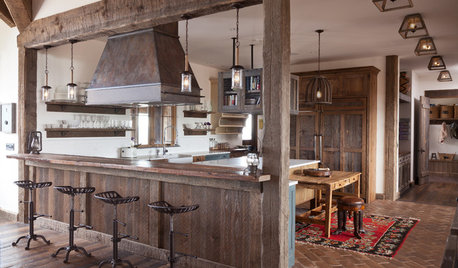
RUSTIC STYLEHouzz Tour: Rough-and-Tumble Refinement
Explore this barn-inspired home that’s designed for an outdoors-loving family
Full Story
HOUZZ TOURSHouzz Tour: Refined Casual Style for a Gracious Farmhouse
Once a rustic weekend cabin, this spacious Georgia home now comfortably accommodates the owners and their guests full-time
Full Story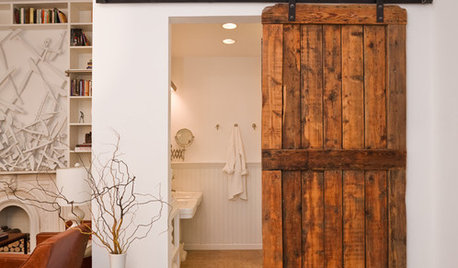
DOORS5 Questions to Ask Before Installing a Barn Door
Find out whether that barn door you love is the right solution for your space
Full Story
WORKING WITH PROS8 Questions to Ask Yourself Before Meeting With Your Designer
Thinking in advance about how you use your space will get your first design consultation off to its best start
Full Story
REMODELING GUIDESConsidering a Fixer-Upper? 15 Questions to Ask First
Learn about the hidden costs and treasures of older homes to avoid budget surprises and accidentally tossing valuable features
Full Story
TASTEMAKERS5 Questions for Heath's Adam Silverman
A studio director brings out-of-the-ordinary dinnerware and home accessories to Heath Ceramics' showrooms. See where he goes for inspiration
Full Story
ROOM OF THE DAYRoom of the Day: A Maine Guest Cottage Steeped in Charm
Once offering eggs for sale, this little guesthouse now offers a serene experience in a refined rustic setting
Full Story
KITCHEN DESIGNHouzz Call: Tell Us About Your First Kitchen
Great or godforsaken? Ragtag or refined? We want to hear about your younger self’s cooking space
Full Story
HOMES AROUND THE WORLDRoom of the Day: Elegant Open-Plan Living in London
This living-dining-kitchen area in a period apartment is light and refined, with just a dash of boho style
Full StorySponsored
User