

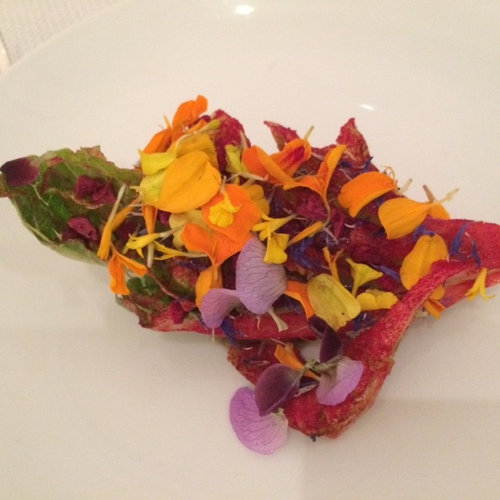
A painterly presentation
10 years ago
Featured Answer
Sort by:Oldest
Comments (22)
 10 years ago
- 10 years ago
Related Discussions
Inner gardens, revisited
Comments (10)Afew quick random thoughts: Ink, I'm glad you didn't stay away. I think the never-ending winter has us all testy. Inner Garden Yes, it is title if you will. Parts of childhood such as wind in a cottonwood tree, the grass (it wasn't really a "lawn") to play crochet or fetch with the dog; memories of special places/vacations; a semi-hidden nook to read or just observe the world go by, memories of special people (Effie's irises etc). Its past, present, and hope for the future, practical and whimsical all tangled up together. As such I expect my inner garden to continue to evolve over the years. And adapt to the visions of others who share my life. For me the garden is intensely personal. I look at the pretty landscapes installed in some yards and that is what they are, installations. That isn't a bad thing. Sometimes they are very functonal and attractive but they are impersonal. My garden will never be featured in a magazine spread. It isn't meant to be. Its mine. Phlox on a humid summer evening and wind crinkling the cottonwood leaves. If only I can incorporate a gooseberry bush because we had them when I was very young and lived in England. Maria...See Moreneed advice on rose photography.
Comments (19)First of all, you do not need to learn how to work with Camera Raw format. That format offers you abilities to do work on an image that a JPG doesn't, but if you mostly want to publish photos on the Web, then working with good quality JPGs is going to be quite sufficient. And yes, digital cameras all produce some degree of "noise" in images. It works pretty much the same way as film does: the higher the light sensitivity (ASA) the more visible the grain or "noise" becomes. So if you are setting your camera with a very high light sensitivity, 1600 ASA for example, the noise ("graininess") in the photos will go way up. Setting the sensitivity as low as you can is always advisable as long as it doesn't compromise your getting a sharp, clear image. Getting a good image depends on three basic factors: 1) shutter speed - the duration of the opening of the shutter must be as short as possible, within reason, to eliminate any motion of the subject or shaking of the camera operator's hands. Generally you want to use a shutter speed of at least 1/125 of a second or less. 2) depth of field - this controls how sharp the photo is by determining how much of the subject from closest-to-camera to furthest-from-camera is within the range of focus of the lens. Depth of field is determined by how small a lens opening (aperture) you set. It is usually a balancing act between shutter speed and aperture to get lots of depth of field and still use a fast enough shutter speed to eliminate any motion. Most inexpensive digital cameras don't allow you much (or any) control over these settings and simply make a decision for you. This isn't always ideal, but you may not get a full range of features from a camera in your affordability range. If possible, look for a camera that does allow you some manual control. 3) image quality settings - set the ISO/ASA ("film speed" or light sensitivity) as low as lighting conditions will allow. I personally enjoy shooting under overcast conditions which I feel best displays the full range of color of flowers and eliminates hard shadows and highlights. On a cloudy day you can often get a much more painterly look than a bright day. This means you may have to set the camera's light sensitivity to a higher setting, like 400 ASA/ISO or even higher, in order to get both a fast shutter speed and reasonable depth of field. (Keep in mind that depth of field is optional for some kinds of photos: sometimes you don't want everything to be sharply in focus from front to back, and so you may want to shoot with the lens wide open = very little depth of field) Under cloudy conditions I will often set the camera sensitivity to 400 or even 800 if necessary. If you are very lucky and the air is very still, you can use a tripod and leave the ASA/ISO setting way down at 100 (or however low your camera allows) and when you do that, you are reducing the "noise" in the image to minimum. I work exclusively with a Nikon D80 and I find that at its lowest ASA/ISO (which is 100) I can get a very large image that shows next to no noise. Even when I turn up the sensitivity to 800, I can still get a very good image with very little image noise. Its only when I turn sensitivity up to 1600 or more that image noise becomes very noticeable. A few other points: Jeri mentioned image editing software. Your needs are probably going to be very basic at the start and so perhaps Photoshop Elements might be all you need. I'm not sure what other tools might be available in the cheap-to-free range. I gather that Google's Picasa offers the basic photo editing tools. See link below. If you are up to grappling with a fairly steep learning curve, there is a free Photoshop type editing suite called The Gimp and it is almost as powerful as the full Photoshop suite, minus a few of the tools and filters. There are plenty of tutorials online to help you learn how to use it. Also, as Cass mentioned, if you are working on an OS X iMac (as I do) then you can do many image manipulations using the built in iPhoto tools. I can't tell you much about iPhoto though, since I use Photoshop CS4 as my tool of choice. If you can get your head around the idea of buying a used camera, you will undoubtedly get a lot more camera for your money. You might be lucky enough to get a DSLR for what you have to spend. I sold my Nikon D70 two years ago for less than half what I paid for it and the person who bought it got a really good deal. It was an excellent camera and I'm sure it still has years of service in it. So, you may want to consider buying second hand. People often sell their current camera to upgrade to a newer, more capable one (as I did) and there is absolutely nothing wrong with the camera they are selling, they just want to move up a level. Finally, if you already have an understanding of the basics of film camera photography, then you already know most of what is important in digital photography. All of the same basic principles apply to both, its just a matter of learning how to use the specific camera controls to get what you need from a digital. No need to be intimidated by digital imaging, especially if you have a friend who cam teach you along the way. Regards, Paul B. Here is a link that might be useful: Picasa...See MoreUnofficial ABB president looking to retire
Comments (150)Breezy I went to Fireclay and Heath Today to finalize my own backsplash. Some info for your consider. Heath tile - several of their glazes have some copper in them. They are all about using traditional natural materials. But this also means that the tile glaze can etch! I tried it with some of the green tiles I had and sure enough I was able to etch a couple of them with lemon juice. I was really disappointed and even considered if I can live with it.. Patina and all that. But I could see the spots in the undercabinet light and DH hated the etches. So reluctantly I have given up the wide hex twist with 3 colors with glossy and matte that I had fallen in love with :( This is not to say that this won't work for you. Not all of their glazes etch. Depending on the colors you want, call Eric their tile manager and see what will work. One more thing - some of their tiles are dark clay body and others are white clay. As the glaze has a lot of dimension, the colors really work better if you select all white clay or all dark clay. Fireclay - Debris series is dark clay body and Vitrail is light clay. Again not advisable to mix tiles between the two. Debris is also a tad thicker tile. Vitrail depending on the color has some crackle in it. It is all organic and not exactly the same. As the tiles have a handmade quality to them, it looked like you can't really get a small tight grout line. Not sure how important this is for you. I finally have decided on backsplash tile from fireclay and have placed my order. They also have this thinner super large format tile that was just awesome. May work in a contemporary kitchen like yours. Lots of zen like colors and you can definitely get small tight grout lines with these. Yolanda who works there is very knowledgeable and helpful. This post was edited by GWlolo on Sun, Mar 24, 13 at 2:55...See MoreTripping the Light Fantastic: An Exhibition of Fine Art Photograp
Comments (1)Down......See More- 10 years ago
- 10 years ago
 10 years ago
- 10 years agolast modified: 10 years ago
- 10 years ago
- 10 years ago
- 10 years agolast modified: 10 years ago
 10 years ago
- 10 years ago
- 10 years ago
- 10 years ago
- 10 years ago
- 10 years agolast modified: 10 years ago
- 10 years ago
- 10 years ago
- 10 years ago
- 10 years agolast modified: 10 years ago
- 10 years ago
 10 years ago



Related Stories
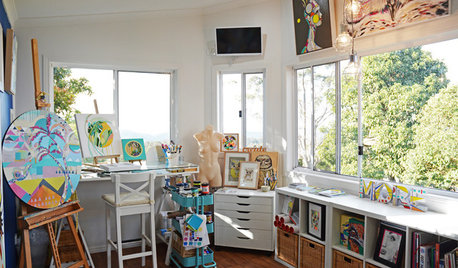
STUDIOS AND WORKSHOPSStudio Tour: A Painter’s View From on Top of the World
This colorful artist’s space in Australia sits up high and opens up to inspiring views of the Queensland rainforest
Full Story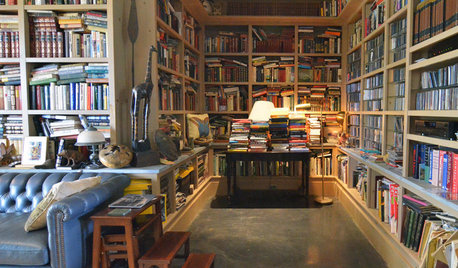
HOUZZ TOURSMy Houzz: Oregon Landscape Inspires a Painter’s Dream Home and Studio
Acres of unspoiled land and abundant natural life surround this special live-work space in eastern Oregon
Full Story
ENTRYWAYSGrand Entry Elements: Newel Posts Past and Present
They once spoke to wealth and class, but newel posts today say more about individual style
Full Story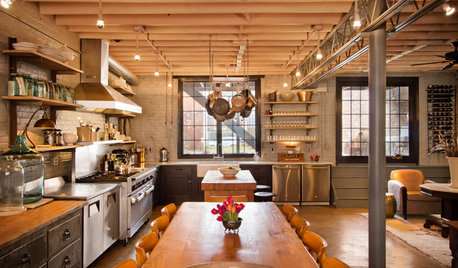
HOUZZ TOURSHouzz Tour: Bootlegging Past, Quirky Supper Club Present
The only crime in this newly bustling home on a Washington, D.C., lot is the sinfully delicious cooking
Full Story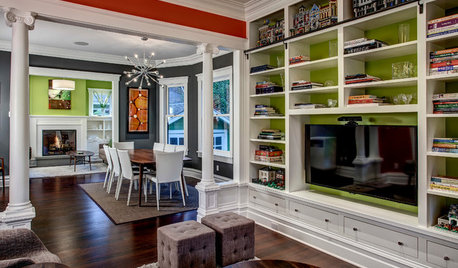
HOUZZ TV FAVORITESHouzz Tour: A Home Built for Lego Play
Candy colored and classically inspired, this remodeled Seattle home combines the best of past and present
Full Story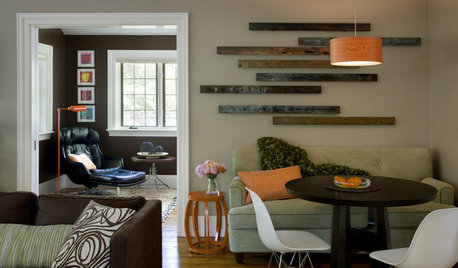

COLORColors of the Year: Look Back and Ahead for New Color Inspiration
See which color trends from 2014 are sticking, which ones struck out and which colors we’ll be watching for next year
Full Story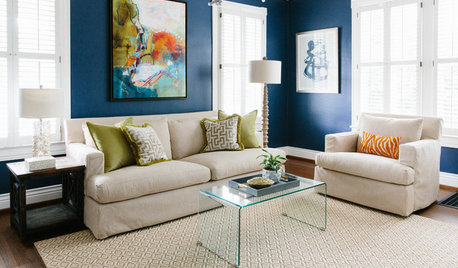
MOST POPULARThe Right Way to Test Paint Colors
Here are 5 key steps to take to ensure you're happy with your wall paint color
Full Story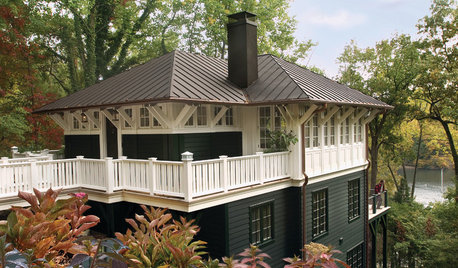
HOUZZ QUIZHouzz Quiz: What Color Should You Paint Your House?
Is white right? Maybe dark blue-gray? Take our quiz to find out which color is best for you and your home
Full Story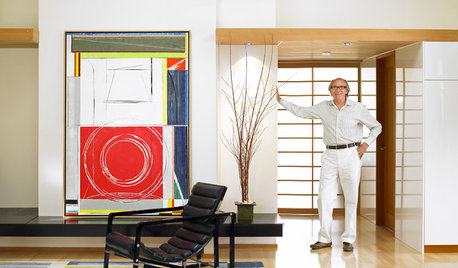
HOUZZ TOURSHouzz Tour: Everything Art Is Illuminated in Canada
Artist Richard Roblin has designed an airy, modern home and studio that's brimming with paintings and contemporary furnishings
Full Story



foodonastump