

I imagine it's not a new concept but I've never seen it before
11 years ago
last modified: 11 years ago
Featured Answer
Sort by:Oldest
Comments (20)
 11 years ago
 11 years ago
Related Discussions
I've never seen a hummer!
Comments (7)Bellarosa - You better believe there are hummingbirds here! Technically only Ruby-throated Hummingbirds breed/migrate through Illinois, but once in a while a migrant might blow in from the west (when I lived in NYC we got all sorts of crazy things in Central Park! Now THAT'S a long way from California!). I put up my first feeder in the spring here in Evanston and had one female for a couple days ... then.. nothing. I took down the feeder until late August - and have had a female visit several times a day until yesterday - when I saw a young male as well. Hard to tell if they're the same birds or just a bunch passing though, as migration has indeed started. I planted Scarlet Runner Bean along our (gorgeous, lovely, glamourous) chain-link fence. I've seen the hummingbirds visit those blooms, and also my Honeycomb Butterfly Bush (which may not be hardy in your area)... I have plans for many more perennial/annual plantings to convince the buggers that my yard is a lush buffet. Now that they know that there's food here, maybe they'll stay NEXT year! Here's a great map showing the northward migration of Ruby-throated Hummingbirds. They really are everywhere! Good luck, Sandy Here is a link that might be useful: Ruby-throated Hummingbird Migration Map...See Morei am in a serious slug quandry that i've never seen discussed
Comments (11)Greenthumbz--Bleach instead of vinegar or ammonia partially because it was at hand, since I keep it around to sterilize tools between diggings. Vinegar and ammonia are okay for spritzing on slugs, but these plants were getting a total emersion bath for an hour, and I didn't want them either pickled or burned. Bleach will also kill off most if not all of the eggs. On using the DE, here is part of an email I sent to someone earlier this week who had a terrible slug infestation. Okay, now to solve your slug problem quickly, cheaply, and organically, three things I strive for in my garden at all times. Go to your local feed store (as in horse and cattle feed) or your local pool supply store, and ask for a large bag of diatomaceous earth. You want the pure stuff, NOT the kind with any added chemicals, or the pelleted kind, just the straight, unadulterated, powdered diatomaceous earth. This is composed of the microscopic skeletal remains of tiny sea creatures, and viewed under a microscope it is very spiky and sharp. Without a microscope, it looks like talcum powder. If a slug touches it, the tiny particles work into its body and kill it. But itÂs harmless to pets, birds, and most other wildlife. It will kill fleas and sowbugs, too, by blocking their breathing apparatus, so it may also do in some of the smaller insects, but mostly itÂs just fatal for slugs. In my garden earthworms are not bothered by DE. Now find yourself one of those parmesan cheese shakers that you see at the local pizza place, or a fine sieve with a handle, or even an empty talcum powder container and fill it with the DE. Shake it around the base of every plant, very close to the base and make a ring around the plant 2 or three inches wide. For plants that are already infested with the slimy critters, shake some right down into the crown of the plant. Then if you are feeling really ambitious, you can also put a line a couple of inches wide around the perimeter of each bed to prevent any more slugs from crawling in. You will want to pull any mulch back from the base of the hostas before applying the DE. I did this in some of my beds 20+ years ago, and still donÂt have any sort of a major slug problem, and I live in the country and have 12 acres of totally naturalized landÂslug heaven. I havenÂt gotten around to doing the newer beds yet, but by now my toad population is such that they deal effectively with most of the slugs. Rain will wash the DE into the soil, and partially off the plants, but there is still enough residue to keep the slugs away, even though it's not readily visible. If you have a really severe problem, you might want to spread the DE around a second time in about a month, then just use it on individual plants that might still have passengers. Feed stores carry DE because itÂs an effective and safe way to deworm sheep, cattle, dogs, horses, and alpacas. Pool supply stores carry it because itÂs used in pool filters. The feed stores are more likely to have or be able to get the pure product, whereas pool supply stores usually stock the stuff with extra chemicals that you donÂt want on your hostas. Both places should be able to easily order a 40 or 50 pound bag for you, and although itÂs probably gone up in price since I last bought it, that size used to be about $10. Hope that helps. It's been almost two weeks now, and the new hostas don't have any new slug damage, so the bleach soak did the trick....See MoreI've never seen this before. Help ID?
Comments (11)Yeah it's new but I'm giving it a lot more light than the Lowes I bought it from did. I'll try to do some more searching. edit: I found a few things that mentioned there are some tall pachyveria hybrids that aren't actually victims of etiolation but just happen to be tall. I will admit it's leaves are quite fragile though. I may update this as time goes on...See MorePlant ID? A strange haworthia I’ve never seen
Comments (17)oof, nice one, NL. You're basically going to try re-rooting the rosette so I recommend sifting the fine particles from your substrate. Then replant in as small a pot as you can get (yes, smaller than the one you are using). The key is to be able to allow the moisture to evaporate quickly when you water. Watering, in this case, should be shallow and but frequent. For faster results, make sure it gets warm during the day (20C-25C) but cold at night (10C to 16C). It's the difference that is important. I do this by putting rooting haworthias right against my pathetically insulated glass doors that should really be replaced by now. But you get the idea. Another technique is to just water the pot then sit it on cotton cloth so the excess moisture can be wicked out. I find there is less room for error this way though; but you might find it easier yourself. Fresh roots look like this: That white bit is the active root, if your plant has those, you will need to target that small nub when you water. If over-watered, that growing root will melt and the plant has to start over. The longer roots in this photo are old ones that are about to whither and are no longer moving water from the substrate to the plant which is why this one was dehydrated. Remember, haworthias are very slow plants. This can take weeks to months....See More 11 years agolast modified: 11 years ago
- 11 years ago
 11 years ago
- 11 years ago
- 11 years agolast modified: 11 years ago
- 11 years ago
 11 years ago
 11 years ago
- 11 years ago
- 11 years ago
- 11 years ago
 11 years ago
- 11 years ago
- 11 years ago
- 11 years ago
- 11 years ago
- 11 years ago

Related Stories
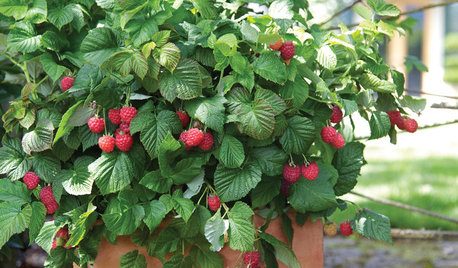
CONTAINER GARDENSPatio-Perfect Berry Bushes Like You’ve Never Seen
Small enough for pots but offering abundant fruit, these remarkable bred berries are a boon for gardeners short on space
Full Story
ARTBring In a View Like You’ve Never Imagined
See how art photographers turn a plain white wall into a magical window with a centuries-old camera technique — and how you could try it too
Full Story
ARTSee the Sky as Never Before, Courtesy of Artist James Turrell
Experience light, space and perception in a whole new way at three museums across the United States — and maybe at your house, too
Full Story
LIFEYou Said It: ‘I’m Never Leaving’ and More Houzz Quotables
Design advice, inspiration and observations that struck a chord this week
Full Story
DECORATING GUIDESThe Dumbest Decorating Decisions I’ve Ever Made
Caution: Do not try these at home
Full Story
FEEL-GOOD HOME12 Very Useful Things I've Learned From Designers
These simple ideas can make life at home more efficient and enjoyable
Full Story
MOST POPULARSo You Say: 30 Design Mistakes You Should Never Make
Drop the paint can, step away from the brick and read this remodeling advice from people who’ve been there
Full Story
FUN HOUZZ16 Creative Paint Color Names We Haven't Seen — Yet
Someday, the namers of new paint colors will finally run out of ideas. We're here to help
Full Story
FUN HOUZZ9 Places for the TV We Haven't Seen — Yet
Tube watching ventures into uncharted territory. How far would you go in your own home?
Full Story
FUN HOUZZWhat Could You Imagine With Lego's New Architecture Kit?
Go ahead, toy around with wild building ideas. With 1,210 all-white blocks at your disposal, it's OK to think big
Full Story

Elmer J Fudd