

Anne_ct and others: Best tick (and insect) repellents
11 years ago
Featured Answer
Sort by:Oldest
Comments (25)
 11 years agolast modified: 11 years ago
Related Discussions
Seeking info on insect repelant planting in the garden
Comments (5)John, I find that as a gardener (ornamental, veggie and orchid), what discourages bad bugs and encourages good bugs is not overfertilizing or overwatering, and watering only in early morning. Too much nitrogen encourages fast, lush, soft growth that pests love to feed on. Then you are stuck trying to get rid of the pests. Using organic, low-number fertilizers, or slow-release synthetics, IMHO, provide less soft growth and fewer pests. Best of all, IMHO, is feeding the soil, not the plants, with compost, and all kinds of organic matter (leaves, grass clippings, coffee grounds, manure, etc.) and let the microbes and earthworms release the nutrients for your plants as they need them. I find this leads to the fewest pests. The only thing I treat in my yard is the tomatoes with Bt (an organic biocontrol agent). Nothing else in my yard or veggie garden gets pests (knock on wood). I guess that's not true. I have some knockout roses with chilli thrips that I am slowly getting rid of as I find other things to put there. That's another lesson too- don't plant things that tend to attract pests to your garden. Grasshoppers come every year and I just stomp those. Another lesson I've learned, is to be tolerant of some pests. As long as they are not decimating your plants, they will attract beneficials to your yard. Frequently, hand-picking or a spray of water from a hose will be enough control. What a great lesson to teach your little one. The circle of life in plants too. In this day and age of global warming and bad economy, recycling and reusing organic materials is a great solution, not only for the health of your garden and wallet, but the health of your community. I just put my neighbor's grass clippings and a few bags of leaves in my veggie garden. About 30 pounds of coffee grounds and 10-15 pounds of soybean meal went in there yesterday. The brown and yellow banana leaves I trimmed were put on the ground and covered with leaves. These are great lessons he will remember and carry on. Anna...See Moreticks, ticks and more ticks
Comments (41)USDA Studies: Ivermectin for Tick Control http://www.ncbi.nlm.nih.gov/entrez/query.fcgi?cmd=Retrieve&db=PubMed&list_uids=8667385&dopt=Abstract Knipling-Bushland U.S. Livestock Insects Research Laboratory, USDA-ARS, Kerrville, TX 78028-9184, USA. Whole-kernel corn was treated with 10 mg ivermectin per 0.45 kg corn and fed at rate of approximately .45 kg/deer per day to white-tailed deer confined in the treatment pasture, whereas deer in an adjacent control pasture received a similar ration of untreated corn. Treatments were dispensed from February through September of 1992 and 1993, and free-living populations of lone star ticks. Amblyomma americanum (L.), were monitored in both pastures using dry-ice traps to quantify nymphs and adults and flip-cloths to assay the relative abundance of larval masses. Control values that were calculated for all ticks collected in both pastures during 1993 showed 83.4% fewer adults, 92.4% fewer nymphs and 100.0% fewer larval masses in the treatment versus control pasture. Serum ivermectin concentrations in treated deer averaged 21.7 and 28.3 ppb during 1992 and 1993, respectively. These values compared favorably with the goal concentration of 30.0 ppb which was anticipated under ideal conditions. This study demonstrates that a freely consumed, systemically active acaricidal bait ingested by white-tailed deer under nearly wild conditions can significantly reduce the abundance of all stages of free-living lone star ticks. http://www.ars.usda.gov/research/publications/publications.htm?SEQ_NO_115=115671 The effectiveness of the endectocide, ivermectin administered daily to cattle infested with all life stages of B. microplus was evaluated. Cattle were treated at dose rates of 25 and 50 mcg of ivermectin per kg of body weight for a period of 21 days. While both ivermectin treatment doses were highly effective (>99% control), the 50 mcg/kg/d dose was more effective than the 25 mcg/kg/d dose against all life stages of the tick. The presence of ivermectin in the blood of the cattle caused high mortality in the ticks, as well as producing dramatic adverse effects in the reproductive capability of the ticks that were able to survive and detach from the cattle. Based on the results of this study, the potential for use of ivermectin and other acaricides with similar chemistries is encouraging. The use of these types of acaricides applied by different delivery systems, such as long-term boluses or medicated feed systems has great promise for future applicability in the Boophilus eradication program.... ...overall control achieved at both doses of ivermectin was >99% against all parasitic stages, the 50 mcg/kg/d dose was more effective (P http://www.afpmb.org/pubs/misc/researchreview2004/4b-Pound.ppt http://live.psu.edu/story/19217 Deer-free areas may be haven for ticks, disease Wednesday, August 30, 2006 -------------------------------------------------------------------------------- University Park, Pa. -- Excluding deer could be a counterproductive strategy for controlling tick-borne infections, because the absence of deer from small areas may lead to an increase in ticks, rapidly turning the area into a potential disease hotspot, according to a team of U.S. and Italian researchers. "Deer are referred to as dilution hosts or dead-end hosts," says Sarah Perkins, a postdoctoral researcher at Penn Stateâs Center for Infectious Disease Dynamics. "They get bitten by ticks but never get infected with tick-borne pathogens, such as the bacteria causing Lyme disease." However, deer are critical to adult female ticks in the last stages of their three-part lifecycle. Ticks use them for a final blood meal before dropping off to produce thousands of eggs, Perkins explains. Currently, health officials believe that removing deer from the equation could disrupt the tick lifecycle and leave fewer ticks to feed on rodents, which, unlike deer, can transfer a range of tick-borne pathogens. Ultimately the tick-borne disease will fade out. However, previous field studies show that removing deer sometimes leads to higher tick densities and sometimes lower, and the outcome seems dependent on the size of area from which deer are excluded. "Very few studies have looked at how removing the deer affects the intensity of tick bites on rodents, and how it relates to the size of the area from where the deer are excluded," explains Perkins, whose findings are published in the current issue of the journal Ecology. Researchers first collected data from published information on tick densities in deer excluded areas ranging in size from roughly 2.5 acres to 18 acres. Next, over a six-month period, they captured rodents from a 2.5-acre deer excluded area in the Italian Alps in a known hotspot for tick-borne encephalitis -- a disease passed to humans through the bite of an infected tick. "From previous studies we found that tick densities decreased in (geographically) large areas and increased dramatically in smaller areas," suggesting that there is a threshold area - from where deer are excluded - for tick populations to either increase or decrease, notes the Penn State researcher. Statistical analyses of ticks on the captured rodents indicated that compared to the control areas, the deer-excluded areas hosted a significantly higher number of nymph and adult female ticks, as well as a high prevalence of tick-borne encephalitis. Because tick-borne encephalitis is transmitted only between ticks feeding on these rodents, the findings suggest how small deer-free areas could quickly turn into a disease hotspot. "This goes somewhat against conventional wisdom. When you remove deer, it does not always reduce the tick population," says Perkins. "If you were to exclude deer from hundreds of acres, tick numbers will fall. But in an area less than 2.5 acres, you are more likely to increase tick density and probably create tick-borne hotspots." Researchers say the study demonstrates how the strategy of keeping deer away may work only for large areas but is likely to amplify tick populations in smaller areas. Fragmented patches of forest and small parks that are off-limits to deer could also turn into a disease reservoir, they caution. "We need to be cautious about keeping deer away from small areas, even peopleâs backyards, as it might only lead to more ticks that are infected with tick-borne pathogens," says Perkins. She adds that forest areas deer consistently avoid also have the potential of turning into a haven for tick-borne disease. Other authors of the paper include Isabella M. Cattadori, postdoctoral scholar, and Peter J. Hudson, the Willaman Professor of Biology, both at Penn State University, and Valentina Tagliapietra and Annapaola P. Rizzoli, Centro di Ecologia Alpina, Italy. A grant from the Autonomous Province of Trento, Italy, supported this work. The Penn State Center for Infectious Disease Dynamics is at http://www.cidd.psu.edu/. Contact Amit Avasthi axa47@psu.edu http://live.psu.edu 814-865-9481 Contact Vicki Fong vfong@psu.edu http://live.psu.edu 814-865-9481 The Pennsylvania State University © 2006 http://www.wildlifeprotein.com/index.cfm/fa/categories.main/parentcat/16705...See MoreTicks,ticks,ticks!
Comments (37)To quote the sage advice of the Springfield, MO band, "Big Smith": "If we didn't have those bugs attachin', we'd never know the joy of scratchin'" :) My job requires me to be miles in the wildnerness all day, nearly every day, all summer long. So, I just CAN'T use the poisons because I'd constantly be bathing in them. We just duct tape the bottom of our pant legs to our hiking boots, tuck in our shirts, and keep a roll of duct tape handy for seed ticks. Otherwise, we just enjoy the glorious feeling that comes from scratching those bites! Makes us know that it's truly summertime! Generally, we have between 1 and 1000 ticks on us by the time we get home, but we're happy and tired and know we're ALIVE! I know, I know, this isn't really helpful advice to most. But really, aside from the slim chance of a disease, there's really a lot of psychology involved in the desire to be rid of the "pests". Also, FWIW, I've heard that a tick must be attached 6-12 hours before a disease can be transmitted, presumably because the tick must be filled with some blood to have it sqeezed/regurgitated back into your body during removal. So, if you just keep up with picking them off.......See MoreInsect repellents...???????
Comments (3)I have, but I like to make my own with Avon's SSS (Skin So Soft). I don't want the Deet. Here's the recipe: 1 Cup SSS 1/2 Cup vinegar 1/2 Cup water 1 teaspoon Eucalyptus Oil Put in a spray bottle and use the setting for a fine mist. It'll need to be shook each time you use it. I like the smell better than the other insect sprays. Leslie...See More- 11 years ago
 11 years ago
- 11 years agolast modified: 11 years ago
- 11 years ago
- 11 years ago
- 11 years ago
 11 years ago
- 11 years ago
- 11 years ago
- 11 years ago
 11 years agolast modified: 11 years ago
- 11 years ago
- 11 years ago
- 11 years ago
- 11 years ago
- 11 years ago
- 11 years ago
- 11 years ago
 11 years ago
- 11 years ago
- 11 years agolast modified: 11 years ago
- 11 years ago

Related Stories

EARTH DAY5 Ideas for a More Earth-Friendly Garden
Consider increasing the size of garden beds, filtering rainwater and using plants to reduce energy use
Full Story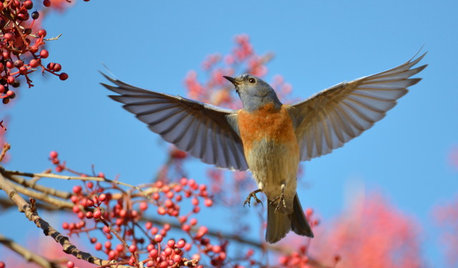
GARDENING GUIDESHow to Bring the Joy of Bluebirds to Your Garden
Attract these beautiful songbirds with nesting habitat and food sources, including berry-producing trees and shrubs
Full Story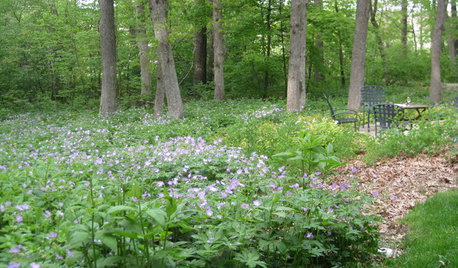
GARDENING GUIDESWe Bust 4 More Native Plant Myths
Have you been taken in by these fallacies about gardening with native plants?
Full Story
HOUSEKEEPINGHow to Clean and Care for Your Mattress
Find out what you should do to protect your mattress from dust, moisture and stains
Full Story
GARDENING GUIDESTop 10 Native Plants for the Northeast
For a low-maintenance, wildlife-friendly landscape, use native plants adapted to the climate and range of soils in the Northeast
Full Story
MOST POPULARHow to Get Rid of Those Pesky Summer Fruit Flies
Learn what fruit flies are, how to prevent them and how to get rid of them in your home
Full Story
GARDENING GUIDESLessons in the Rewards of Selfless Gardening
Let go of gardening for your own vision and watch the garden’s own true vision come forth
Full Story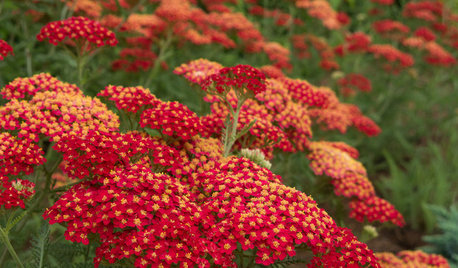
GARDENING GUIDESTop 12 Summer-Blooming Perennials for Deer-Resistant Drama
Can you have garden color, fragrance and exciting foliage with hungry deer afoot? These beauties say yes
Full Story
HOUZZ TV FAVORITESHouzz TV: See How Early Settlers Lived in This Restored Pilgrim House
Passionate restoration and preservation efforts give a 1665 home an honored place in the present
Full Story
CONTAINER GARDENS7 Deer-Resistant Flowers for Your Summer Containers
Grow these as protection for edibles or just for their colorful beauty — deer might not like them, but everyone else will
Full Story


terilyn