Purple Martins still laying; Tree Swallows hatching,
11 years ago
last modified: 11 years ago
Featured Answer
Sort by:Oldest
Comments (8)
- 11 years ago
Related Discussions
Tree Swallows
Comments (27)I went out today to check the TRES house to see if another egg had been laid. As I stood next to the house, I could hear the Mother flitting about inside. So I knocked on the side of the house to see if she would fly out. She stuck her head out and looked right, then left where I was standing. She staired at me for maybe 30 seconds (as if to say, "yes, may I help you"). She disapeared back inside. Again I knocked. She stuck her head back out and looked straight at me for another 20 to 30 seconds. She went back in, so I opened the box and looked in with my mirror. She was hunkered down on those eggs and nothing I could do was going to pry her off. She had some real moxie, some real chutzpah. I closed the box and walked back to the house. I am still smiling and laugh out loud every time I picture this in my mind. Can you imagine the nerves of steele it took for this little bird to protect her eggs from this big hulking monster (me) looking at her and her eggs. What an inspiration and life lesson these little birds can teach us. Phil...See MoreMy Controller\Purple Martin Guardian
Comments (2)Sounds and looks like a neat place. I have never been birding outside the United States but that looks neat. Thanks for the tip. I wonder if there are starlings there?? Probably darn it grin..suckers have spread all over the globe now it seems except like maybe Antarctica or the far north. I wish they would all go there from the United States anyway and maybe freeze solid before they realized they went too far south. My trap had another one in it this very morning and it was great to see him behind bars as I sipped my morning coffee while watching my now 20 martins all over the gourds smile...Mike...See More5 Purple Martin Photos
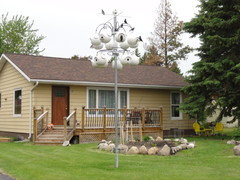
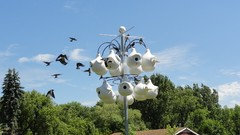
Comments (11)Indulge me folks; this one's going to be long. I'm going to answer the questions 'cause I just luuuuve talking about my Purple Martins. I love all birds, of course, but these guys are my main focus for the couple of months they're here. SheilaJoyce ~ There is a double pulley system on top of the 14' tall pole. The white rope runs around one pulley and attaches to the top of the lead weights inside the pole. The rope also runs inside the hub (the square black/white box that holds all the arms) and down to the ground. (It's called the EZ Lift system; you can email me for more info.) When the rack (hub plus arms) is "up" I can pull on the white rope (without much force) and the rack glides down the pole until the gourds are at my chest level. I can then check and maintain the nests without risking harm to the eggs or chicks and without have to use a step ladder. Pulling on the black rope raises the hub back to the pole top and adjusts the orientation of the gourds. They have to always be pointing the same direction. Decoys are used when trying to lure in a PMs to a new site. I have several but I only had to use them the first season here. People can check the PMCA site to learn when the martins' migration is expected in their area. Prepare the houses/gourds, etc. and set out the decoys before that date. I also play a CD of PM "Daytime Chatter." It makes the site look and sound occupied to overhead PMs. Sometimes they're so far away and/or so high you might now see/hear them, but they'll see/hear the site. People attract colonies all the time without decoys but it just gives you that little edge. I've loaned my CD and decoys out to three newbie "landlords" to help them start their colonies. I left this one decoy up to help confuse the hawks. Hawks are a native bird, also protected by the migratory bird laws, but they can wreck havoc on a colony. Many times, if a site it attacked by hawks, and they lose many chicks, the PMs will not return to that site the next year. PMs also leave the colony for hours at a time to hunt their flying insects. That's when the chicks are in the most danger from hawk attacks. I've seen a sharp-shinned hawk attack the decoy. Slammed right into it, knocked himself sideways, and then flew off to a tree. After smoothing out his feathers, and his pride, he left for feathery pastures. He now thinks the birds at this site are indestructible. The decoy survived! LOL McMann Aren't all the native birds wonderful! You don't have to do anything to enjoy them. Putting out seed, or suet, or nectar, is a great way to lure them in for easier viewing. Offering a birdbath that is kept filled with clean fresh water is another very low stress way to help the birds, and little critters, and bring them in closer so you can hear and see them. I've lived in places where all I could offer the birds was water. Even then I had more varieties around me than I could have imagined. I became interested in the Purple Martins, and Blue Birds, when I was reading about how close they came to extinction. The blue birds even more so than the Purple Martins. Both species have suffered loss of habitat and predation by the two non-native birds that are increasing to the point of wiping out the native cavity nesters...that would be the European Starling and European House Sparrow. I've been blessed with good luck with the PMs. Except for my first season (2003) I've had large clutches of eggs and a nearly a 100% fledge rate. (A bird is a successful fledge once it survives to the right age to leave the nest, and does so, under it's own power.) I learned about the PMCA and started reading, and studying, and saving my money to purchase a gourd rack. I joined two private PM forums filled with experienced landlords that offer so much encouragement and decades of experience of what does, and doesn't, work. Like me, they're all striving for larger percentages of fledged PMs. I've also put up blue bird houses, but they're "trickier" than the PMs, at least for me. I'm still trying; one of my friends joined in the BB quest. She now hosts two or three pairs, who raise two and three clutches, every year. And she lives in a 300 home suburb with a tiny yard! I'm so proud of her. She does have the houses in the right sites; she controls EUST and EUHS, and offers water for the BBs. Leslie I love your site, and aren't your pinkies a beautiful sight! I love the photos you sent, too! There are two camps in the PM world, LOL. Those that do use Sevin, and those that don't. I use it. I use it at least three time in the season and then again if I see even one mite. It's all a numbers game. Get the adults healthy and safe and let them produce every egg and raise every chick that's possible. Mites kill birds. They weaken the adults so they can't hunt as efficiently to feed the chicks. They cause anemia and blood loss to the chicks. They cause chicks to jump out of the nest before they can fly. They kill chicks. So, when I make the pre-nests, before the martins arrive, I sprinkle a scant teaspoon of Sevin on top of each nest. The new birds arrive, go in the gourd, scuttle around, and any mites they picked up along the route are dead. I do a nest change when the chicks are around 10 days old and again when they are 18 days old. (Don't open a nest after the oldest chick reaches Day 18 though or you may cause premature fledging. The chicks will most likely die.) Take out the chicks, remove all the old nasty nests, add new cedar shavings, mix in a teaspoon of Sevin, ( I mix this in good so the chicks aren't in just one concentrated area of Sevin) replace the chicks and raise the gourds. No, this doesn't bother the adults at all. Some of them sit on the perching arms, a couple feet from my head while I do it. Others zoom around and "flog" me. They have imprinted on humans since before the time of Columbus when the east coast native Americans set gourds up on poles around their camps and villages to attract the birds. I've had females that won't leave the gourd even when I'm checking the nests and counting eggs/chicks. Since you're using box type houses, and probably don't have the volume of nesting material I use, I'd say 1/2 to 3/4 teaspoon of Sevin would do the trick. It's up to you. I've had mites in only one gourd for the all the time I'm managed the PMs. When mites get in one gourd, they can't move out and along the metal arms to the next gourd. In most houses, they can crawl from nest to nest quickly and easily. It's very important to keep a close eye out for mites if you're offering apartment type housing. If you don't want to use Sevin you should still do the nest changes. This gets rid of most of the mites. You might want to do nest changes more often if you're not using Sevin. Granlan Thanks; you're kind. This has been the Little House of Horrors and The Money Pit combined. If we're ever finished, and if my health improves, I'm hoping for "cute" and "serviceable." I'm learning a lot as we slowly muddle through all the fixes. The front of the house, and the front yard, are totally flat and boring. The house borders on "ugly." Heck, it might be firmly imbedded there. But it does host my PMs and scores of other birds in the feeder tree. I am thankful to have a place to live and enjoy my birding. Connie I know they're in your area. I'm in touch with PM "Landlords" all over the country. I'll try to locate some closer to you if you want to check out their sites. Most of us are so happy to show our birds off to others. I meet people all PM season long, looking at and asking questions about the gourds and birds. MaryAnnTX Texas is a PM Paradise. Your birds will arrive, nest, fledge, and start the migration back to Brazil before my eggs have hatched. I find it amazing. Someone told me the PMs seem to be a lot of "work." They're really not, and it is a labor of love. I do remove, empty, and clean, and store all the gourds in September, after the last of the Canadian PMs migrate through. I want them to see my site, too! I have to make the pre-nests and rehang them in April. That's the two biggest chores. I do two or three at a time, as time and health permit. I do a daily walk-around, checking the ground under the gourds for any signs of hawk or owl attacks. I also fill my feeders and bird bath while the colony is "in" so they get use to seeing me. Nest checks take less than 30 seconds per gourd; nest changes take a couple minutes, tops, per gourd. The rest of the time is just enjoying, watching, listening, observing....See MorePurple Martin eggs, nest check update
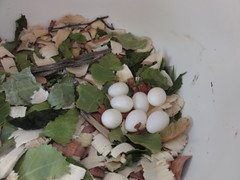
Comments (3)Carolyn--glad to hear from you and yes this weather is doing a number on nests, birds and people. Guess you have heard about all the flooding in Minot. It has been so interesting driving there. I have had to go in twice a week for therapy on my back after slipping early March on ice. NOT FUN!! Anyway, I think I too have lost a nest from a Robin, but not sure it is crows or a neighbors cat. Dumb bird just would not stay on the nest and keep quiet. It is a wonder that any Robins make it. I don't have the houses out that you due, even though son in law said I could. He has been so busy with DD getting chemo treatments, his work in the city, late snows etc. Oh well, there is always next year. We just barely got the garden in. Thanks for keeping us updated. Marie from the other end of ND....See More- 11 years ago
- 11 years ago
- 11 years agolast modified: 11 years ago
- 11 years ago
- 11 years ago
- 11 years ago
Related Stories
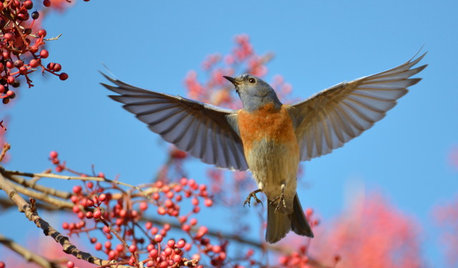
GARDENING GUIDESHow to Bring the Joy of Bluebirds to Your Garden
Attract these beautiful songbirds with nesting habitat and food sources, including berry-producing trees and shrubs
Full Story
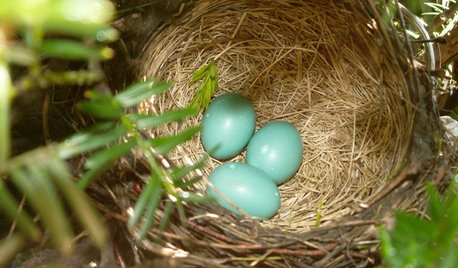
GARDENING FOR BIRDSWhat to Know About Birds Nesting in Your Yard
Learn how to observe, record data and help ornithologists with NestWatch’s citizen science project understand bird trends
Full Story

TRAVEL BY DESIGNTravel Guide: Austin, Texas, for Design Lovers
You'll find fantastic food along with incredible art and architecture in this capital city, deep in the heart of Texas
Full Story
FARM YOUR YARDHouzz Call: Show Us Your One-of-a-Kind Chicken Coops
Do you have a fun or stylish backyard shelter for your feathered friends? Post your pictures and stories in the Comments!
Full Story
GARDENING FOR BUTTERFLIESBe a Butterfly Savior — Garden for the Monarchs
Keep hope, beauty and kindness alive in the landscape by providing a refuge for these threatened enchanters
Full Story
GARDENING GUIDESBackyard Birds: Invite Entertaining Hummingbirds Into Your Garden
Hummingbirds — unique to the Americas — zip through open landscapes seasonally or year-round. Here’s how to attract them
Full Story

SAVING WATERHouzz Call: Are You Letting Go of Your Lawn?
Many facing a drought are swapping turf for less thirsty plantings. If you’re one of them, we’d like to hear about it
Full Story

HOUSEPLANTS8 Essentials for Healthy Indoor Plants
Houseplants add so much to our homes — and can thrive when grown in the right conditions. Keep these tips in mind
Full Story

PETSHouzz Call: Send in the Design Cats
Post your best photo of your cat at home, in the garden or with you in your studio. It could be published in a featured ideabook
Full Story
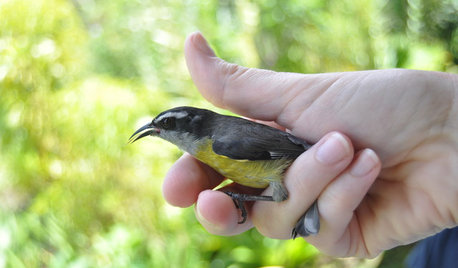
GARDENING FOR BUTTERFLIESBring on the Birds: Natural Habitat Ideas for Gardens of All Sizes
Provide nesting, watering and perching spots inspired by the Costa Rican jungle and watch the birds flock on over
Full Story


caroline94535Original Author