

Rice wrappers/summer rolls - what am I doing wrong?
11 years ago
Featured Answer
Sort by:Oldest
Comments (29)
 11 years ago
- 11 years ago
Related Discussions
rice paper wrapper trays
Comments (11)I think you misunderstood me. I am not looking for rice paper WRAPPERS, I am looking for the TRAYS that are used to hold a single wrapper once it's been wet down and before one rolls them. Below is a picture of what I'm talking about. I want exactly this style, though other colors are acceptable. I am looking for an ONLINE source. I have gone to all the local asian groceries I can find and no one is carrying these or willing to order them for me. For those who haven't seen these before... You put a rice paper wrapper on each tray. The tray has small bumps on the bottom around the edge to make it sit up slightly from the tray beneath it. Then you wet down a bunch of wrappers at once. Then set a stack of several trays on a plate, bring them to the table with all the other fixin's and everyone gets to make their own special spring rolls with their favorite ingredients! I know this is a little esoteric compared to the usual topics here, yet I'm hopeful someone will be able to point me in the right direction to an online, retail vendor. Thanks in advance for any leads! Here is a link that might be useful: rice paper wrapper TRAYS...See MorePie Crust - What am I doing wrong?
Comments (33)Lard has a larger fat crystal than other fats, which is one reason it works so well in pastry. Butter gives great flavor but has a lot of water in it and it melts quickly. The combination of lard and butter in pastry is a great twosome. When I use coconut oil (frozen and grated on the large hole on my box grater), I can reduce the amount of fat by about 25 percent, especially when using pastry flour or milling soft wheat or low-gluten spelt into flour to use for pastry. Good pastry is a combination of tenderness and flakiness and each characteristic is developed differently. Pastry is all about reducing the gluten development in the flour, so choose flour (pastry flour or Southern All-Purpose flours like Martha White, White Lily, Gladiola, Red Band) that has a low protein/gluten content to begin with as a great way to reduce gluten-development up front. If you want more tender pastry while using all-purpose flour you can add a little more fat and add an acid ingredient. Divide the cold fat in two portions and mix one half in the flour until it's very finely mixed. This will coat the flour so it develops the gluten in short strands (hence short-crust pastry) when the liquid is mixed in and will give a tender crust. Quickly add the remaining fat and keep it in larger blobs. When the heat of the oven melts the blobs of fat the steam will raise those layers in the pastry we recognize as a flaky pastry. Vinegar in a recipe is another way to decrease the gluten-development. Adding an acid brings one more tenderizer into play. "Acids soften gluten, breaking apart gluten strands and keeping the pastry tender." When eggs are used in a pastry recipe it is best used for something like a meat pie. The protein from the egg will reinforce the structure of the pastry, making it strong enough to hold a hefty filling. When liquid vegetable oil is used to make pastry it is considered a "warm fat", which coats each particle of flour so completely than no gluten develops. Oil pastries are very tender and tend to be more mealy than flaky since you don't have steam raising those flaky layers. Oil pastry is generally easier to handle and is easy to roll between two sheets of waxed paper. It's neither right or wrong what type of pastry you make - it's just one of those cooking/baking choices we make - BUT - as a general rule of thumb don't take an oil pastry to the fair because it will tend to get judged down because they rarely come up to judging standards. If a sticky dough that is hard to roll-out is your problem, you have too much gluten developed - probably from adding too much liquid and/or using flour that has a high protein content. Northern all-purpose flours like King Arthur and Robin Hood really don't make good pastry because of the high amount of protein. Add as little water as possible!!! As soon as lumps of dough stick together during mixing, stop mixing and adding water. It takes very little extra water, as little as 1/2 teaspoon, to quickly toughen the dough. -Grainlady...See MoreVietnamese Summer Rolls
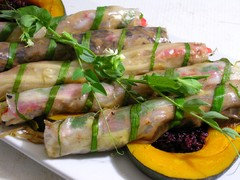
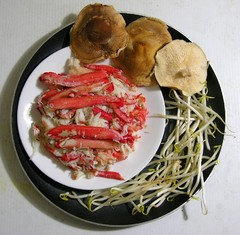
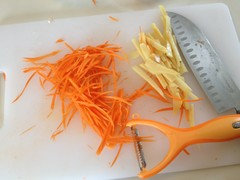
Comments (43)Hi Lars Vietnamese Spring Rolls ingredients 1 recipe Shrimp Filling or Chicken-Crabmeat Filling 1 recipe Lime Dipping Sauce 1 12-ounce bottle warm beer 7 to 9 8-1/2-inch-diameter rice papers 1 head bibb or Boston lettuce, finely shredded Snipped fresh cilantro Snipped fresh mint leaves Snipped daikon (Oriental white radish) directions Prepare Shrimp Filling or Chicken-Crabmeat Filling. Prepare Lime Dipping Sauce; set aside. Pour beer into a pie plate. Carefully dip rice papers into beer, one at a time. Place papers, not touching, on clean, dry kitchen towels. Let soften for a few minutes until pliable. Place 1/4 cup shredded lettuce on bottom part of each rice paper. Place about 1/3 cup filling on the lettuce near the curved edge of the paper. Fold in ends. Beginning at that edge, tightly roll up the rice paper. Place, seam side down, on a plate. Cover with a damp towel. Repeat with remaining filling and papers. Cover and chill up to 2 hours. Diagonally cut each roll in half crosswise. Transfer spring rolls to a serving plate. Serve with bowls of Lime Dipping Sauce, cilantro, mint leaves, and shredded daikon. Makes 14 appetizers. Shrimp Filling: In a bowl pour enough hot water to cover 1 ounce rice sticks and 1 dry wood ear (cloud ear) mushroom. Let stand for 30 minutes to soften. Heat 1 tablespoon cooking oil in a wok or medium skillet. Add 1 tablespoon chopped green onion and 4 minced cloves minced garlic; stir-fry for 30 seconds. Add 1/4 cup shredded carrot and 1/2 teaspoon sugar; stir-fry for 1 minute. Remove pan from heat. Drain rice sticks and wood ear; finely chop. Add to vegetable mixture. Stir in 8 ounces finely chopped, cooked, peeled, and deveined shrimp and 1 tablespoon fish sauce. Chicken-Crabmeat Filling: In a bowl pour enough hot water to cover 1 ounce bean threads (cellophane noodles) and 1/2 ounce dried black Chinese mushrooms. Let stand for 30 minutes to soften. Heat 1 tablespoon cooking oil in a wok or medium skillet . Add 6 ounces finely chopped skinless, boneless chicken breast; stir-fry for 2 to 3 minutes or until no longer pink. Push to side of wok. Add 1/4 cup chopped onion and 1 minced clove garlic; stir-fry for 1 minute. Remove from heat. Drain, remove cartilage, and flake one 6- or 7-ounce can crabmeat, or thaw, drain, and flake one 6-ounce package frozen crabmeat. Stir crabmeat and 1 tablespoon fish sauce into chicken mixture. Drain bean threads and mushrooms; finely chop and add to chicken mixture. Lime Dipping Sauce: In serving bowl combine 1/2 cup fresh lime juice, 6 tablespoons fish sauce, 6 tablespoons water, 2 tablespoons sugar, 3 minced cloves garlic, and 2 seeded and minced red chili peppers. Let stand for 30 minutes to 1 hour before serving. Makes 1-1/3 cups. Here is a link that might be useful: vietnam things to do...See MoreWill I ever figure out chicken breast?...What am I doing wrong?
Comments (43)I just cooked chicken breasts to take to our church to be made into pounds and pounds of chicken salad for our Christmas fundraiser. Here's the method I used...it worked perfectly. How To Cook Moist & Tender Chicken Breasts Every Time What You Need Ingredients 1 to 4 boneless skinless chicken breasts, of similar size Salt and freshly ground black pepper 1 tablespoon olive oil, unsalted butter, or combination of both Equipment Heavy Mason jar or wide drinking glass Wide (10-inch) sauté pan with lid Tongs or spatula Instructions Flatten the chicken breasts: Pound the chicken breasts to an even thickness with the bottom of a wide jar or glass. You can also (carefully!) use the handle of a heavy chef's knife. Season the chicken breasts: Lightly salt and pepper the chicken breasts. Prepare the pan: Heat the sauté pan over medium-high heat. When it is quite hot, add the olive oil (or butter, if using). Swirl the pan so it is lightly covered with the olive oil. Cook the chicken breasts for 1 minute without moving: Turn the heat to medium. Add the chicken breasts. Cook for just about 1 minute to help them get a little golden on one side (you are not actually searing or browning them). Flip the chicken breasts: Then flip each chicken breast over. Turn the heat down to low: Turn the heat to low. Cover the pan and cook on low for 10 minutes. Cover with a tight-fitting lid. Set a timer for 10 minutes, and walk away. Do not lift the lid; do not peek. Turn off the heat and let sit for an additional 10 minutes: After 10 minutes have elapsed, turn off the heat. (If you have an electric stove, remove the pan from the heat.) Reset the timer for 10 minutes and leave the chicken breasts in the pan. Again, do not lift the lid; do not peek. Remove lid and take temperature: After the 10 minutes are up, take the lid off, and your chicken is done. Make sure there is no pink in the middle of the chicken breasts. If you want to be absolutely sure it is cooked, you can use an instant-read thermometer to check (the chicken should be at least 165°F). Slice and eat. Store any leftovers in a covered container in the refrigerator. Here is a link that might be useful: How to cook moist, tender chicken breasts every time...See More- 11 years ago
 11 years ago
 11 years ago
 11 years ago
 11 years ago
- 11 years agolast modified: 11 years ago
 11 years ago
- 11 years ago
- 11 years ago
- 11 years ago
- 11 years ago
- 11 years ago
 11 years ago
- 11 years ago
- 11 years ago
- 11 years ago
 11 years agolast modified: 11 years ago
- 11 years ago
- 11 years ago
- 11 years agolast modified: 11 years ago
- 11 years ago
- 11 years ago
- 11 years ago
- 11 years ago
- 11 years ago
- 11 years ago

Related Stories

LIFEHouzz Call: Where (and What) Are You Reading This Summer?
Whether you favor contemporary, classic or beach reads, do the long and lazy days of summer bring out the lit lover in you?
Full Story
KIDS’ SPACESOh, Baby! 12 Ideas to Get a Chic Nursery Rolling
Nest to your heart's content with these starting points for gorgeous nursery designs
Full Story
SMALL HOMESHouzz Tour: Rolling With Simplicity in a Tiny House on Wheels
Just 240 square feet, this California home encourages efficient living — but there’s still room for yoga
Full Story
WALL TREATMENTS11 Ways to Roll With Wallpaper All Over the Home
Ditch the misconceptions and latch on to some great ideas for decorating your walls with patterned, textural and colorful wallpaper
Full Story
FUN HOUZZ14 Things You Need to Start Doing Now for Your Spouse’s Sake
You have no idea how annoying your habits at home can be. We’re here to tell you
Full Story
INSIDE HOUZZUsing Houzz: Create a Home To-Do List
See how to use an ideabook to keep track of your home projects this year
Full Story
MOST POPULARHow to Get Rid of Those Pesky Summer Fruit Flies
Learn what fruit flies are, how to prevent them and how to get rid of them in your home
Full Story
FUN HOUZZWhat You Do When There’s No One Around
Ice cream binges, air guitar concerts, napping in the closet. Houzzers worldwide disclose their quirky secret indulgences
Full Story
GARDENING AND LANDSCAPING9 Ways to Enjoy Gardening More This Summer
Catch the rain, go vertical, add a gabion, grow vegetables out front and more
Full Story
ENTERTAININGHow to Welcome Summer Weekend Guests
Thoughtful touches and smart planning will help make your visitors feel at home
Full Story
petalique