

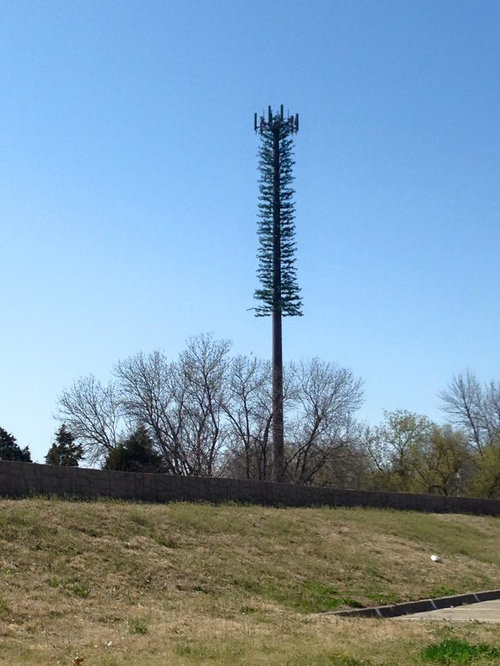
Non-native conifers I have been seeing around
11 years ago
Featured Answer
Sort by:Oldest
Comments (18)
- 11 years ago
Related Discussions
Q's re: Monarch toxins and non-native milkweeds
Comments (7)Hi Steve et al, (is that right by the way, or did I just pull that out of a hat?) I had no idea that I was bringing up the question at all in my remark about A. tuberosa. I was only mentioning that I heard that A. tuberosa was not as toxic as some of the other popular milkweeds and that I had never been able to get it to grow anyway so I gave up on it years ago. I wondered whether you had it growing yourself or whether you might have been confusing it with curassavica which I have all over the place. But the question you raise is interesting though I have no knowledge of the subject and never thought about it until you mentioned it above. At this point I wouldn't lose any sleep over it at all since it seems to be used by so many people successfully with monarchs for years. But monarchs are not as easy to rear for me and I think they are susceptible to so many forms of predation that I often leave them outside when I find them because I hate to see things die. But if there is truth to the allegations about native vs. non-native I would definitely like to know. I grow two species of native milkweed but to be honest with you they are a real pain because they appear too late for the spring migration and often go dormant before the fall migration. So what good is that. So I just have at least five or so species and let the adult butterflies pick out their own choice. They definitely choose the physocarpa and curassavica over any of the others. As far as the notion that A. tuberosa might be invasive out here in CA, I seriously doubt it because tuberosa likes rich and well-drained soil and the only place you would find that out here is in bags at the local nursery and it's quite expensive. I doubt most tuberosas could afford it. On top of that tuberosa does not do well in pots or so the mail order catalog indicates. At least it never worked for me....See MoreHave you been hunting for natives?
Comments (15)Its a big world and everybody on it has a different viewpoint - all of them valid. When I take a deep view of the issue it has parallels to other nature/environmental conflicts and the ethics of ownership of art and artifacts. When I was younger I collected a lot in the wild, both plants and animals. Over time my poor track record for success calmed down my wish to grow everything. Now I only collect something that I really think I can grow. I prefer to take cuttings and whereas in the past I would take an obscene amount of cuttings, now I only take a few (you could call this pruning!). I try not to tell other people what they should do or not do, because I believe they will eventually slow down on the collecting. It is rare for a person to be a rabid collector for years on years. Another aspect of it to consider - the only people that will care enough to step in and do the work involved with saving an endagered species of plant will be gardeners. Those gardeners will have to gain those skills somewhere. When disaster is looming, it will be a gardener that saves the rare plants in his/her neighborhood - other people will be busy saving something else. Way back when I worked at the zoo I used to work in the bird department taking care of a large walk through aviary filled with South American birds. One day while out at lunch with some ex-staff I ran across my old highschool biology teacher who told me about her teenage son's pet parrot that he had recieved from the zoo. Immediately my group figured out that the kid had stolen the parrot but I kept my cool and let her tell me the false story he had told her. Later they were furious that I did nothing or said nothing to her but in my mind that parrot was in a much better place being cared for by this kid. Everyone thinks that because its the "zoo" that all the animals are expertly cared for but this was an orphaned bird that lived in isolation and neglect in windowless shed for years before someone stepped forward and suggested we re-introduce it to the parent flock. By then it was heavily imprinted on people and would fly up to anyone walking through the aviary. The flock treated it poorly, it was never going to fit in. The zoo didn't have the time to take adequate care of it. Allowing it to be kept by the teenager was actually better for the bird - even though the kid was a thief. So it all depends on how you want to look at it....See Morewill these various natives hybridize w/these related non-natives?
Comments (2)RE: Raspberry x Blackberry hybrids clip this post email this post what is this? see most clipped and recent clippings * Posted by farmfreedom (My Page) on Tue, Dec 15, 09 at 14:31 Yes you can cross: raspberries , blackberries , mulberries , wineberries ,dewberries , tayberries , boisenberries ,loganberries , salmonberries ,black caps, can all crossbreed . There is even a "white blackberry" developed by Luther Burbank The Nothernmost most cold resistant fruits in the world are berries. We should be using the most cold resistant fruits in the world to extend the range of all berries that they can crossbreed with . o RE: Raspberry x Blacberry hybrids clip this post email this post what is this? see most clipped and recent clippings * Posted by henry_kuska z5 OH (kuska@neo.rr.com) on Thu, Dec 17, 09 at 14:34 See: http://www.rosehybridizers.org/forum/message.php?topid=2986 for additional "possibilities". Here is a link that might be useful: link for above o RE: Raspberry x Blacberry hybrids clip this post email this post what is this? see most clipped and recent clippings * Posted by tugbrethil Sunset 13, USDA 9 (My Page) on Sat, Jan 16, 10 at 1:27 Wait a minute, farmfreedom! All of the brambles (blackberries, raspberries, etc.) are members of the rose family (Rosaceae), while mulberries are members of the Moraceae, along with figs and the rare succulent Dorstenia. There is virtually no structural similarity between the families: are you sure that mulberries and blackberries will hybridize? Kevin : ) o RE: Raspberry x Blacberry hybrids clip this post email this post what is this? see most clipped and recent clippings * Posted by farmfreedom (My Page) on Mon, Feb 1, 10 at 16:30 I believe if you look up the "TAY berry " or the "Logan berry " you will find that that is the cross breed. Also If this was not true How Did Luther Burbank develop the " White Blackberry " . He is also said to Have crossed Strawberries and Blackberries which I would like to see if anyone has a picture . The Nothernmost most cold resistant fruits in the world are berries. We should be using the most cold resistant fruits in the world to extend the range of all berries that they can crossbreed with . 1. Will native strawberries (F. vesca or F. virginiana) cross-pollinate (freely, open-pollinate) with F. ananassa or even F. moschata? I know that half of the gene-pool comprising F. ananassa is F. virginiana, but I'm not sure if this was 'forced' under controlled conditions not present under normal circumstances - just like when you force American persimmon (var. virginiana only) to hybridize with D. kaki (with much effort)? With strawberries it depends on if they are diploid, triploid, quadriploid, etc. 2.Native plums (P. angustifolia; P. americana; P. maritima; P. alleghaniensis; P. pumilla var. besseyi) with European plum (P. domestica) or with the Asian plums (including P. tomentosa). Someone said the natives will not hybridize with the European species but will with (?all)Asian species. Plums,beach plums, apriocots, peaches (including nectarines), almonds and I believe sand cherries can all cross breed with each other , but not with real cherries . 3. The wild native mints (or plants in the mint family) with the Eurasian mint types. 4. The native garlic spp. with the Eurasian garlic spp. garlic can cross with onions( shallots) and other garlic but neither can cross with leaks. 5. Are there natural native crab apple x European apple hyrbids? Yes 6. Other then the supposed Amelanchier canadensis x A. laevis alleged hybrid resulting in A. x grandifolia, will the various Amelanchier spp. hybridize with one another - i.e. A. alnifolia, A. canadensis, A. humilis, etc. with one another? 7. Will the various hickories hybridize with one another, such as pecan x shagbark x shellbark, or are these either extremely rare hybridizations or ones requiring human intervention? Luther Burbank crossed them and crossed the heart nut and all the walnuts . he was trying to cross the walnut with the pecan when he died. 8. Will the various native plums hybridize with one another? - I think several will with A. americana, but not sure if those that would will hybridize with one another. Probably 9. Will native currants and gooseberries hybridize with their European counterparts? And will native currants/gooseberries hybridize freely among themselves? currants X gooseberries are called jostaberries 10. Will native raspberries and blackberries from the north east hybridize with those (Rubus) from the western states? Same question for native blueberries/huckleberries from the east and western coast? Why not ?...See MoreBeginning to replace non-natives
Comments (17)I read through this post laughing about the 'disposal' problems you were facing. When we moved into our home the previous owners had spent over $5K on landscaping, mostly croatans, arecas, and some others which died. In the first week I ripped out probably $3K of it (labor was included in the $5K receipt I found in a folder). I made a pile about 7 feet tall of ficus, which looked like a Home Depot delivery truck had spilled, for the garbage men. I watched the pile dwindle (since I didn't realize trash pick-up was 4 days away) as neighbors plucked them off the street side. I now wonder how many PVC irrigation pipes have been chewed up from my 'recycling', hahaha. Even worse, after reading the last post, I read about your Green Is. Ficus you pulled out. YIKES! Was I in a state of daze as I walked through the nursery and okayed the delivery of (12) 3-gall. pots of this stuff!? It's now planted up our walkway with intentions on keeping it only 12" tall. Did I goof? I can only imagine what the Cocoplum was saying to the Ficus on the ride over together......See More 11 years ago
- 11 years ago
- 11 years ago
- 11 years ago
- 11 years ago
- 11 years ago
- 11 years ago
- 11 years ago
- 11 years ago
- 11 years ago
- 11 years ago
- 11 years ago
- 11 years ago
- 11 years agolast modified: 11 years ago
- 11 years ago
- 11 years agolast modified: 11 years ago

Related Stories
GARDENING GUIDESHummingbird or Moth? See Why You Want Clearwings Around
These fascinating moths may be helpful pollinators for your garden. Here’s how to coax them your way
Full Story
GARDENING GUIDESDesigning With Conifers: Finding the Right Garden Bedmates
In gardening, building on commonalities creates an enduring relationship
Full Story
PLANTING IDEASStretch the Budget, Seasons and Style: Add Conifers to Your Containers
Small, low-maintenance conifers are a boon for mixed containers — and you can transplant them to your garden when they’ve outgrown the pot
Full Story
GARDENING GUIDESWe Bust 4 More Native Plant Myths
Have you been taken in by these fallacies about gardening with native plants?
Full Story
GARDENING GUIDES15 Native Flowers That Feed Native Bees
These perennials offer superfood to hundreds of bees and are gorgeous in their own right
Full Story
GARDENING GUIDESWhat’s in a Name? See 6 Wildflowers That Aren’t ‘Weeds’ at All
Dispel the stereotypes of weeds and try these wildlife-supporting native wildflowers in your garden
Full Story
PLANTING IDEASDesigning With Conifers: Exploring Color
Colorful, structural and adaptable, conifers are waiting to transform your garden
Full Story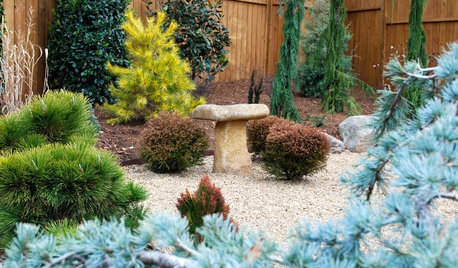
PLANTING IDEASDesigning With Conifers: Personality and Form in the Garden
Unique and full of interest, well-shaped conifers await a place your yard
Full Story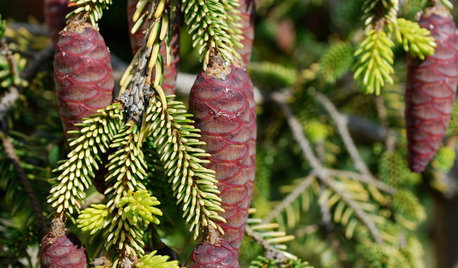
GARDENING GUIDESGreat Design Plant: Skylands Oriental Spruce, a Favorite Conifer
Brighten up a drab corner of your garden with Picea orientalis ‘Skylands’, a smaller spruce that a bird family might just call home
Full Story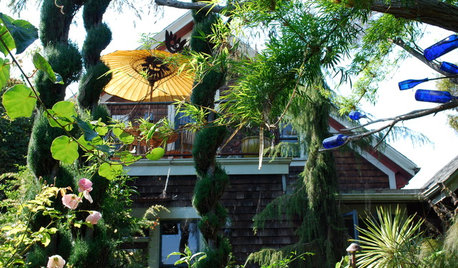
PLANTING IDEASDesigning With Conifers: How to Unite Your Landscape
Create a landscape full of intrigue and artistry with the right placement of conifers and their supporting players
Full Story
WoodsTea 6a MOOriginal Author