

Annuals, Biennials, and Short Lived Perennials
11 years ago
Featured Answer
Sort by:Oldest
Comments (12)
 11 years ago
- 11 years ago
Related Discussions
Is Kale Annual or Biennial?
Comments (13)Hi, What are your favorite kale varieties by how they taste as a cooked green? If I could find a super hardy variety that tastes as good as collards I'd gladly try it for next year. The RR kale is a good strong vigorous plant and is doing very well, growing faster and stronger (and with less watering) than my brocolli or Brussels sprouts. Around here in winter 10 F. is considered warm, so maybe the RR kale won't overwinter as we don't always get deep snow. Over the years I've had 1 or 2 smaller collard plants overwinter, but normally not. Last winter, however, I had a small brussel sprouts make it thru until spring buried in the snow. However, within a week or so it completely vanished without a trace roots and all!...See Moregrass green 3 weeks ago
Comments (27)Those are all KBG in that test rating. Yeah, Bedazzled really is awesome and exibits good performance in practically all areas of adaptation. One of Turf Merchants' competitors highly commends it, too. I don't doubt others do as well. I wish tests for powdery mildew were conducted more often or that more were available if they are conducted. Here is the 2005 turf quality ratings under shade conditions in your area. Results for PM is the 4th column. I'm not sure I would be alarmed with Morpheus' mention of PM for a number of reasons. One is that you get great resistance from both Bedazzled and Moonlight. You might want to balance the weight of the three to favor those two, like 40/40 and 20 percent Midnight/II. I think I recall suggesting that last year. Another thing is his lawn is new and new ones can't express themselves immediately, meaning their traits and characteristics, including resistances and tolerances. Still, his was not persistant as your has been. You have a lawn that is susceptible, while he doesn't. I don't expect he will have a PM problem in the future and if so, it will easily be taken care of. One thing I will surely suggest is you making sure it has not progressed into a soil-borne problem of something else before planting new seeds. Have the plants and soil tested for disease first by a plant pathology lab. Extension can handle it for you. I agree with her assessment of tall fescue in a kbg lawn. There may be reasons for mixing them in some areas, like the transition zone perhaps, but generally it isn't necessary. Ryegrass either. Been to bed twice but can't sleep. UGH...See MoreWhich winter sown perennials W O N' T bloom the first year
Comments (17)Hmmmm ... I guess it may depend on location, since some of the ones people have listed as NOT blooming the first year have bloomed in their first year for me - Dianthus, Asclepias, and Rudbeckia. I did have to wait for the following: Aquilegia Belamcanda chinensis (Blackberry Lily) Echinacea Geum Shasta Daisy Gaillardia Kniphofia Penstemon Hey, after looking at snow for two months or more, I'm happy to look at some green, blooms are just icing on the cake! Bonnie...See MoreHow deep a fine mulch for annual & perennial weeds?
Comments (4)Spraying poplar suckers has potential to damage the parent tree. Fine mulch is ideal for getting lots of new little plants coming up, as mentioned. Paper mulch is best for smothering weeds in an area that is going to be made into a bed later, rather than as a routine maintenance tool. You put down a thick layer and get it wet, keep it wet. Also a decorative mulch may be put over the newspaper layer, if desired. Coarser mulch such as clean arborist wood chips or purchased play chips is the most effective, however as has been pointed out in response to one of my posts on this site there can be issues with smothering when such materials are used near herbaceous plants. Even when applied some distance back chips may often migrate and get on top of perennials. Really if you are going to have flower plantings of much size and scope you can expect to be out there hand weeding etc. as a matter of course. If working among your flowers like this is more a vexation than a relaxation then consider making some changes. One way to include herbaceous plants in a home landscape without the upkeep being too much is to have one small or smallish area where these are planted, with the rest in lawn and woody plants (mulched with wood chips). This post was edited by bboy on Mon, Aug 18, 14 at 15:14...See More- 11 years ago
- 11 years ago
- 11 years ago


Related Stories
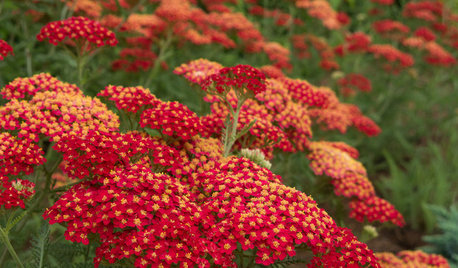
GARDENING GUIDESTop 12 Summer-Blooming Perennials for Deer-Resistant Drama
Can you have garden color, fragrance and exciting foliage with hungry deer afoot? These beauties say yes
Full Story
SUMMER GARDENING6 Water-Wise Perennials for Blazing High-Altitude Summers
Scorching weather and high elevations don't have to mean scraggly plantings. These blooms are as gorgeous as they are tough
Full Story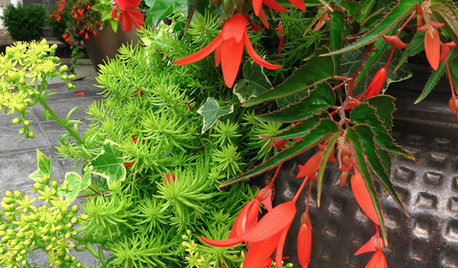
GARDENING GUIDESSuperstar Annuals for Containers and Baskets
High performing, low maintenance and all-around gorgeous, these container plants go the distance while you sit back and relax
Full Story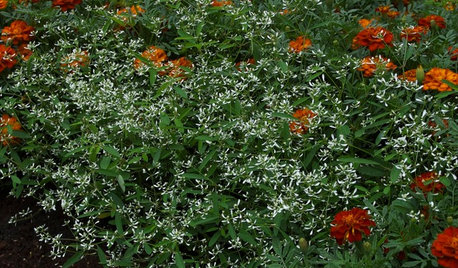
GARDENING GUIDES7 Enticing, Little-Known Annuals of the Plant World
Give these underutilized garden wonders a chance by discovering their draws
Full Story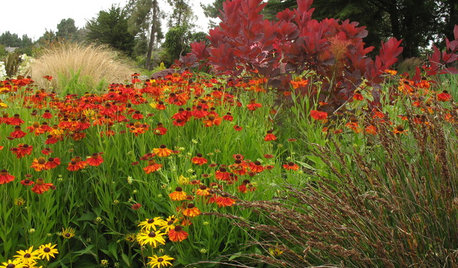
PLANTING IDEASWant a More Colorful, Natural Garden? Try a Perennial Meadow
Spend less time tending and more time taking in the sights by improving on Victorian and prairie garden designs
Full Story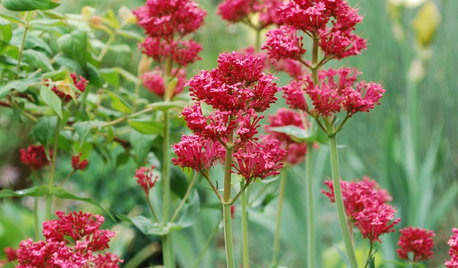
GARDENING GUIDES6 Lovely Water-Wise Perennials for High Altitudes
Even if your climate is cold and dry, you can still celebrate spring with these hardy and colorful perennials
Full Story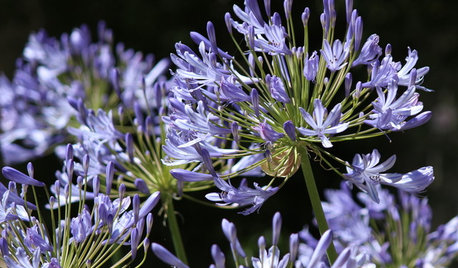
GARDENING GUIDES8 Plants That Snobs Love to Hate — and You'll Love to Grow
Don't dismiss these common annuals, perennials and shrubs — there are reasons they've been popular for so long
Full Story
FALL GARDENING20 Favorite Flowers for the Fall Landscape
Vivid blooms and striking shapes make these annuals and perennials a delight in autumn gardens
Full Story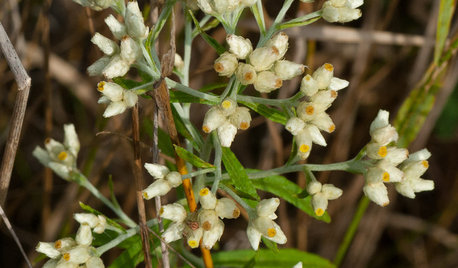
GARDENING GUIDESGreat Design Plant: Pseudognaphalium Obtusifolium, or Rabbit Tobacco
This late-blooming native annual, also known as sweet everlasting, adds spontaneity to landscapes in the eastern United States
Full Story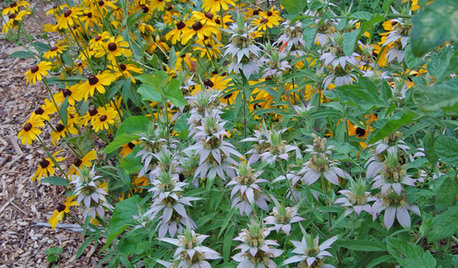
GARDENING GUIDESGreat Design Plant: Spotted Beebalm (Monarda punctata)
Looking for unusual, long-lasting blooms, low maintenance and deer resistance? Try this self-sowing perennial
Full StorySponsored
docmom_gw