

True Irene Watts
20 years ago
Featured Answer
Sort by:Oldest
Comments (11)
 20 years ago
- 20 years ago
Related Discussions
Question about 400watts and 600 watts
Comments (12)Shrubs said: "I did not mention refraction at any point. Or perhaps you just don't know the difference between reflection and refraction." (Lermer) I had assumed your were talking about refraction and not reflection, so out of politeness I thought to correct you. Definition of "refraction": http://squ1.org/wiki/Light_Behaviour "Refraction is an effect that occurs between transparent materials of different densities, such as air and glass. The bending evident in refraction is a physical representation of the longer time it takes light to move through the denser of the two materials, and it is dependent on the angle that the light strikes the boundary." (Lermer) Light passing through glass would be refracted, as it's angle is changed. This is the first I've heard about glass reflecting light. Please show a reference for the alleged reflective properties of glass. In any event, I thought we were talking about how much light (and what spectrum) makes it through the glass, not how much is reflected from the glass to the aluminum above the bulb. I ask again for a reference showing that the light losses claimed by glass manufacturers are not true losses, because of alleged reflection or refraction. (Shrubs) I did write you a paragraph about the materials that are used (in UL approved fittings) for metal halide lamp shields, but you are still rattling on about glass. (Lermer) I just called Sunlight Supply, the biggest manufacturer of vented hoods w/glass. UL does not require any special type of glass, other than that it be tempered. Even with the glass types you mentioned, there was radical drop off in light transmission past 400nm with some, 350 nm with Borosilicate. As I have pointed out, the Violet, UV-A and UV-B spectrums are important for plant growth. You didn't respond to those points, except to "poke fun". (Shrubs) And what is all this stuff about Bouguer's law (note the correct spelling)? You clearly have no clue what it means. It has nothing to do with the wavelength of the light,... (Lermer)Perhaps we are talking about different laws, but googling "Bouger's law" I get lots of hits in the scientific literature. Including this one (ibid.): "Absorption by a transparent or translucent filter varies with wavelength and filter thickness. Bouger's law states the logarithmic relationship between internal transmission at a given wavelength and thickness."...See MoreIrene Watts
Comments (22)Phil - you're missing my main point... Lets take it down to a basic scenario... 1. An exhibitor gets an Irene Watts from a reputable nursery. 2. Takes a fabulous spray to a rose show. 3. They look in the Handbook 2005 and see nothing under Irene Watts 4. They check Modern XI and see: 'Irene Watts', Ch, w, 1896; bud soft apricot-orange; flowers with a button eye, dbl.; Guillot, P. 5. They also look her up in the 2005 AEN and see: 'Irene Watts'. 6. They enter IW into a show and much to their shock - -D/Q. So the exhibitor takes all the information available to them at an ARS show -- enters a rose only to be D/Q'd. Now if the ARS had simply made a notation in the AEN and Handbook: "Irene Watts -- see Pink Gruss an Aachen" there would be no problem. What I'm saying is that let Irene live for one more year until the proper notations are made in the two most important tools that an exhibitor can have. Either that of just stop waisting your time printing them and only use Dobson. Have I made my self clear enough!!!! We should always err on the side of the exhibitor. IW has been receiving OGR trophies for years - -one more is not going shake the foundations of the ARS. In the future, when God sends ARS an epiphany to change a name -- especially one that has won so many trophies and so widely grown - substantiate your changes with as many photos, drawings and notations as possible. And include those changes in ALL publications so everyone is on the same page. I have no doubts that IW that we have in the U.S. is missnamed but I do have my doubts if its really a sport of GAA. My flowers are very different. I think the name change was premature until more research could be done to really find out what this rose really is....See MoreTrue Irene Watts
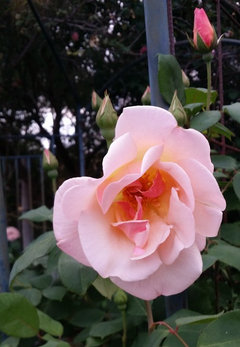
Comments (4)ClairMatin1 Thank you very much for your beautiful picture! There stiil are true Irene Watts in Europe. In the American Rose Society's magazine, American Rose 2004 August, it reads: it seems very clear that all the plants being grown commercially in the United States and much of Europe as Irene Watts are really Pink Gruss an Aachen. They don't say all the plants in Europe are Pink Gruss an Aachen. Is your Irene from Peter Beales? I'd like to see the true Irene Watts by myself someday! Rosaline...See MorePink Gruss an Aachen v Irene Watts....not...
Comments (137)This, too, comes into the 'For what it's worth' department .... I was just reading Peter Beales 'A Passion for Roses' (published in 2004) and noted the following comment he made in the section on Floribundas - "A few roses are completely timeless, and two of these I must mention here: 'Grüss an Aachen' and its sport 'Pink Grüss an Aachen'. 'Grüss an Aachen' is a superb rose, introduced in 1909, and one of the best cluster-flowered roses ever raised. Its colour is a soft flesh-pink, changing to cream in maturity, and it is fragrant and very free flowering; it is also tidy in habit and perfect for both bedding and group planting, 'Pink Grüss an Aachen' is a much deeper pink but in all other respects exactly the same, and just as charming. I confess to being one of a number of nurserymen who, until recently, have distributed the pink form erroneously as 'Irène Watts', a mistake I regret but have now rectified" So, I wonder where the Beales nursery sourced their 'Irène Watts' stock when they realised that what they had previously sold as that rose was in fact the PGaA? Tricia...See More- 20 years ago
- 20 years ago
- 10 years ago
- 10 years agolast modified: 10 years ago
- 10 years ago
- 10 years ago
- 10 years ago
- 10 years ago
Related Stories
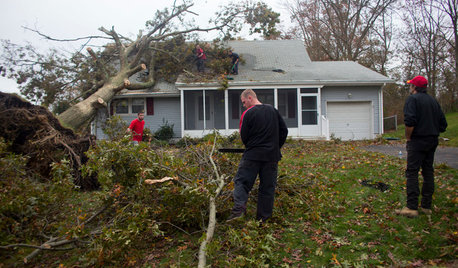
MOST POPULARWhat to Do After a Hurricane or Flood
How you treat your home after a natural disaster can make all the difference in its future livability — and your own personal safety
Full Story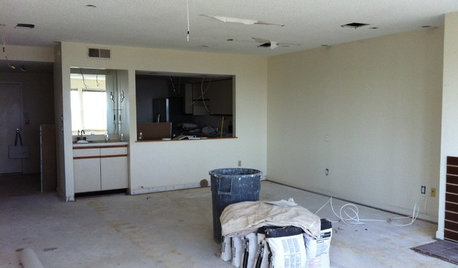
DISASTER PREP & RECOVERYRemodeling After Water Damage: Tips From a Homeowner Who Did It
Learn the crucial steps and coping mechanisms that can help when flooding strikes your home
Full Story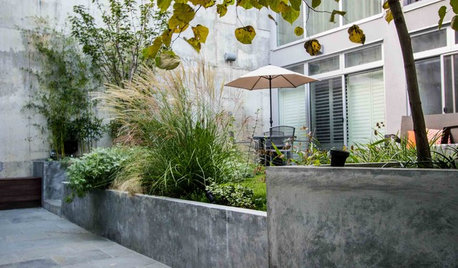
URBAN GARDENSFrom Concrete ‘Jail Yard’ to Lush Escape in Brooklyn
Once stark and uninviting, this urban backyard is now a welcoming retreat for relaxing and entertaining
Full Story
LIFEReading in Bed Comes Out From Under the Covers
No more sneaking a flashlight beneath the sheets. Grown-up bedtime reading deserves grown-up lighting and other bedside amenities
Full Story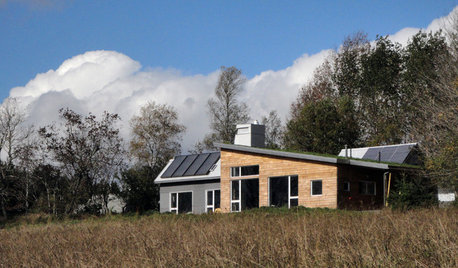
GREEN BUILDINGHouzz Tour: Going Completely Off the Grid in Nova Scotia
Powered by sunshine and built with salvaged materials, this Canadian home is an experiment for green building practices
Full Story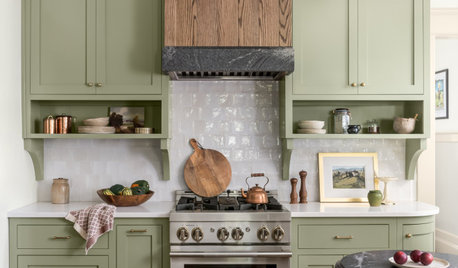
KITCHEN DESIGN7 Ways to Save on Your Kitchen Remodel
Discover key areas where you can economize and still get the kitchen of your dreams
Full Story
KITCHEN DESIGNKitchen of the Week: Elegant Updates for a Serious Cook
High-end appliances and finishes, and a more open layout, give a home chef in California everything she needs
Full Story
GREEN BUILDINGOff the Grid: Ready to Pull the Plug on City Power?
What to consider if you want to stop relying on public utilities — or just have a more energy-efficient home
Full Story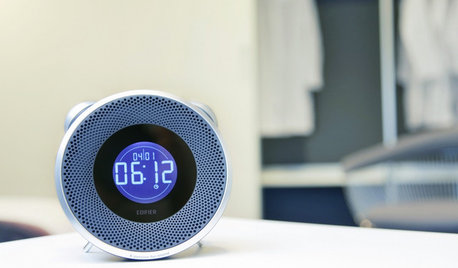
HOME TECHWake Up to the New World of Connected Alarm Clocks
Use your smart phone to enhance your alarm clock, to get more music and better sound than ever before
Full Story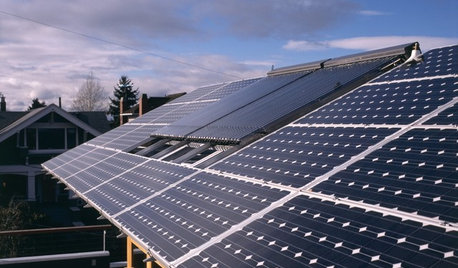
GREEN BUILDINGLet’s Clear Up Some Confusion About Solar Panels
Different panel types do different things. If you want solar energy for your home, get the basics here first
Full Story
goldenwings13