slaters
21 years ago
Featured Answer
Sort by:Oldest
Comments (17)
- 21 years ago
- 21 years ago
Related Discussions
3rd Annual Appalachian Seed Swop
Comments (0)3rd Annual Appalachian Seed Swap Public Event ÷ By Appalachian Sustainable Development When Sunday, December 4, 2011 Time 2:00pm until 5:00pm Where Slater Center , 325 McDowell Street, Bristol, Tennessee Description Please join us at the Slater Center in Bristol, TN as the Appalachian Farmers Market Association celebrates the close of the 2011 Farmers Market season with the Appalachian Seed Swap. If you are a saver of seed, if you enjoy planting new vegetable and flower varieties, or if you would like to grow and/or save seed from locally adapted varieties, this event is for you. This yearâÂÂs event will feature a presentation by Ira Wallace of The Southern Exposure Seed Exchange (SESE) entitled âÂÂHeirloom Seeds �" Sow, Savor Save.â SESE will also have a booth at the seed swap offering an assortment of open pollinated seeds for sale. This event is free and open to the public �" you do not need to bring seeds in order to attend and enjoy this event �" light refreshments will be provided. If you will be bringing seeds for the seed swap, plan to make labels for your seeds so that folks will know what you have (see example below). We will have blank labels available at the swap for those who need them. Also plan to have sealable bags to put your seeds (or otherâÂÂs seeds) into. The idea of a seed swap is to allow folks to share seeds and information with each other, but not everyone will have seeds to swap- if you wish to make seed packets available for sale, that will be allowed as well. Label Example: Bush Bean: Irish Annie (if from British Columbia the name would be Ireland Creek Annie) This bean originated in Ireland and found its way to British Columbia before reaching the USA. These beans are from a friend- Irishman- Shane Ross who gave me 20 beans and now I am giving 20 to one of my friends. The beans breakdown quickly due to their thin skin and make their own sauce working well with other beans in soups. They possess a wonderful flavor. Daytime warmth of 60 degrees or more, resistant to mold and mildew, bush habit, about 24â high, sturdy, high yields, 75 days to harvest. Wily Seedropper (123) 456-7890 For more information about the Appalachian Seed Swap or about the Appalachian Farmers Market Association, please contact Tom Peterson at: 276-623-1121 or tpeterson@asdevelop.org Appalachian Famers Market Association �" www.appfma.org Directions to Slater Center: Travel east on State Street from Volunteer Parkway/Commonwealth Drive. Pass under the Bristol âÂÂA Good Place to Liveâ sign and make a right turn onto Pennsylvania. Take your next let onto McDowell. The Slater Center is the big brick building on your left. �" Call 423-764-4023 if you get lost....See MoreSlater's Crimson China
Comments (3)Btw-Slaters CC. far better choice than the knockouts,around here anyway. Since I just pruned mine to get it ready for the Christmas flush didn't post picture.Will at Yule Time if reminded.Got to about 5 foot tall ....See Moreslater army invades worm farm in old bathtub.. yikes
Comments (11)I've read the statement that sow bugs/pill bugs/rolly pollies/slaters compete with the worms too, but you can add that to your list of internet myths badly in need burial, but with the unfortunate gift of apparent immortality. There are NO invertebrates that compete with the worms in a worm bin, because the worms will ingest the manure of all of these organisms as a nutrition source. Let's say this again, all together; there... are... no... invertebrates... that... compete... with... the... worms... in... the... bin! Now, commit that phrase to memory and smack anyone who suggests otherwise, and we may find more folks willing to try vermicomposting and not fearing the critters they see crawling through the system! Ok, in all seriousness, sow bugs/pill bugs/rolly pollies/slaters are omnivores whose preferred food source is some of the toughest organic materials in the bin; stuff that is very lignous or high in cellulose, which is difficult for most of the other organisms, both micro and macro, to break down. Their powerful mouth parts are able to bite and chew these tough materials, and their digestive enzymes break them down, fragmenting them so they can be ingested and stabilized by the worms once they pass outof the sow bugs/pill bugs/rolly pollies/slaters as poop. This is the good side of these guys. It needs to be understood, however, that when castings containing sow bugs/pill bugs/rolly pollies/slaters are introduced to closed environments like greehouses where their preferred OM food sources are in short supply, they will begin feeding on tender plant shoots. It is this aspect of their behavior that has led some to have concerns, and it is people erroneously applying these concerns to environments where sow bugs/pill bugs/rolly pollies/slaters are not a problem that has created concern about finding them in the worm bin. So, bottom line, sow bugs/pill bugs/rolly pollies/slaters are wonderful in the bin and we love them. They are fine if they remain in the castings when they are applied to the outdoor garden, but if the castings are to be applied to plant starts or seed start mix in a greenhouse consider freezing the castings for several days before use to eliminate any potential sow bugs/pill bugs/rolly pollies/slaters problems. There, now wasn't that easy? ::grin:: Kelly S...See MoreSad Saga of Stephen Slater (on his gravestone)
Comments (9)In the 1700 and 1800s, women bore a large burden. Child birthing and the follow-on responsibilites wore them down and weakened their resistance. Many births were home births and if complications arose, it was difficult to counteract. Medical care was spotty. There were no health insurance. Common diseases sweep through neighborhoods wiping out mothers and children. It was not a nice period. I also found a sad story in a cemetery. It was the burial site of one of my ancestors. The principle stone was of the husband and wife flanked by 5 more little stones in a row. Each of their first 5 children died soon after birth or lived only one year. The births were 1 to 2 years apart. Finally, they had 2 children who lived. That story was a heart-breaker....See More- 21 years ago
- 21 years ago
- 21 years ago
- 21 years ago
- 21 years ago
- 21 years ago
- 21 years ago
- 21 years ago
- 21 years ago
- 21 years ago
- 21 years ago
- 21 years ago
- 21 years ago
- 12 years ago
Related Stories

GARDENING AND LANDSCAPINGPavers for the Perfect Patio and Path
3 Landscape Designers Share Tips on Paver Materials, Installation and Cost
Full Story
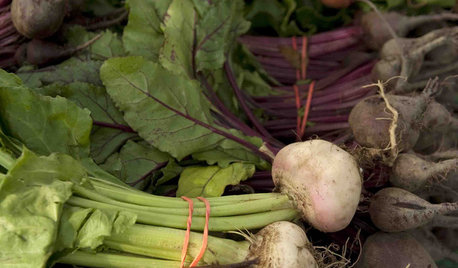
FARM YOUR YARDCool-Season Vegetables: How to Grow Beets
Give canned versions of this fall and spring garden favorite the heave-ho and discover its true flavor and colors
Full Story

YELLOW FLOWERSGreat Design Plant: Winter Jasmine Gladdens Snowy Gardens
Sunny yellow flowers defy the frost, bringing cheer to the garden on gray days
Full Story
Trier