

Can you freeze a sealed 6 layer dip?
12 years ago
Featured Answer
Sort by:Oldest
Comments (11)
 12 years ago
 12 years ago
Related Discussions
How can you freeze your green beans?
Comments (10)Well, you know, we've only had the beans three times so far in the last 10 days or so. We can keep up with them at that pace, but I was just looking ahead in case I do have extras that I can keep till later in the year. I had heard of blanching, but I didn't quite remember. Let's see if I have it right. Throw the beans in boiling water for 1 1/2 minutes, take out and immerse in ice water, dry, and then put them in a ziplock bag. Try to take as much of the air out of the bag (Mary, interesting idea about the straw). Alternatively, I might try 'blanching' them in the microwave and then the rest as above. Is that right? Now I almost hope I have extras just to try this procedure out! Thank-you, everyone. P.S.- Carol, how do you make oven-roasted beans? Anna...See Morecan you propagate maples via air layering?
Comments (15)Crepe myrtles come easily from root cuttings. Dig the cuttings in early spring and pot up or plant out in beds with loose soil. If you want to do cuttings, hard or softwood cuttings taken in spring or summer (take them from right where they join the main branch, from the south side of the plant). Use 6-8 inch cuttings with about 3-4 nodes per cutting. Remove all the leaves except the last two or three & bury the cutting almost to the base of the lowest leaf. You need a very well-aerated medium for cuttings. If you stick them in MG soil and the base of the cutting is below the level of saturated soil at the bottom of the container, expect failure due to a lack of O2 to the cutting. Shallow pots are most difficult to grow in because a heavy soil might be 100% saturated in them, yet the maple above and this one do just fine in this soil which is what I start cuttings in, too. Al...See MoreCan I freeze these Florentines
Comments (3)I hate to see a query languish unanswered so I did a search. And found this: Bake the cookies until they are lacy and golden brown, about 10 minutes. Gently slide the parchment paper with the cookies onto a rack and cool completely. Transfer the cookies to paper towels. Repeat with the remaining batter, lining the baking sheets with clean parchment for each batch. (The cookies can be made up to this point 2 months ahead. Cool completely, then store airtight in the freezer. Defrost before continuing.) Here is a link that might be useful: Giada's florentines....See MoreTyvek not sealed at bottom of wall and not overlapped 6" at seams
Comments (27)Joseph Corlett, LLC, Who knew "Follow the manufacturers' instructions" could be controversial?!? I'm not saying that bad building products were never produced. There have been some serious failures (LP siding, de-zinking pex plumbing fittings, flammable high-rise cladding) I'm also not saying that superior installation methods and components aren't sometimes available. (Forget Teflon tape, I've always used Permatex #2 on gas line threads and they will never ever, ever leak.) I am saying that the vast majority of installers do not have the technical depth of knowledge to substitute or disregard installation instructions. I am also saying that when homeowners have a question about what is "proper and correct" and need a reference, look at the installation instructions. In residential work, bad installs are vastly more prevalent than faulty products. I am also suggesting that products that deal with preventing water intrusion (including shower enclosures btw) are much more likely to do major and costly damage that goes undetected over time than almost any other system other than a faulty foundation. If one of your sink installs falls, it's pretty obvious what happened and who's responsible. Not so with a bad window flashing install that goes undetected for years. Many of the major building product manufacturers do have field reps / engineers who do get out in the field. They learn why their products fail in the field under real world installs. James Hardie, just for example, has changed their installation instructions over time. Windows on Washington Ltd, I've done a fair amount of work on old homes. My experience is admittedly limited to the mid-west. The older homes I've worked on range from some in the 1880's to many in the 1900's and 1910-20's as well as the 1940's. What I can tell you is that the wood framed homes in the 1880's - 1920's used mostly wood (cedar) siding with very little flashing (very little copper at times) and they had tar paper under the siding. If there was sheeting at all under the cedar siding and tar paper it was 1x boards - usually diagonally - not solid panels of glued OSB or plywood. To say that the walls weren't airtight is a huge understatement. We didn't see insulation installed in the walls commonly until the 1960's. (Insulation can act as a sponge and trap water in the wall). Those walls did see water intrusion especially around the windows, doors and band boards and especially after some years. They survived precisely because they were able to dry out instead of rot - not because the build quality or workmanship was so much better....See More- 12 years ago
- 12 years ago
 12 years ago
- 12 years ago
- 12 years ago
- 12 years ago
- 12 years ago
- 8 years ago

Related Stories

GREEN BUILDINGThe Big Freeze: Inventors Break New Ground to Keep Things Cool
Old-fashioned fridges can be energy guzzlers, but there are more eco-friendly ways of keeping food fresh, as these global innovations show
Full Story
PETS5 Finishes Pets and Kids Can’t Destroy — and 5 to Avoid
Save your sanity and your decorating budget by choosing materials and surfaces that can stand up to abuse
Full Story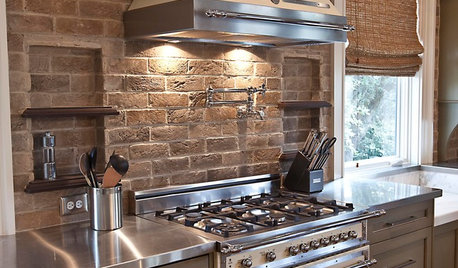
KITCHEN DESIGNYes, You Can Use Brick in the Kitchen
Quell your fears of cooking splashes, cleaning nightmares and dust with these tips from the pros
Full Story
LIFE6 Ways to Beat the Winter Blahs
Snow and dark days dampening your spirits? These ideas will have you looking on the bright side
Full Story
MOST POPULARYou Can Turn That Into a Bathroom Vanity?
Find inspiration in 13 unconventional bathroom vanities that are as functional as the real deal
Full Story
LIFEHow Your Landscaping Can Keep Burglars Away
Prevent home break-ins with strategic landscaping and good practices instead of menacing — and maybe less effective — measures
Full Story
DIY PROJECTSMake an Upholstered Headboard You Can Change on a Whim
Classic stripes today, hot pink tomorrow. You can swap the fabric on this DIY headboard to match your room or your mood
Full Story
LANDSCAPE DESIGNSmall Garden? You Can Still Do Bamboo
Forget luck. Having bamboo that thrives on a wee plot just takes planning, picking the right variety, and keeping runners in check
Full Story
MATERIALSBrace for Brass: How This Warm Metal Can Boost Your Bathroom
See what to mix with this trendy alloy, how to keep it from showing water spots and more
Full Story
BEFORE AND AFTERSSee 6 Yards Transformed by Losing Their Lawns
Wondering whether a turf lawn is the best use of your outdoor space? These homeowners did, and they found creative alternatives
Full Story
Jodi_SoCalOriginal Author