

Help me come up with an act for a talent show!
17 years ago
Featured Answer
Sort by:Oldest
Comments (31)
 17 years ago
Related Discussions
I'm starting to worry about my dog..acting up?
Comments (6)We feed her twice a day like the vet recommended. She's not deaf, she'll look at wear the sound is coming from, but won't respond, like she's ignoring us, or trying to. The other dog actually calmed her anxiety, she's a jealous dog, that can be sneaky though, which I forgot to inform you guys about (sorry, i was sort of panicking.) When she was a puppy we couldn't leave her a cage, that was around x5's bigger then her in the first place, because she had anxiety issues and would scratch her head against the side until it bled. So we got her a brother, and everything changed and she's really nice now. But Chester, Sophies "brother", is a soft-coated wheaten terrier, we've already took him to around 4 different trainers, I guess it's just his instincts preventing him changing into a nicer, calmer, relaxed, less dirty dog. ( We wash/groom him, but he loves going outdoors..so.ha.) And yes, we are feeding her a quality dog food that you can only buy at certain pet stores, not PetCo/PetSmart. Do they do blood work when dogs go into surgery? I know it may sound silly, but I'm sure if she's already gotten blood work done for all that. She had surgery earlier this summer for skin-tags, and cracked teeth, in multiple areas for the skin-tags. I really hope it's nothing more then old age, if there's cancer, It would really crush me. She's one of the prettiest weimaraners ever, well, not to be conceited, but she really is a pretty one. Oh, and she's kind of getting more paranoid in a sense. Getting scared really easily, I don't know why! We treat our dogs with respect like their our family, which they are, and there's no pet-abuse in the family either. (Never ever ever will that happen!)...See MoreCat acting up at night
Comments (17)I actually came here today to ask this same question, but I realized I already did last year! Same cat is still doing the same routine. Which makes me feel better as I'm now certain it's not a health problem or I would have seen other issues by now. He scratches and howls at the door if I close it, and if I open it he runs in circles around the room. Jumping up on my bed, purring madly then jumping down, running into the bathroom and yipping, making yowling noises at the window, jumping back on the bed. Almost always between 2 and 4 AM. So frustrating!!! I wonder if it's related to the cooler temperatures as it didn't seem to be such an issue earlier this year. He's 5 now. No other issues at all. It must just be his personality but the thing is, he KNOWS he's being bad. If he cries and scratches at the door enough that I have to get up at 3 AM, he turns and runs from the door like a bat out of hell so he doesn't get in trouble. I usually find him acting all cute in the living room where he'll wrap around my legs and purr and act all innocent then when I stumble back into my room, he'll dart in. Little brat. He sure has me trained! Good thing he's cute!...See MoreFisher Paykel GWL 11 Ecosmart acting up again
Comments (131)Hmmm. Should be between between 110v and 125v. Higher voltage is too much power so it'd run hot and kick-out on overheat protection, maybe pretty quickly, maybe almost instantly. However, seems odd the reading is so much over the norm. An earlier model uses a 230v pump, the motor board on it has components to increase the voltage for the pump circuit even though the machine connects to a standard 120v power outlet. Your board doesn't do that for the pump circuit, although it may produce higher voltage for other circuits. Anyway, you've confirmed the board is outputting power to the pump circuit. Check again on the connector down at the pump to confirm power is getting all the way there to rule out a broken/shorted wire. The only other check is a resistance reading on the pump (7 ohms, you've already done that). I have no suggestion other than replace the motor board again. You said the board had already been replaced once. Is it new enough to be covered by a parts warranty of sorts?...See MoreSchefflera acting up
Comments (10)Happy to share. I define a really big pot as one that I can't pick up when full. If you are going to remove the old soil & trim the roots a bit, the size of the new container is irrelevant, beyond practical concerns about being able to move it. The old wives' tale about not switching plants to a significantly bigger pot comes from the use of peaty potting soil that can rot roots because of its' lack of oxygen, and from folks potting-up plants vs. repotting. Potting-up being when an undisturbed root ball is placed into a larger pot surrounded by more soil. I would never pot-up a woody entity, mine are always repotted with old soil removed, roots that are too long to fit back into pot without bending are trimmed. If one is not using a soil of a type that will cause this rot (overwatering,) there is no concern about the pot being too big. I am glad you mentioned also being under the spell of an another old wives' tale about any plant preferring to be in a rootbound state so we can help put that myth out of its' misery. They are twin myths that are usually found together. No plant likes to be rootbound. What is necessary for plants to stay alive is for their roots to not rot, which can happen so easily in a pot with dense soils, like ground dirt, or bagged mixes of predominantly tiny particles of peat, (or to simply shrivel from simply never getting any water.) Having very little soil around the roots would make the soil dry more quickly, and for even the most dedicated plant-overwaterers to not rot the roots of their plants. This is not ideal, since most non-cactus plants are stressed by dry conditions, it's just a way of coping with soil that has little air in it when moist. Negative experiences in regard to potting-up, where an undisturbed root ball is placed into a bigger pot with more soil around it, vs. doing a repotting, as described below, can give rise to old wives' tales about plants not liking to be repotted/disturbed. Potting-up a root-bound plant that has roots surrounding the outside root ball often lead to this negative experience because those roots had adapted to accessing oxygen around the outside of the root ball and surrounding them with more dense, soggy-but-airless potting soil will likely lead to suffocation. The reason bonsai masters are able to keep potted entities alive for hundreds of years is because they care for the roots by trimming them and changing the soil. A plant grows from the roots-up, so if the roots are not healthy, gorgeous foliage will decline &/or no flowers can form. When you unpot a plant and find a pancake of roots at the bottom, chopping that off will give roots a chance to grow normally again for a while and will make removing the old soil easier. Roots need oxygen & moisture at the same time to function. Just air = shriveling. Just moisture = suffocation & rotting. Either will cause root death and dessicated foliage because the roots have been unable to deliver moisture. Having to let soil dry, as if ones' tropical jungle plant was a cactus, is an unnecessarily stressful coping mechanism for non-desert dwelling plants in soil without enough oxygen for the roots to stay healthy when it is moist and can lead to premature loss of older leaves and in extreme cases, dry shriveled roots/dead plant. The ability of roots to be able to function properly depends greatly on the soil structure/texture, which can change over time. Potting soil tends to be very dense, mostly peat, with very little air in it. Any kind of organic ingredients decompose into smaller bits over time, and roots fill air spaces over time as they grow through soil. Replacing soil periodically is usually necessary to keep plants healthy because of these reasons. A more porous, chunky, airy soil (like cactus/palm, if one is buying bagged,) can have more air in it even when it is moist because there is space between the particles. When there are tiny particles of any kind in a pot, such as peat, sand, silt, clay, they filter into all of the tiny spaces in a pot, eliminating the air. "Overwatering" is the label and manifestation when roots have suffocated and/or rotted, combo of both. Over time, organic bits decompose into smaller bits, so even the "best" soil, if it has organic components, will need to be replaced when this happens. The speed at which this happens depends on many variables, but on average, about 1-3 years. You're right about the potential for sunburn damage from a sudden & drastic increase for plants that have been inside. If one wants to acclimate an indoor plant to significant direct sun exposure outside, it needs to be done gradually, to avoid sunburn. Not all plants would benefit from such an adjustment, and the length of time it would take for any particular plant would depend on what kind of plant it is, on the length of ones' outdoor season, and what kind of exposure it had when it was inside. In Z3, your options are much more limited, due to much shorter length of the warm season outside, than where I am. Under a tree sounds fine for your plant!...See More- 17 years ago
- 17 years ago
- 17 years ago
- 17 years ago
- 17 years ago
- 17 years ago
- 17 years ago
- 17 years ago
- 17 years ago
- 17 years ago
- 17 years ago
- 17 years ago
- 17 years ago
- 17 years ago
- 17 years ago
 17 years ago
- 17 years ago
- 17 years ago
- 17 years ago
- 17 years ago
- 7 years ago
- 7 years ago
 7 years ago
- 7 years ago
 7 years ago
- 7 years agolast modified: 7 years ago
- 7 years ago
- 7 years ago
- 7 years ago
Related Stories
TASTEMAKERSTastemakers: Talents Shine in New Lighting Designs
Inside Inspired Wire Studio, she says "Wouldn't it be cool if...?" and he makes it come to life
Full Story
STAIRWAYSClear Staircases — They're a Real Glass Act
If you're flush with funds, you can have a ball with crystal on your stairs. The rest of us can just marvel from afar
Full Story
FARM YOUR YARD9 Ways to Change Up Your Vegetable Garden for the Coming Season
Try something new for edible plantings that are more productive than ever
Full Story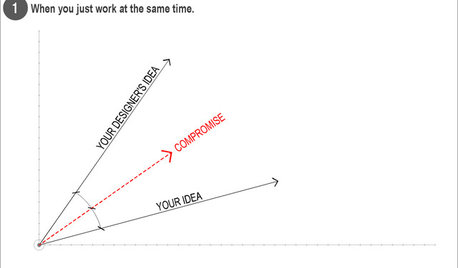
COFFEE WITH AN ARCHITECTThe Forces Acting on Your Design
Perhaps you're not aware of all the dynamic forces at work in your home design process. Here's a graphical analysis
Full Story
REMODELING GUIDESRoom of the Day: Antiques Help a Dining Room Grow Up
Artfully distressed pieces and elegant colors take a formerly child-focused space into sophisticated territory
Full Story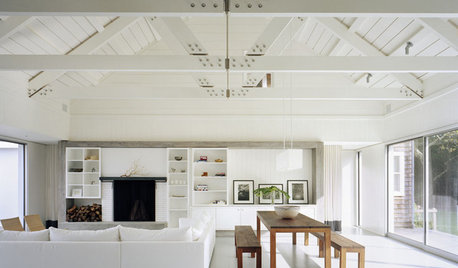
REMODELING GUIDESSupporting Act: Exposed Wood Trusses in Design
What's under a pitched roof? Beautiful beams, triangular shapes and rhythm of form
Full Story
DECORATING GUIDES10 Look-at-Me Ways to Show Off Your Collectibles
Give your prized objects center stage with a dramatic whole-wall display or a creative shelf arrangement
Full Story
COMMUNITYSimple Acts: The Unsung Power of a Good Neighbor
There are many ways to be a good neighbor, and they're often easier than you think
Full Story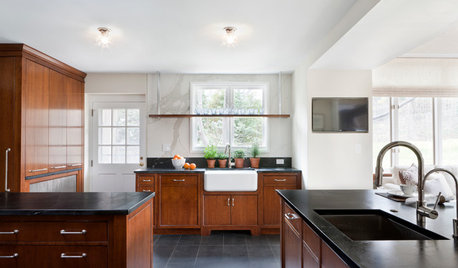
DESIGNER SHOWCASESA Kitchen Opens Up for a D.C. Show House
Removing a fieldstone wall helps turn a cooking space from dark and dingy to open and filled with light
Full Story

sheilajoyce_gw