

Open Jar of Spaghetti Sauce - How Long in Refrigerator?
17 years ago
Featured Answer
Sort by:Oldest
Comments (40)
 17 years ago
- 17 years ago
Related Discussions
freezing spaghetti sauce question
Comments (5)harriet, welcome! congratulations on your tomato bonanza. No, you don't have to "pressure cook" the tomato sauce if you're going to freeze it. You can just make it --- any recipe you want, including meat, veggies, whatever, if it's to be frozen --- cook it as much as you like till it's how you want it, then put it into containers and freeze it. ("Pressure canning" and "Water bath canning" are for if you want to store the sauce in jars that do NOT go in the freezer --- just stay on the shelf, like jars from the store. If you want to try that, then you need to follow a tested recipe to be sure that it's safe for home caninng. Get the Ball Blue Book for a start! But if you are going to freeze it, you can make any recipe you want.) Yes, the containers can be regular canning jars. But they don't have to be jars at all --- they can be almost anything, in fact: little plastic tubs with snap-on lids, or even freezer bags wit the tops close tightly. BUT whatever you use, be sure to leave a little extra space at the top (like a half inch) because the sauce will expand a bit when it freezes and you don't want to pop the top off! You should let the sauce cool to almost room temperature before freezing it just so it doesn't warm up your freezer too much. You can let it cool first, then put it in the containers --- I find this easier than pouring in hot sauce. Your steps are fine. You probably want to cut out the tough "core" in the top centre of each tomato when you chop it. If you don't like the seeds you can take those out too at that time, but some people don't care (I leave 'em in). Hope this helps. Welcome to the forum. Good luck with yoru tomato sauce project! Zabby...See MoreSalsa/spaghetti sauce - which tomatoes?
Comments (23)Assuming that there are no spores in the acidified food, why is underprocessing an issue? Because there is no way to make that assumption safely. You have no way of knowing if they are there or not. And given that spores are in the air and in foods and on surfaces all around us, the functioning assumption for safety is that they ARE there. Plus you are putting the cart before the horse. Under-processing is a safety issue period. It isn't acceptable. It can't be justified after the fact. It can only be dealt with either by reprocessing within 24 hours or refrigeration or freezing, or by pitching the food. This, regardless of what may or may not be in the food. 'm just trying to figure out why you recommended refrigerating the underprocessed (but sealed) jars. As I said above, In this particular case of under processing it is the air that remained in the food and in the jar because the water wasn't hot enough to bring the food inside the jar to a boil and force the air out. So while you have a seal, it is a compromised seal and there is still air and an incomplete vacuum inside the jar. Can't say it any plainer. Under-processed jars still have air in the jar. If there is bacteria in the jar that air allows it to grow. And the jars have compromised seals, that are easily broken. Refrigerating the jars retards the growth of any contaminants inside the jar and allows you a brief time to to consume them safely just like anything else you buy at the store and bring home to stick in the fridge. We are beating a dead horse here. It all comes down to do it right so it is safe or pitch it. Don't try to reason around mistakes or come up with compromises unless you are willing to accept the associated risks. I offered you what is considered by most to be an acceptable compromise - a short but safe life in the refrigerator for under-processed foods. If you aren't comfortable with it then just pitch the food. Also why rolling boil is required instead of gentle boil, etc. The simple answer would be because that is what the research shows is needed for the processing time allowed. But yes, NCHFP does explain it - so did basic high school chemistry class on the molecular action of boiling water. ;) A full rolling boil at 220 degrees is approximately 10 degrees higher than a gentle boil and all the extra molecular action, the increased friction between the molecules, within the water allows for faster heat transfer to the food inside the jar so that food is brought to 212 degrees in less time and for a longer amount of time than would happen with less activity in the water. In other words, when a gentle boil is used, food in the jar doesn't get as hot as quickly or remain hot for as long a period of time as it would at a full rolling boil. Since it is the heating of the food that forces the air out of the jar to create a vacuum you need it to get as hot as possible in as short a time as possible. Don't sell NCHFP short. There is months and months of reading and learning there both on the site itself and in it's many publications linked from the site. Dave...See MoreTomatoes for spaghetti sauce?
Comments (54)Plan for making spaghetti sauce. Procrastinate until every square inch of counter space is filled. At the first fruit fly in the kitchen, go back out to the garden and get every tomato that is even close to ripe (of course this means two or three days of tomato withdrawl after sauce day). Blanch tomatoes, slip off the peels, cut in half and squeeze out seeds. Throw in blender and puree. Dump in the largest pot known to man and boil down for an hour or three. Reserve about one sixth of the tomatoes to be sliced/crushed and added for the last half hour at which time you will also add seasoning--for me onions sauteed in olive oil, garlic, salt, pepper, oregano & sweet basil. If there's any left after feeding your four (and soon to be five) kids, freeze in large ziplock freezer bags. That is all. Oh, italian sausage or homemade meatballs are nice, but I wouldn't add these to the portion I'm freezing. You can call this Dude Rubble's 18 variety spaghetti sauce scramble...See MoreHomemade Spaghetti Sauce
Comments (19)This is my mother's recipe for Spaghetti Sauce. It is wonderful! SPAGHETTI SAUCE Mix together: 2 Pounds Ground Beef 1 Cup Bread Crumbs 2 Beaten Eggs 1 Tablespoon Parsley Flakes 2 Teaspoons Salt 1 Teaspoon Pepper Fry a Clove of Garlic in 4 Tablespoons Olive Oil; then discard Garlic. Put large chopped Onion in Oil; stir around, almost to browning. Put Meat in skillet; break up, cook almost to browning. Then put in kettle. Add: 1-1/2 - 2 Quarts (3 small cans or 2 large cans) Tomatoes - put through sieve (throw seeds away) 2 Large plus 1 Small Cans Tomato Paste (plus couple of cans of water) 2 Teaspoons Italian Seasoning 1/2 Teaspoon Oregano 1 Bay Leaf Stalk of celery (chopped fine) 2 Teaspoons Parsley Flakes 1/2 Green Pepper (chopped fine) 1 Tablespoon Worcestershire Sauce 2 Cloves Garlic (discard after cooking) (Can substitute garlic powder) Little Basil Leaf (sift in) 1/3 Cup Sugar 1/8 Teaspoon Crushed Red Pepper (sift in) Cook 2-1/2 - 3 hours, until oil comes to top MEATBALLS 2 Pounds Ground Beef 2 Beaten Eggs 3 Spoons Parmesan Cheese (optional) 5 Tablespoons Bread Crumbs 1 Teaspoon Parsley Flakes 1 Chopped Onion Italian Seasoning Chopped Garlic Clove Salt and Pepper to Taste Mix and make meatballs; either bake or fry until they start to get a little brown....See More- 17 years ago
- 17 years ago
- 17 years ago
- 17 years ago
- 17 years ago
- 17 years ago
- 17 years ago
- 17 years ago
 17 years ago
- 17 years ago
- 17 years ago
- 17 years ago
- 17 years ago
 17 years ago
- 17 years ago
- 10 years ago
- 10 years ago
- 10 years ago
 10 years ago
 10 years ago
 10 years agolast modified: 10 years ago
- 10 years agolast modified: 10 years ago
- 10 years ago
- 10 years ago
- 10 years ago
- 10 years ago
- 10 years ago
 10 years agolast modified: 10 years ago
 10 years ago
- 10 years ago
- 10 years agolast modified: 10 years ago
 10 years ago
 10 years ago
- 10 years ago
- PRO9 years ago
- 9 years ago
- 9 years ago
Related Stories
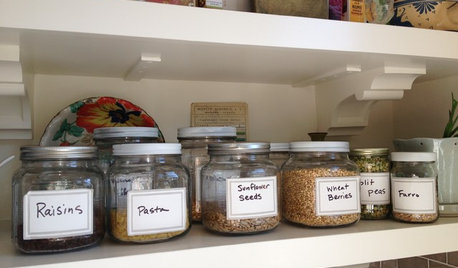
KITCHEN STORAGEArtful Organizers: Jars for Pretty Pantry Displays
Ditch the disheveled look of mismatched boxes and bags for colorful or clear pantry jars in an appealing arrangement
Full Story
KITCHEN DESIGNSee-Through Refrigerators Dare to Go Bare
Glass-front fridge doors put your food and drinks on display, for better or worse. See the benefits and disadvantages
Full Story
KITCHEN STORAGESmart Storage for Fresh, Tempting Produce
Keep fruits and veggies in easy reach with baskets, refrigerated drawers and cabinet pullouts, to stay healthy all winter long
Full Story
KITCHEN DESIGNHave Your Open Kitchen and Close It Off Too
Get the best of both worlds with a kitchen that can hide or be in plain sight, thanks to doors, curtains and savvy design
Full Story
KITCHEN DESIGNNew This Week: 4 Kitchens That Embrace Openness and Raw Materials
Exposed shelves, open floor plans and simple materials make these kitchens light and airy
Full Story
KITCHEN STORAGEStyle Your Open Kitchen Shelving Like a Pro
Follow these do’s and don’ts for arranging items on your kitchen shelves
Full Story
HOUZZ TOURSHouzz Tour: Major Changes Open Up a Seattle Waterfront Home
Taken down to the shell, this Tudor-Craftsman blend now maximizes island views, flow and outdoor connections
Full Story
LIFEKitchen Traditions: Tomato Season Meets a Family Legacy
Somewhere a Sicilian great-great-grandmother is smiling at a bowl of American-made sauce
Full Story
TRADITIONAL HOMESHouzz Tour: Tudor-Inspired Outside, Open and Contemporary Inside
A designer shows respect for a home’s historic St. Paul neighborhood with a fresh take on Tudor style
Full Story
HOUSEKEEPINGHow to Clean Your Fridge, Inside and Out
Keep your refrigerator clean and fresh, while you gain storage space and lose those ‘UFOs’
Full StorySponsored

lucillle