Houzz Logo Print
curtisjwatt

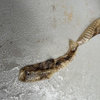
Can anyone tell me what type of snake this is...

13 years ago

I am a little worried as the head looks triangular and it attacked my push broom when I was trying to get it out of my garage... I am pretty sure it is a baby of some sort as it was only 10 inches long or so...

Comments (9)

  • 13 years ago
    last modified: 11 years ago

    Looks like a baby black rat snake. Elaphe obsoleta

  • 13 years ago
    last modified: 11 years ago

    I agree. Have seen a great many. The interesting thing about reptiles is that the younger are often the more colorful.

  • Related Discussions

    Can anyone tell me what kind of snake is

    Q

    Comments (1)
    Appears to be an anerythristic corn snake. Quite common...who ever had the snake should know that and have further information for you.
    ...See More

    Can anyone tell me what type of Persimmon this is?

    Q

    Comments (3)
    You can try though there's some reported incompatibility between fuyu and lotus. I've seen late incompatibility between lotus and various astringent and nonastringent kaki, but there's an industry based on kaki growing on lotus rootstock, so clearly it can be done and is worth doing with the right scion/rootstock combinations.
    ...See More

    Can anyone tell me what type of plant this is?

    Q

    Comments (3)
    It looks like an aloe of some kind to me. Did you know that there is a forum for plant ID called Name that Plant here on the Gardenweb part of Houzz? [https://www.houzz.com/discussions/name-that-plant-dsbr0-bd~t_3137[(https://www.houzz.com/discussions/name-that-plant-dsbr0-bd~t_3137) There is also a succulent forum that may help. [https://www.houzz.com/discussions/cacti-and-succulents-forum-dsbr0-bd~t_3277[(https://www.houzz.com/discussions/cacti-and-succulents-forum-dsbr0-bd~t_3277-and-succulents-forum-dsbr0-bd~t_3277) If you can still edit your post you can add those to the forums tagged, or you can just repost in those forums.
    ...See More

    Can anyone tell me what type of maple this seedling is??

    Q

    Comments (9)
    Showing the characteristic tendency to have a percentage of more elongated tips as well as different veining than the seedling asked about, along with the leaves tending to be cupped near the base. Instead of having the lobes fall away from a high point where the base of the leaf joins the petiole.
    ...See More
  • 13 years ago
    last modified: 11 years ago

    Eastern Milk Snake, a harmless type of Kingsnake. Almost all harmless snakes can spread the head and look dangerous. I instruct my students not to use that as a criterion for venomousness.

    Milk Snakes are very nippy; I caught one back in the summer, and it tried its best to eat me up, but even grown, its teeth were to small to penetrate my skin. Food is small reptiles, amphibians, mammals, reptile eggs and other things like that. Prey is killed by constriction.

  • 13 years ago
    last modified: 11 years ago

    Once again, NOT an Eastern Milksnake.

    This is a juvenile Black Ratsnake (or Texas Ratsnake, Gray Ratsnake, etc). The actual subspecies depends on where you found it.

  • 13 years ago
    last modified: 11 years ago

    we call them King Snakes here in AR. I wish I had more because they discourage the heck out of rodents that eat my vegetable garden up.

  • 13 years ago
    last modified: 11 years ago

    we call them King Snakes here in AR. I wish I had more because they discourage the heck out of rodents that eat my vegetable garden up.

  • 13 years ago
    last modified: 11 years ago

    jpl60,

    Kingsnakes are different species of snake. You have several types of kingsnakes in AR. The one that would look a bit like this would be the prairie kingsnake. The other AR kingsnake (the Speckled Kingsnake) is black with yellow spots.

  • 13 years ago
    last modified: 11 years ago

    King Snake.
    Lampropeltis triangulum, commonly known as a milk snake or milksnake, French: Couleuvre tachet�e; is a species of king snake. There are 24 subspecies of milk snakes. They are not dangerous to humans.

    Some milk snakes have a striking resemblance to coral snakes and this mimicry (known as Batesian mimicry) likely scares away potential predators. While both milk snakes and coral snakes possess transverse bands of red, black and yellow, a common mnemonic can be used to properly distinguish between the deadly coral snake and the harmless milk snake:

    "Red on yellow will kill a fellow, but red on black is a friend of Jack."
    "Red on yellow, deadly fellow; Red on black, venom lack."
    "Red and yellow will kill you fellow; Red and black is friend Jack."
    "Red on yellow, kill a fellow. Red on black, you're alright Jack."
    "Red next to black is a friend of Jack; red next to yellow will kill a fellow."
    "Red to yellow, kill a fellow. Red to black, venom lack."
    "If red touches black, you're okay Jack; if red touches yellow, you're a dead fellow."
    "Red next to black, you can pat him on the back; red next to yellow, he can kill a fellow."
    "Red next to black, venom I lack; red next to yellow, run away fellow."
    "Red and black, friend of Jack; red and yellow kill a fellow."
    "Red touches yellow, Not a nice fellow; if red touches black, good friend of Jack."
    "Red touch yellow, kill a fellow; red touch black, you're okay Jack."
    "Red touch black, good for Jack; red touch yellow, kill a fellow."
    "Yellow and red, you are dead; black and white you're alright."

    However, the Eastern milk snake (L. t. triangulum) does not resemble a coral snake; instead it tends to have similar markings to that of several other snakes, particularly the fox snake, scarlet snake and most importantly, the Massassauga rattlesnake. Milk, fox, and scarlet snakes are killed because of a resemblance to the venomous rattlesnake. Juvenile milk snakes, which are more reddish than adults, are often killed because they are mistaken for copperheads. There is enough distinction among the five to make the Eastern milk snake fairly easy to identify. Eastern milk snakes also have a light colored v-shaped or y-shaped patch on their neck.
    Milk snake activity is mostly nocturnal. They are primarily terrestrial and attempt to blend in with ground litter.

    Juvenile rat snakes are strongly patterned with brown blotches on a gray background (like miniature fox snakes). Darkening occurs rapidly as they grow. Adults are glossy black above with white lips, chin, and throat.

    When startled, rat snakes may freeze and wrinkle themselves into a series of kinks. If they feel further threatened, they may flee quickly or vibrate their tails in dead leaves (a form of mimicry, which makes them sound like rattlesnakes). They are also capable of producing a foul-smelling musk, which they will release onto predators if picked up. They spread the musk with their tails in hopes of deterring the threat. When cornered or provoked, Black Snakes are known to stand their ground and can become aggressive. In some instances involving larger specimens, they will often launch a counter-offensive and attempt to chase the antagonizer away.

    Unlike other Elaphe obsoleta whose conspicuous juvenile pattern fades into adulthood, gray rat snakes do not undergo drastic ontogenetic changes in color, or markings. These snakes retain the juvenile pattern of dark elongate dorsal blotches separated by four, or more, pale gray body scales, a light gray crown with dark striping that forms an anteriorly facing spearpoint, and a solid band which covers the eyes and extends rearward to the posterior upper labial scales. The venter is usually off-white or pale gray with darker irregular blotches, and a double row of black spots behind the divided anal plate of the vent. The dorsal scale rows around midbody are usually weakly keeled. Because the gray rat snake shares its range with other members of its species, intergrades of black/gray and yellow/gray rat snakes are not uncommon.

    Check the snake's scales. Rat snakes have weakly keeled scales with ridges.
    King snakes have smooth scales.
    Then there are the pupils ... Despite the snakes common name of the snake, non venomous snakes have round pupils.
    Poisonous snakes often have a triangular head tapering towards the mouth, with the nonpoisonous species often possessing smoothly curved, U-shaped heads. However, some nonvenomous snakes may narrow their heads to warn off predators, while some may have a naturally pointed head. A striking example of the latter is the wine snake, which has a very pronounced 'tip' to its head. In most cases, though, it is wise not to approach a snake if it has a tapering head.

    -Soleil H.

    Here is a link that might be useful: Identifying your snake.

  • 12 years ago
    last modified: 11 years ago

    Soleil,

    Cutting and pasting a bunch of information from the Wikipedia page for Milksnakes and Ratsnakes doesn't really help here.

    In regard to your statements:
    Check the snake's scales. Rat snakes have weakly keeled scales with ridges.

    This is very difficult to see in baby snakes like this one even when you hold them in your hand.

    Then there are the pupils ... Despite the snakes common name of the snake, non venomous snakes have round pupils.

    No. Some non-venomous snakes have round pupils, as do some venomous snakes. This method of telling venomous from non-venomous doesn't work.

    This is NOT any kind of kingsnake or milksnake. It is a baby black ratsnake. I know this because I have been studying snakes for 40+ years.

    This post was edited by FHFchrish on Thu, Oct 17, 13 at 13:34

Sponsored
Preferred General Contracting, Inc.
Average rating: 4.8 out of 5 stars15 Reviews
Fairfax County's Specialized, Comprehensive Renovations Firm