

Loud Nocturnal Bird
12 years ago
Featured Answer
Sort by:Oldest
Comments (52)
 12 years ago
- 12 years ago
Related Discussions
Loud Nocturnal Bird, What is it?
Comments (6)Have you actually seen the figure of some kind of bird in your tree? If not, I'd go with the frog/toad idea too. We have lots of them around here and they typically start up when it's about to get dark. Ours give just one "quaaaaack" at a time....See Moreloud flock of birds
Comments (14)Kate, I just had to come back to this post to let you know about what I have just seen.Last week, I drove to pick up my son from wrestling practice at about 5:15pm. Near his school, there are large empty fields. Two days in a row, as I drove past those fields, there was a VERY large flock of some sort of "black looking" birds (it was getting dark) which was feeding in the fields, and they were flying up all over the road in front of my van. I was worried that I was going to hit one of them. I finally got a good look at them, and lo and behold, they were ROBINS!!!!! I just had to tell you. I have never seen such a huge flock of Robins in my entire life. Now, I think you saw Robins. :o) Angie...See MoreMIL's nocturnal visitors (???)
Comments (18)This just happened at my sisters house when the pope was visiting the USA this year. Sister has one of those 300 day clocks that plays music,except it hasn't had the batteries changed or played any music in over 10 years.My sister said one day her and her DD were in the computor room,and had the tv on and every channel there was the pope.So they were discussing the whys of why every channel should be showing nothing but the pope.Complaining in other words,then all of a sudden that clock started playing Ave Maria.She said they both looked at each other and couldn't believe what they were hearing. Her DD says mom did you put new batteries in that clock?? No she says i havn't touched that clock in years!! So they took it down,checked it out and it was as dead as a doornail,they could not get it to play Ave Maria or anything else. So they decided they better quit complaining about the Popes coverage. Weird huh??? Kathi...See MoreBirding question..Which bird does this?
Comments (16)It doesnt sound like the Carolina Wren or the mockingbird unless its repeating a louder and more annoying call than the ones on the website lol. I would love it, if it was Screech Owls. I have seen them around but they sound different than what we are hearing. We also have a big nesting of Barred Owls in the woods behind us and they get in the trees by our bedroom window and put up a racket of monkey noises some nights. They are hysterical. I hear them some afternoons too in the little meadow area between us and a neighbor. It sounds closest to a cardinal mating call but it consistently has only two "notes"/syllables to the call with the second being a slightly higher pitch than the first. It waits a few seconds before repeating it. It Doesn't sound like a typical chirpy songbird or a crow or hawk etc. It does sound a little astroid or video gameish but it is loud! I guess I should get some binoculars so I can try and see it. Maybe some small ones w a camera in them so I can take a photo and then I can look it up. This has been going on for several years every spring so its probably a mating call of something lol. I will have to look at reviews on amazon lol....See More 12 years ago
- 12 years ago
- 12 years ago
- 12 years ago
- 12 years ago
- 12 years ago
- 12 years ago
- 12 years ago
- 12 years ago
- 12 years ago
- 12 years ago
- 12 years ago
- 12 years ago
- 12 years ago
- 12 years ago
- 12 years ago
- 12 years ago
- 12 years ago
- 12 years ago
- 12 years ago
- 12 years ago
- 12 years ago
 11 years ago
- 11 years ago
- 11 years ago
 11 years agolast modified: 11 years ago
- 9 years ago
 9 years ago
- 9 years ago
- 9 years ago
- 9 years ago
 9 years agolast modified: 9 years ago
- 9 years ago
- 9 years ago
- 9 years ago
- 9 years ago
- 9 years ago
- 9 years agolast modified: 9 years ago
- 9 years ago
- 9 years ago
- 9 years ago
 9 years ago
- 9 years ago
- 9 years ago
 9 years ago
- 9 years ago
- 6 years ago
Related Stories
GARDENING GUIDESBackyard Birds: Go Owling in October
These stealthy nocturnal hunters fill North American skies with their quiet wings and distinct calls
Full Story
GARDENING GUIDES13 North American Backyard Birds to Know
Find out about these enchanting native species and learn how to attract them to your yard
Full Story
GARDENING FOR BIRDSBackyard Birds: Meet Some Clever and Curious Jays
Boisterous jays provide plenty of backyard bird-watching in winter. Here’s how to identify all the varieties and welcome them into your yard
Full Story
GARDENING FOR BIRDSWhat to Know About Birds Nesting in Your Yard
Learn how to observe, record data and help ornithologists with NestWatch’s citizen science project understand bird trends
Full Story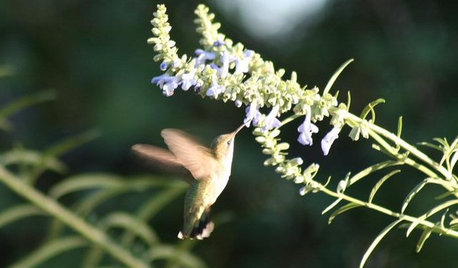
GARDENING FOR BUTTERFLIESA Quick-Start Guide to Bird-Watching for Fun and Learning
Set out some seed and grab your field guide. Bird-watching is an easy, entertaining and educational activity for the whole family
Full Story
MODERN ARCHITECTUREKeep Your Big Windows — and Save Birds Too
Reduce bird strikes on windows with everything from architectural solutions to a new high-tech glass from Germany
Full Story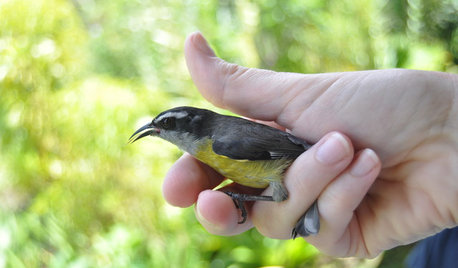
GARDENING FOR BUTTERFLIESBring on the Birds: Natural Habitat Ideas for Gardens of All Sizes
Provide nesting, watering and perching spots inspired by the Costa Rican jungle and watch the birds flock on over
Full Story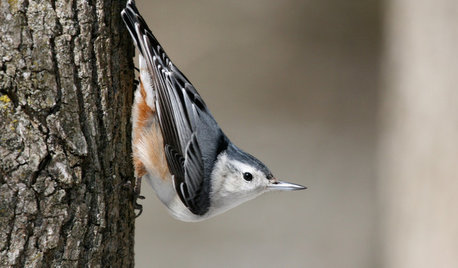
GARDENING FOR BIRDSBackyard Birds: Those Nutty Nuthatches
The North American songbirds, which often perch upside down, make themselves known in the winter landscape
Full Story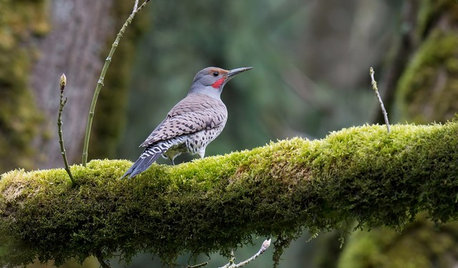
GARDENING GUIDESBackyard Birds: Healthy Home Habitats for Northern Flickers
These colorful woodpeckers found across the U.S. and Canada love berries, seeds and ants and often nest in deep burrows in trees
Full Story
EARTH DAYThe Case for Losing the Traditional Lawn
Work less, help the environment and foster connections by just saying no to typical turf
Full Story
More Discussions
catherinet