

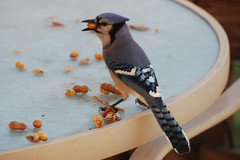
Is it a bad idea to attract blue jays?
16 years ago
Featured Answer
Sort by:Oldest
Comments (42)
 16 years ago
 16 years ago
Related Discussions
garlic mustard and ? knotweed ? good/bad idea to...
Comments (25)Hi Folks, I just wanted to throw in my $.02 on the subject of controlling Japanese Knotweed. This past week I spent two days removing the knotweed from hill along the side of my driveway. The infestation had been growing for about two years and spreading rapidly. In my case, the hillside that was covered in knotweed also had some plants that I wanted to save- some sugar maples, four varieties of ferns, and some viburnum, so using a foliar spray was out of the question. Instead, I used the "cut stem application" as outlined in this document: http://www.pullman-wa.gov/content/WYSIWYG/Recreation/Japanese%20knotweed.pdf The document recommends cutting the canes between the first and second node and filling the "well" with concentrated herbicide (I chose plain Glyophosphate, you choose your own poison). The document claims this method is 95% effective. Another method involves injecting the plant with herbicide using an injection tool. The upside to this method is that you don't need to dispose of the cut canes. In all, it took me just about two days to clear the hillside. I cut enough canes to completely fill my 8' truck bed two times. I'll keep an eye on the area for the next year or so in case any survivors pop up. -Josh-...See MoreHow can I attract blue birds to my yard in the winter?
Comments (12)kendra2 i was surprised to see that you are in MA and in zone 5 and have year round BB's. I am in SW Vermont in zone 4 (or 4B depending on where you look) and have been seeing BB's later and later each year and wondering what is going on as i thought they went south for winter. It is hard to tell from the posts what is happening because not everyone identifies where they are located and what zone they are in but it appears they will overwinter wherever they can. It seems unimaginable that BB's would overwinter in my region because it can go to -20 here at night and be in single digits for days at a time. Typically there is a stretch of 2 or more weeks in winter that don't exceed the teens. These temps are mitigated only slightly till one travels at least 75 air miles to Albany and the lower Hudson valley. Nevertheless, I have seen BB's later and later in the year on nice days until I eventually stopped seeing them in late November. This year I saw groups of BB's around the nest boxes on nice days several times in November and December. On Christmas eve I saw a pair perched near the house going into the snow to pick up something. This weekend is supposed to be in the high 40's and i kind of expect to see them again. So my question is: are they overwintering here or making "day trips" to their nesting grounds and why on earth would they be doing that in such a difficult environment when they could be in Carolina eating fresh fruit and bugs? Lou...See Morehow do I attract mockingbirds and blue jays to my feeders
Comments (11)Thanks to you both, Lazygardens and bluegirl, I believe you are both right and I will continue to enjoy the mockingbirds and blue jays from the yard. I have two hummer feeders, two little bird feeders and one large bird feeder. Ive been spoiled by having the other birds being so close to the window, they have become personal to the cats and myself, being just inches to a few feet on the other side of the window. Right now, I have daily visits from about seventy to eighty mixed birds and hummers. House finches - two females and one male came in early spring, I think they were from last year, but they were new to me, I thought they were some kind of sparrow, I did a goggle search for a red headed sparrow, it came back with pictures and the name house finch, they had seven offspring. They stay at the feeders. Titmice are my favorite. One set of parents and four youngsters have three females and one male, going by the size of the black patches on their forehead. Cardinals mom, dad and five young, three males and two females, all hatched in late spring, mom had a large brood this year, seems like they will stay together, papa and momma is always close. In the early spring we had a good number of blue birds with a pinkish chest, and a yellow finch, haven't seen the blue bird since the middle of spring, any idea where the blue bird went would be helpful. The yellow finch will show up every two or three weeks. The hummers are another story, I have no idea how many females there are from one day to the next, but there have been at least six males from time to time, since they are in a constant chase with the females, I can get a pretty accurate count on the males, I have had as many as six females outside the window at once. Thanks again...See Moreside by side ranges- bad idea?
Comments (58)The risk to all wired electronics is high voltage transients due to lightening strikes to power lines within some vicinity of one's residence. Vicinity may mean a mile or two. To minimize the risk, modules are available to suppress high voltage transients. A layered approach may be desirable where a breaker box module is wired in to a 2-pole breaker, as well as an exterior module at the meter or, if a generator is also present, after the transfer box, or even a local to the interior device module can be used. Uninterruptible power supplies (UPS) can provide such protection for computer equipment. Example, I only had breaker box modules at the main breaker boxes. A lightening strike about 1000 ft away (as the power lines fly) caused the following effects: Breakers that fed UPSs opened, the control system of my furnace had the arc suppressing capacitors across the relays burned. (This wasn't immediately apparent.) My Frigidaire 36-inch induction cooktop was apparently unharmed, but it was nominally off at the time. No PCs or networking appliances were evidently harmed (all were on UPSs). No transient suppression modules after the strike showed a failure indicated by changes in their tell-tale lights. Since then I have added a commercial grade transient suppression box to the furnace power feed, and a larger such unit to the external circuit between transfer box and service entry breaker boxes. There are myriad ways closer strikes can get into house wiring and cause havoc (or at least $$$ repairs or replacements). Where there is deemed a risk, even if only from induced transient currents, localized protection should be used. One has to consider probability of risk vs. cost of transient damage. My Frigidaire induction cooktop was only $1300, plus a modest warranty, so I accept the risk of not spending hundreds on extreme transient protection for the cooktop as the warranty provides the low probability of risk protection....See More- 16 years ago
- 16 years ago
- 16 years ago
- 16 years ago
- 16 years ago
- 16 years ago
- 16 years ago
- 16 years ago
 16 years ago
- 16 years ago
- 16 years ago
- 16 years ago
- 16 years ago
- 16 years ago
- 16 years ago
- 16 years ago
- 16 years ago
- 16 years ago
- 16 years ago
- 16 years ago
- 16 years ago
- 16 years ago
- 16 years ago
- 16 years ago
- 16 years ago
- 16 years ago
- 16 years ago
- 16 years ago
- 16 years ago
- 16 years ago
- 16 years ago
- 16 years ago
- 16 years ago
- 11 years ago
 11 years ago
- 11 years ago
 11 years ago
- 10 years ago
- 10 years ago
Related Stories

COLOROpposites Attract: Complementary Color Combos
Use the power couples of the color wheel — blue and orange, purple and yellow, red and green — to spice up any decor scheme
Full Story
HOW TO PHOTOGRAPH YOUR HOUSEAttract Home Buyers Easily With Great Photography
Show your home's best face in real estate listing photos to have potential buyers knocking down your door
Full Story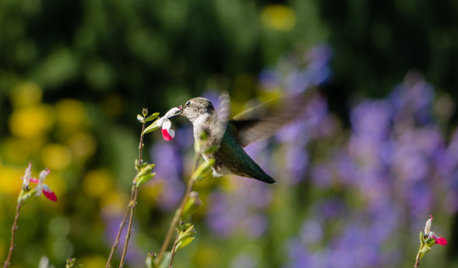
GARDENING GUIDESAttract Hummingbirds and Bees With These Beautiful Summer Flowers
Roll out a welcome mat for pollinators to keep your landscape in balance and thriving
Full Story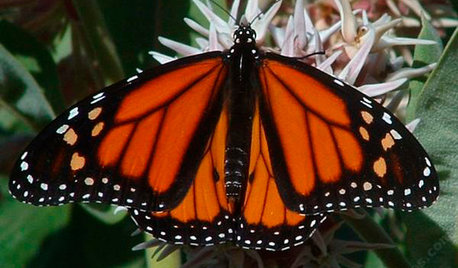
CALIFORNIA NATIVE PLANTSGreat Design Plant: Asclepias Is Attractive to Monarch Butterflies
Increase monarch butterfly populations in California by planting stunning native milkweeds
Full Story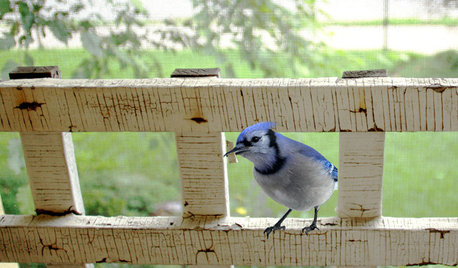
GARDENING FOR BIRDSBackyard Birds: Meet Some Clever and Curious Jays
Boisterous jays provide plenty of backyard bird-watching in winter. Here’s how to identify all the varieties and welcome them into your yard
Full Story
WINDOW TREATMENTS6 Ways to Deal With a Bad View Out the Window
You can come out from behind the closed curtains now. These strategies let in the light while blocking the ugly
Full Story
GARDENING AND LANDSCAPINGBid Bad Garden Bugs Goodbye and Usher In the Good
Give ants their marching orders and send mosquitoes moseying, while creating a garden that draws pollinators and helpful eaters
Full Story
COLORBest Uses for the Saturated Blue Color of 2015
Kelly-Moore’s selection is a classic shade of blue worthy of chunky accents around the home
Full Story
COLORKitchen Color: 15 Beautiful Blue Backsplashes
Blue is the new cool kid on the backsplash block, showing up in shades from pale ice to cobalt
Full Story
BATHROOM DESIGNStyle Up Your Bathroom Storage
Consider these ideas for attractively displaying your towels, toiletries and other bathroom essentials
Full Story
More Discussions
dzyg