

Dusk at 7 PM on the east coast, US — sad face
last month
last modified: last month
Featured Answer
Sort by:Oldest
Comments (32)
Related Discussions
Has anyone on East Coast ever tried Quercus ilex?
Comments (54)I just wanted to post that I was out at the National Arboretum a few weeks ago. The large Q. acutas looked like they sustained some damage from teh past winter. Some twig and a few branches died back. Sad to see. But they will certainly survive. The Q. salicina looked like it had NO damage at all surprisingly. I have never seen acorns on them. Interestingly the Q. phillyreoides had some acorns. No apparent dieback. They all looked rather shrubby to me and not large single trunked trees. L. henyri and Q. myrsinifolias looked just fine. Q. glauca specimens at the Arboretum have all had a rough go of it over the years. Numerous diebacks. Pretty pathetic. They should really not be grown up here. But maybe they got some northern provenance stock that they wanted to try. I didn't see where they were from. Unrelated, but all the hollies looked great. Even Ilex latifolia. The Ilex latifolia in my yard looks great as well. No apparent winter damage. A small amount of leaf spot but overall I was very pleased. This post was edited by dave_in_nova on Fri, Oct 17, 14 at 10:33...See MoreCoast Redwood photos, Big Basin SP, CA
Comments (55)Robert: The narrow strip on unlogged trees along Redwood creek was left to provide access to what were then thought to be the tallest trees in the world. A big section of logged over land surrounding the "worm" was added to the park with the park expansion bill. I was one of two lobbyists for the Sierra club working to make sure our Senators and Congressmen had the right information and would support the bill. It is a shame that that land, and even more, was not included in the original park, which really did not preserve that much additional old growth redwood forest. By this time much of the Bull creek watershed has recovered somewhat--the cutting there was done close to 60 years ago. As for the incorrect measurement of the "Mother of the Forest Tree": As a percent of the total height, the amount of error is not that uncommon. The most frequent error, is what I noted in my discussion above--the top of the tree, or a point sighted as the top, was closer to the observer than a point directly above the base of the tree. So, when the angle for computing the height was read, the clinometer gave an angle steeper than the true angle would be. The problem occurs because the measurement to the base of the tree was made separately from the measurement of the angle. For these calculations, whether for the ENTS method, or the previous method, a right triangle is assumed, but unless the top sighted is directly over the base, no right triangle actually exists for the calculations, leading to distorted results. The ENTS method assumes TWO right triangles, and measures two distances and two angles, and then combines. So whether the tree leans, or whether the top is directly over the base, is not an issue. But this method, using the convenience of the laser rangefinder, is, after all, much easier and faster. The difficulty is finding a good window to the top, and judging what the true top is, especially when sightlines are difficult and the crown of the tree is broad and/or complex. When no good window can be found--if the tree is very special--it will be climbed, and a tape dropped. Now this is really difficult and takes both climbing AND measuring expertise. And one or two additional people. With the ENTS "sine top, sine base," the angle and the height are measured on the same sight line. The assumed right triangle always--and of necessity--always exists for the calculations. If an error occurs, it is usually to underestimate the height. This would happen when something other than the true top is sighted. The ENTS method will give a true height of whatever twig is sighted, whether the top or not. Note that Will Blozan, when he measured the tree, moved 600 feet away to ensure that from his angle--from far away--he could sight the true top. And, because the distance and angle are measured along the same line and from the same point, the issue of whether the top is perfectly over the base is not an issue. The base is measured the same way as the top, and the height added or subtracted, as the case may be. What may have happened with the "Mother" tree, is either someone did not have enough patience to try to find a visual "window" for sighting the true top of the tree.--so if he stood too close to the tree, allowing him to sight some twig that was more to the side of the crown towards himself rather than at the absolute top, and that twig were a relatively small distance closer to the observer than the base of the tree, whether it were the true top or not, a large overestimation of the height could occur. Or, if the true top was sighted, but that top were closer to the observer than a point directly over the base, that would lead to the same kind of error. Of course, errors could occur in measuring the distance to the trunk, even it the top were directly over the base. Of course, people using the ENTS method can make errors, but any error will not occur simply because it is built into the methodology, as has been the case with the method commonly applied previously. Want to have some fun: get some equipment and start measuring. The now discontinued Nikon 440 rangefinder is perhaps the most preferred rangefinder because it has a narrow laser beam that can pass through narrow openings without giving a false echo from surrounding clutter. Used ones usually available on e-bay, often for between $100 and $150. I also use a basic Suunto clinometer and $13 scientific calculator. If I can sight the top and the base without too much searching, I can get readings, punch in the numbers and get a tree height in maybe as little as two minutes. --Spruce...See MoreWhere to go on an extended camping trip out east?
Comments (20)dedtired, Hints for seasickness... 1.) Look off the stern instead of the bow; 2.) Fix your eyes on the horizon instead of looking a few feet ahead of the boat (you'll be out of sight of land); 3.) Sip on cold Diet 7-Up; 4.) Many people do fine underway; but when drifting they start feeling queasy. Whale watch boats stop frequently for whale sightings. While drifting, stand at the gunnel stanchions & hold on to a rail if it's rough rather than sitting down...much better. Actually, more people get seasick in calm water than in rough seas (within limits, of course!) When there's good wave action your body gets into a rhythem. In calm seas, there's just a slight up/down, up/down that gets to some people. Beam seas are the worst! That side-to-side motion can do in even the saltiest of seamen! Since I've been a boater, I can't imagine WHY people stick babies in cradles! Inhumane punishment, IMO! Also, if you're focused on looking for the blow spouts of whales your body won't notice the rolling sensation nearly as much. We need Lori. She's more local to Newport...I'm about an hour away. But here's a place to start...a fun lunch spot in Newport is the Red Parrot. Allow about an hour just to read the menu & make your selection. It's also a great place to people watch. And go hungry! Parking is tricky. Don't be a hero & try to find a parking spot on one of the side streets...it's mostly "Residents Only". Just pay your $15 & chock it up to a good day in Newport. You can also rent the most adorable two-seater scooters in Newport. The shopping is one of two things...either touristy or very expensive boutiques, gallery quality art, designer jewelry, home decor, etc. There are also some great bookstores. History lesson on Newport: Did you know that most of early Newport was built with slave labor? Most people don't realize the extent Newport relied on slaves. The wonderful granite cobblestone roads, the houses, the ships...all slave labor. By 1770, the entire workforce was slaves mostly from Ghana. They came as children & were different than the southern plantation slaves. In Newport, most slaves lived in the same house as their owners often slept in the same bedroom as the owner's kids. They were taught skills & became highly trained. By 1830, most Newporters had freed their slaves. They went on to found businesses, become councilmen, teachers, policeman, fireman, & held high offices. But they came to America as slaves. End of history lesson. Follow the signs for Ocean Drive/Mansions & go to Brenton Park. It's right on Ocean Drive. On weekends, it's a popular place to fly those huge kites in different shapes. The water is right across from the parking (free). Actually, you could just sit in your car & stare at Newport Channel for hours watching the boats. You'll see many huge international & corporate yachts. The rocks at Brenton Park are also a popular dive spot. Look for small boats with a red flag floating in the water near the boat. The red flag means, "Diver Down". When's your trip? /tricia Here is a link that might be useful: The Red Parrot...See MoreHeads Up to Everybody on the Atlantic Seaboard & the Gulf Coast
Comments (51)Linda, there are other ways to lose your livelihood other than being a commercial fisherman should a storm take out several thousand recreational boats here in my town. Many ways. Just a few from the top of my head...marine mechanics, shipwrights, fiberglass specialists, electronics sales/installation/service, rigging specialists, canvas specialties (several types), upholstery specialists, stainless steel fabricators, crane owners & operators, marina owners, dockmasters, deck hands, fuel, pump-out service companies, painters, those who do the shrink-wrapping for winter storage, Tow Boat US franchise owners & their employees, places like West Marine & the marine salvage yard suffer from greatly reduced sales when the boats are not being used, restaurants & their employees (if boaters are not using their boats they aren't in town needing food), hotels, caterers (we have many very large yachts here all summer. They come up from the Caribbean to, hopefully, avoid hurricanes & utilize local caterers every week.), & retail in general. Boaters' purchases are the mainstay of our downtown area. Recreational boating is big business in the Great Lakes area also as it is all along the country's coasts (west, Gulf, & east). People earn their livelihoods in other ways besides farming. And those other livelihoods also ripple through the entire economy. Despite their farms the mid-west is suffering economically right now. So are Connecticut & Rhode Island. IMO, every job we have in America is important...not just farmers. My town lives or dies by the health of our local marine industries that includes oyster bed farmers, scallop divers, commercial fisherman (Stonington, our government jurisdiction, has the last commercial fishing fleet in CT.), sport fishing charter boats, & yes...recreational boaters and all those who support the marine industry that I noted above. The world's largest marine museum is located in Mystic for a reason. As I've said before, Mystic's life blood is the sea....See More last month
- last month
- last month
- last month
- last month
 last month
 last month
 last month
 last month
 last month
 last monthlast modified: last month
 last monthlast modified: last month
- last monthlast modified: last month
- last month
- last month
- last month




Related Stories
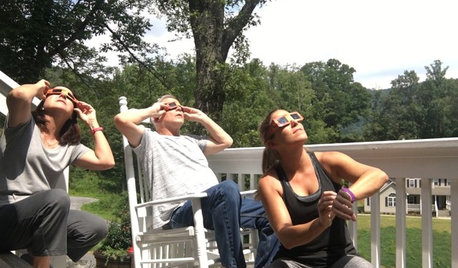
EVENTSHouzzers Watch the Eclipse From Coast to Coast
Protective eye gear in place, eclipse viewers photographed the historic event. Check out their pictures!
Full Story
MOST POPULAR7 Ways to Design Your Kitchen to Help You Lose Weight
In his new book, Slim by Design, eating-behavior expert Brian Wansink shows us how to get our kitchens working better
Full Story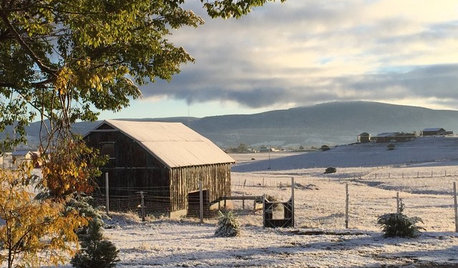
LIFECozy Up to Winter Scenes Across the U.S. and Beyond
Houzz readers share their views of the season
Full Story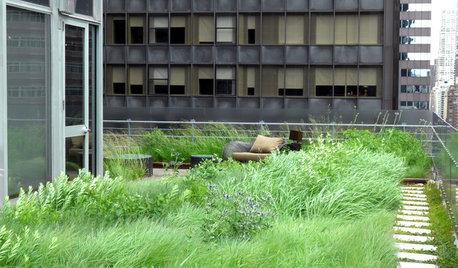
EVENTSTour 7 Stunning New York Gardens
See how garden designers landscape a living roof, a farmhouse pool area, small backyards and more
Full Story
ARCHITECTURERoots of Style: Ranch Architecture Roams Across the U.S.
Great remodeling potential and generously spaced sites make ranch homes ever popular. Is one of the many variations right for you?
Full Story
LIFE7 Tips to Get With a New Minimalist Mentality
Feeling overwhelmed by your stuff? Here's how to pare down, simplify and keep just what you need and love at home
Full Story
LIGHTINGSo You Bought a Cave: 7 Ways to Open Your Home to Light
Make the most of the natural light your house does have — and learn to appreciate some shadows, too
Full Story
CURB APPEAL7 Ways to Create a Neighborly Front Yard
Foster community spirit by setting up your front porch, paths and yard for social interaction
Full Story
DECORATING GUIDES7 Home Purchases Worth the Splurge
Make buyer's remorse over furniture, textiles and more a thing of the past with this wise purchasing advice
Full Story



foodonastump