

Matrix Planting
last year
last modified: 11 months ago
Featured Answer
Sort by:Oldest
Comments (14)
Related Discussions
Makeover my retaining wall?
Comments (7)Yipee, another young gardener. Who loves cottage gardens as do I. Last night dreams of your garden-to-be ran thru my head. Duh, the entire area can't be planted. OK, realistic plan B. Firstly get 1-2 shrubs planted to screen off the area beside the house. A green screen there provides a private sandbox area, potting area, hose storage, whatever you like. Diosma is a good shrub. Soft growth and a nice shade of green, good texture, bonus of bloom once a year. It would be look well with the birches and ivy. Nice growth rate. Let those agapanthus work for you. Take out one more clump. Plant one, or two, Grewia caffra (oops, reclassified as Grewia occidentalis --- Lavender Star Flower) close to the wall between the two agapanthus clumps. I would use another further down as well. No need to attach guide wires to the stucco unless hubby likes doing that kind of thing. It will grow as a natural espalier. Clip off any branches poking outwards when young. Will need a yearly shearing after established. Buy 6-7 (as needed) more Marguerites. Plant them as close as 1 1/2 ft. from the agapanthus (assuming you have marguerites that grow to 3 plus ft.). The agapanthus will then peek out between the marguerite's lacy foliage for excellent contrast and lushness. If you like shasta daisies a couple of clumps would combine well and provide cut flowers. The other plant that would be compatible (I think) are the large flowered hybrid Penstamons. Clumps of solid red or purple gladiolus here and there could be added later. As with all bulbs there is the drying foliage period. Yes, repeat in a long narrow bed unifies things. Since there is a 3 foot (?) width to work with, your choice of plants is limited. Marguerites are a great choice. I think I would not put more than 3 together (in a row - let your eye guide you). Pieces of it will root if you're on a tight budget and have the time. But no more lacy, ferny plants or it will become messy looking. Buy a few 16-20inch pots (the size which fits the overall scale of things) to place around the pool and indulge your love of annuals in them. Rosemary is great in a pot. And combines nicely with many annuals. Now the dog has his path and you have a restful, interesting, low maintenance bed to enhance your yard while the children grow. As Hoov said, your dream garden will happen. (how is astroturf on dogs' paws :-) ? Buy the Sunset Western Garden Book. It was my bible as a young newlywed in a first house. And I still consult it. Take pictures! You'll be glad you did. The 2 hardest things for me to learn were texture combos and scale. I was great on color! Enjoy. irisgal. PS. plants go in front of parts of the Grewia....See MoreShape of front yard beds
Comments (10)I'm not sure what you mean by "I want a lot of space." Could you clarify. You have a lot of space. Do you want a garden area that takes up a lot of the empty front space in your yard? I'm imagining the sloping part of your yard is a pain to mow. Would you like to landscape that area to something that doesn't need mowing? You'll not only have to accommodate the size of your yard, but also the slope when landscaping, so please elaborate a little more on your needs. Also step back for photo of your lot to show how it relates to the slope and your neighbors holler. That area is shaded in the aerial photo so not sure what is in there, is it just all grass? P.S. I had to look up Oudalf. Groovy! So I will add that you'll have to figure out the sun exposure of that site too, because if it is really shady, that will influence what you can pull off. If it were me, I'd wrap a wildish perennial shrub and grass garden around the walkway, tree island and down the hill. I wouldn't go towards the flat part of the yard. Nothing easier to maintain than a straight shot of green grass on a flat surface....See MoreBlooms in the matrix?
Comments (3)Very pretty! Like the color. I have had that happen, I just figured it was being weird and waited for more flowers and hoped they would be more normal ! Rosie...See MoreIs this season a loss?
Comments (17)Ah no, I would start over. I have a small meadow but in the UK. It has not been an easy project and has taken me 4 years to approximate something I am happy with. I spent 2 years assiduously weeding, spraying and covering, to get the cleanest planting area possible (and I still have an eternal headache of weeding out wild oats). Also, spring planting - dreadful idea in the UK. Once I was ready to sow, I did a wildflower/native grass mix (for calcareous soils) in October. Gives hardy perennials a chance to stratify while the few annuals germinated then grew very slowly over winter. Like a lot of things, the largest effort goes in preparation, while the actual sowing took 5 minutes. I also had to decide what sort of meadow I wanted. I couldn't have a spring flowering one which carried on so I could include late summer flowers such as sanguisorba, scabious and the like because the grass must be cut. I left it too late for one year and the grass lodged everywhere - looked a mess. I settled for a meadow which has small spring bulbs (anemones, camassia, narcissus) along with primula (oxslips, cowslips) and other short alpine meadow plants, so I do my first cut in the first week of July. I dunno, I could ramble on interminably about this because it has been a fascinating (and frustrating project) and absolutely not as simple as the many seed merchants would have us believe. I think a UK meadow would probably not transpose easily to the US...but having made numerous attempts at prairie style plantings (in my arid county), I realised I had to rely on a mish-mash of plants and techniques which are not always accepted horticultural orthodoxy....See More- last year
- last yearlast modified: last year
- last year
- last yearlast modified: last year
- last year
- last yearlast modified: last year


Related Stories
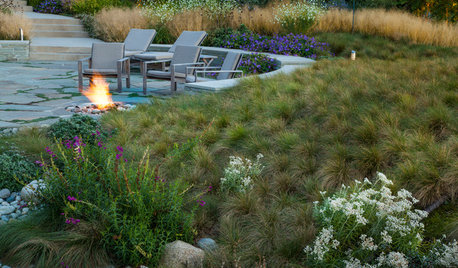
GARDENING GUIDESGet Year-Round Good Looks With Matrix Planting in Your Garden
Any garden — from 100 square feet to 10,000 square feet — can apply this low-maintenance, sustainable design method
Full Story
INSPIRING GARDENSA Contemporary Landscape With Lush, Layered Plantings
Biodiversity, seasonal interest, an enticing path and outdoor living areas are a few highlights of this Toronto yard
Full Story
PLANTING IDEAS5 Ways to Use Pastel Plantings in Contemporary Gardens
Learn how pink, lilac, lavender, cream and peach can bring a soft beauty to your landscape
Full Story
GARDENING GUIDESGreat Design Plant: Andropogon Gerardii
The king of the tallgrass prairie is a wildlife staple in natural gardens
Full Story
GARDENING GUIDESGreat Design Plant: Helianthus Petiolaris
Short and stunning, prairie sunflower brightens the garden and helps butterflies, birds and more
Full Story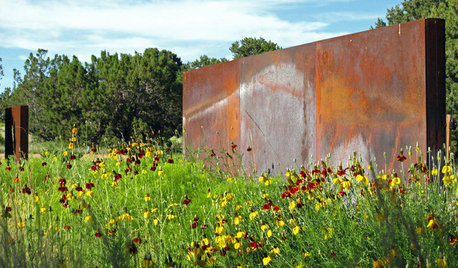
GARDENING GUIDESGreat Design Plant: Ratibida Columnifera
A shortgrass prairie native wildflower fit for pollinators and dry trouble spots offers benefits all year long
Full Story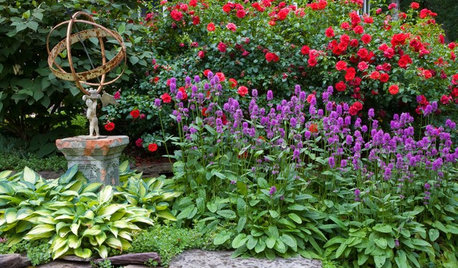
GARDENING GUIDESGreat Design Plant: Stachys Officinalis ‘Hummelo’
The adaptable ‘Hummelo’ betony adds jolts of color to a sunny border or woodland edge
Full Story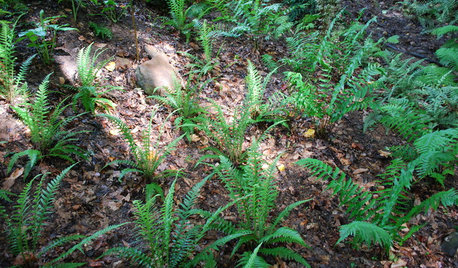
GARDENING GUIDESGreat Design Plant: Phegopteris Decursive-Pinnata
Consider Japanese beech fern for a spreading but noninvasive ground cover for shade
Full Story
GARDENING GUIDESGreat Design Plant: Carex Sprengelii
Fit for nearly any site, Sprengel’s sedge makes for a low-care, healthy garden
Full Story
LIFEConsider Avoiding These Plants to Help Keep Your Garden Fire-Safe
Plants that accumulate dead material, are high in oil or have low moisture content in leaves put some homes at risk
Full StorySponsored
More Discussions
cecily 7A