

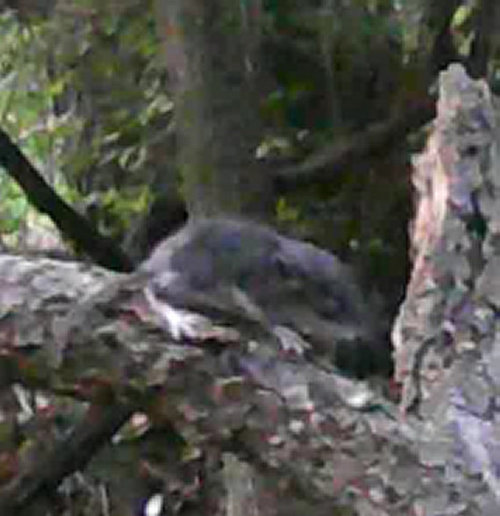
What is this tiny creature? S.E. Mich z6a
last year
last modified: last year
Featured Answer
Sort by:Oldest
Comments (7)
 last yearlast modified: last year
- last year
Related Discussions
Orange blossoms fall before oranges can grow
Comments (48)Yes, you can buy urea. Have you been told about the consequences? Everything that you did not write, I finished thinking for you, since I represent WHAT YOU NEED. I believe you should buy the least problematic fertilizer for the grower, and for the tree, in the long run. And, the effectiveness on the fruits is secondary. If you buy urea. - Urea causes strong branch growth. Do you want the tree even taller than it is now? - It is not known how Urea will act on boron. - Biuret 1% is a lot for citrus fruits. I don't know what the result will be. Biuret will probably hit the flowers hard, but at the same time it will hit the leaves ... You need to accurately calculate the dose. I don’t want to take it upon myself as to what dose is needed....See MoreIntroducing Muffy Jane
Comments (25)Ok, BIL, I'm inspired again. Thanks much for the encouragement. And one thing for sure - the view and the river access are not available in the city - not at that price. We'll talk more later. girlgroupgirl, I'm surprised that the vinegar/orange oil would not be considered organic. I know that the 20% vinegar is not something to handle lightly but I think our standards here might have more to do with how the product breaks down in the environment and from that standpoint, it should be considered organic. But 20% vinegar is topically toxic, that is true. And yes, termites are a problem here. In fact, you have to have a termite inspection done in order to sell a house. Carpenter ants are a problem. I have noticed that as the biodiversity in my yard has increased, the fire ants have decreased although I'm not sure if that's the reason. I used to get rid of them just by spraying the mounds with my water hose. Then they leave but they just go to my neighbors. But nobody around here complains much about them. I think they went to the 'burbs' of Austin where people use more chemicals. When there is a lot of rain and flooding, I do hear people complain that they all mound up together on floating wood, etc. and you'll see these floating fire ant mounds in the lakes and shores and you have to steer clear of them. Pretty funny, huh? Do y'all have organic pest control companies in Atlanta? That is really interesting about your friend's workmen not being as sensitive to poison ivy. We used to have a bunch around here but we've managed to get it under control in our yards. But our neighborhood park and creek are full. I was never allergic until I was in the landscape business and cleaned out a long row of Azaleas not realizing that I was pulling out poison ivy. Yikes! I was covered and have been allergic since. TECNU is the product to use. Very effective....See MoreThe Ladie Are Here--What Else Have You Spotted?
Comments (21)Hi Susan! I absolutely agree with your approach! Too often you will see many people panic and run for the pesticide/insecticide/miticide or insecticidal soap/neem/etc. with little thought for the overall consequence of their actions. I know that God created every single creature for a reason, and this is true in the garden just as it is in the rest of the world. When a gardener tries to wipe out any given pest, they disrupt the food chain and throw everything off balance. Once your bug populations are out of balance, it is very easy for any given pest to overpopulate and become an actual problem (instead of being perceived as a problem just by their presence in the garden). Your example of the milkweeds, aphids and green lacewings is an excellent example. Suppose a butterfly lover were able to wipe out ALL the aphids. With no food to support their population, the green lacewings will either move on to an area with a good supply of food, or they will die. That butterfly gardener's entire garden is then more vulnerable to any bug infestation because the lacewings aren't around any more to keep other bug populations in check. So, obviously you have done the correct thing by letting the natural system work in your landscape. If I have learned anything at all from a lifetime of gardening, it is that the various insects will pretty much take care of each other. That's one reason I prefer to release beneficial insects...it is working within the natural system instead of outside of it. Could you and I ever convince some of those butterfly gardeners to let the aphids stay on the milkweed and then let the green lacewings take care of the aphids themselves?I doubt it. I think the whole 'working within the realm of nature and its cycles' thing is a unique wisdom a gardener acquires over time. Some people catch on to it sooner, some later, and some never. Does this mean that I don't panic when a specific bug population appears to be out of control? No. Of course I still get concerned. But I try to figure out first if there is an actual problem. I try to wait it out and see if nature will correct the situation (it usually does). I try to determine if the damage...like holes in leaves, for example,...is just something that is "visually unpleasant" or is actually damaging to the plant. And I have learned, through the years, that often the best action to take is "no action". So, I guess our approach is best thought of as working with nature, instead of against it, and how can that be wrong? Dawn (who is tired and will now climb down off her soapbox and stop ranting)...See MoreRecipe Share
Comments (88)Grilled Tomato Sauce From Steven Raichlen Like soup, tomato sauce is one of the dishes you're least likely to think of grilling. But there is a powerful reason to try this sauce. Beyond the mere novelty factor, grilling imparts a gutsy smoke flavor to the sauce and heightens the natural sweetness of the vegetables. Don't take just my word for it. For thousands of years, Mexicans have grilled tomatoes, onions and peppers to make rich-tasting salsas. I have adapted the technique to make an exceptionally flavorful tomato sauce. Serve the sauce over grilled polenta, with any simple grilled fish, or with just about any cooked pasta. Makes about 3 1/2 cups. 5 lucious, ripe red tomatoes 2 - 2 1/4 pounds total, cut in half crosswise, and stem ends removed 1 medium size white onion, peeled and cut into quarters 1 rib celery 4 cloves garlic, peeled and skewered on a wooden toothpick or small bamboo skewer 3 Tbs. extra virgin olive oil 1 tsp. oregano 1/2 tsp. hot pepper flakes 1 bay leaf 6 fresh basil leaves coarse salt (Kosher or Sea salt) freshly ground black pepper 1/4 to 3/4 cup chicken stock, vegetable stock or water Cook the tomatoes, onions, celery and garlic in greased and preheated grill (George Foreman grill) until nicely browned. You may need to cook the vegetables in more than one batch. Transfer the grilled vegetables and let cool. Finely chop the onions, celery and garlic by hand or in a food processor. If using a food processor, run machine in spurts. Heat olive oil in large non-reactive sauce pan over medium heat. Add the chopped onion, celery and garlic, oregano, hot pepper flakes and bay leaf and cook until lightly browned, about 5 minutes. Coarsely puree tomatoes and juices with the basil in a food processor. Add the tomato mixture to the sauce pan, with the vegetables. Bring to a simmer over medium heat, then let sauce simmer gently until thick and richly flavored 8-10 minutes. Season with salt and black pepper to taste. The sauce should be thick but pourable. If it is too thick, add a little stock or water. Remove and discard the bay leaf. The sauce can be refrigerated, covered up to 4 days. Or frozen for up to 2 months. Let the sauce come to room temperature then reheat it in a non-reactive sauce pan over medium heat, stirring often....See More- last year
- last year
- last year
 last year

Related Stories
GARDENING FOR BIRDSFeed the Birds: 6 Plants for Abundant Winter Berries
Be kind to your fair feathered friends during lean food times by planting a shrub or tree loaded with nutritious snacks
Full Story
GARDENING GUIDES6 Steps to Creating Your Butterfly Garden
Encourage these fanciful winged beauties to visit your garden while helping restore their fragmented habitat
Full Story
SMALL SPACESCould You Live in a Tiny House?
Here are 10 things to consider if you’re thinking of downsizing — way down
Full Story
BEFORE AND AFTERSSee 6 Yards Transformed by Losing Their Lawns
Wondering whether a turf lawn is the best use of your outdoor space? These homeowners did, and they found creative alternatives
Full Story
MOST POPULAR6 Kitchen Flooring Materials to Boost Your Cooking Comfort
Give your joints a break while you're standing at the stove, with these resilient and beautiful materials for kitchen floors
Full Story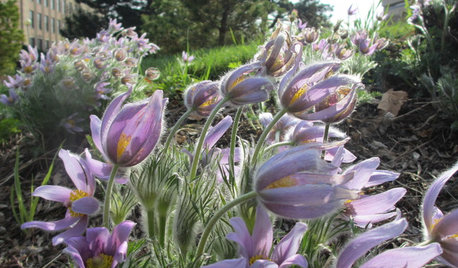
GARDENING GUIDES6 Plants That Beat Butterfly Bush for the Wildlife Draw
It's invasive, a nonnative and a poor insect magnet. Check out these better alternatives to butterfly bush in the garden
Full Story
BATHTUBSBefore and After: 6 Dream Bathrooms That Free the Tub
Freestanding tubs replace bulky built-ins in these beautiful bathroom remodels
Full Story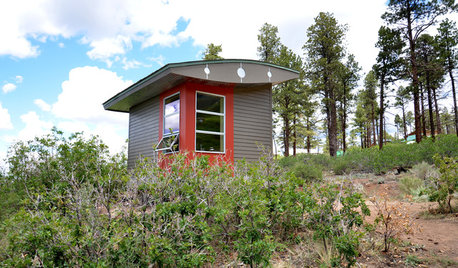
SMALL SPACESCalm Yourself in a Former Hippie Commune’s Tiny Hut
Need to relax? Check into this simple, secluded lodging at a New Mexico retreat and say, “Om”
Full Story
SMALL HOMESHouzz Tour: Sustainable, Comfy Living in 196 Square Feet
Solar panels, ship-inspired features and minimal possessions make this tiny Washington home kind to the earth and cozy for the owners
Full Story
REMODELING GUIDESGet What You Need From the House You Have
6 ways to rethink your house and get that extra living space you need now
Full Story
Old Forester ( Zones 8a-6a ) Ga/NC