

Recipe--bought the wrong kind of yogurt...
2 years ago
Featured Answer
Sort by:Oldest
Comments (25)
Related Discussions
Vegetable seedlings stunted and bolting. What went wrong?
Comments (14)I agree with opinions on MG products. I never buy them. We usually mix our own potting mix. In the past, we've bought a large container of peat moss, perlite and mix that with some compost in a wheel barrow. Once it's mixed, we store it in one of those aluminum trash cans with a lid, where it's easy to access without plastic bags opening up and spilling every where. I've been experimenting with a new recipe after reading a lot about a 5-1-1 mix they suggest over on the Container forum. But the jury is still out on that one. We normally will use the mix all spring and summer and then in the Fall make up another batch, fill our aluminum can and bring it down to the basement for the winter for houseplants and seed starting in early spring. I'm sure there are premixed potting mixes available if you don't have the interest in making your own. I've heard Fafard makes a good product, although expensive. If I were buying pre made, I'd be looking at the ingredients. Peat moss, perlite, compost maybe, bark fines. I'd be avoiding a lot of other ingredients. Especially aimed at water retention, or synthetic fertilizer, coloring or soil 'conditioning'. Seeds have become so expensive now, that I would have to agree with Loribee, to save the money to spend on that. I don't use Burpee either. I have been buying from FEDCO which is an organic growers coop for seeds, supplies, potato tubers, etc. I wouldn't hesitate to buy from Johnny's either. Loribee, I love your yogurt container idea! We usually make our own yogurt and buy the large container once in awhile. I am going to have to try to start using multiples of the smaller size and save those for next year. I also have those red drinking cups that I use too....See MoreYogurt...probably the wrong forum?
Comments (110)I make homemade yogurt all the time. I really like straining it (for greek yogurt) and adding grated english cucumber (well drained), minced garlic, lemon juice, salt and pepper for tzatziki. Great on crackers, veggies, etc. I buy the culture from the New England Cheesemaking company (I like the sour culture) and follow the recipe of the guy on YouTube - type in Greek Yogurt. The guy from Colorado with the little Greek flag is the one you are looking for. I have also the cultures for sour cream and creme fraiche, but have not had the occasion to make them yet. To answer your question, I do not think you need to boil the milk, but it does need to be heated to the right temperature. To set the yogurt, I just use my oven. No heating pads or extra stuff...I put my oven on for about 3 minutes at 200 (the lowest setting) and then put my bowl in the oven (covered) overnight. (It is not even close to 200 degrees) In the morning, I put coffee filters in my colander and put the yogurt in that (refrigerated) for about a day. I use the unbleached coffee filters instead of the cheesecloth as I was concerned about getting the cheescloth clean enough between uses. You can use this yogurt for making more batches, but since I make a gallon at a time of milk, it lasts me and my family over a week....See MoreYogurt making
Comments (4)You don't need a yogurt maker to make Yogourmet Kefir AT ALL, so that should take care of the yogurt maker delemma. Yogourmet Kefir Starter ferments milk at room temperature. Both my sister and I would hold back a 1/2-cup portion from a fresh batch to culture the next batch - and it would work about 3 times before we'd need a new package of the powdered Kefir Starter. Are you confusing Yogourmet Kefir Starter with Yogourmet Yogurt Starter? I sold and used both for years until I quit using them both after I got REAL kefir grains (which last forever). Another good option to use for a yogurt starter is Stonyfield Farm Yogurt. "It's the only U.S. yogurt brand with six live, active cultures, and the only U.S. brand with Lactobacillus reuteri culture." I used to be able to get it 2-hours away so I'd freeze it in 1-T. amounts in ice cube trays. Then I'd pop the yogurt cubes out of the trays and keep in the freezer until I needed a new starter. I'd thaw the amount I needed in the refrigerator, then bring to room temperature just before making yogurt. What beats any of the powdered Yogourmet Yogurt or Kefir Starters all to heck is REAL kefir grains. Check the link below for more information. Why pay so much for something you can often get free (or the price of shipping) and never need to replenish them EVER again. Some advantages of using real kefir grains... (source: "KEFIR Rediscovered!" - by Klaus Kaufmann) -Milk used for making kefir does NOT have to be preheated like milk for making yogurt, and it is left at room temperature throughout the incubation. -You can use almost any kind of milk (cold out of the refrigerator). -The smaller curds make kefir are far more digestible than yogurt. -Kefir contains "right-turning" lactic acid, usually called L+ lactic acid. How turning left vs. turning right makes a HUGE difference not only on the highways, but in your own bodily pathways. -Best of all, the cost of making kefir is far below the cost of making yogurt. The REAL kefir (unlike the powdered Yogourmet version) never dies. Thus, kefir cultures do not have to be bought time and again. Kefir grains are "immortal." Yogurt cultures are merely like "humans," they have a birth, childhood and youth stage, an adult stage, and sinking-towards-death stage. I use kefir as a substitute for buttermilk, cream cheese, sourcream, and plain yogurt. Depending on how long I drain the curd will determine what I use it for. I also use the very important whey as a refreshing beverage, or if you shake the jar of kefir, the curds will quickly liquify and mix with the whey. We consume kefir every day! -Grainlady Here is a link that might be useful: Dom's Kefir In-Site...See MoreWill I ever figure out chicken breast?...What am I doing wrong?
Comments (43)I just cooked chicken breasts to take to our church to be made into pounds and pounds of chicken salad for our Christmas fundraiser. Here's the method I used...it worked perfectly. How To Cook Moist & Tender Chicken Breasts Every Time What You Need Ingredients 1 to 4 boneless skinless chicken breasts, of similar size Salt and freshly ground black pepper 1 tablespoon olive oil, unsalted butter, or combination of both Equipment Heavy Mason jar or wide drinking glass Wide (10-inch) sauté pan with lid Tongs or spatula Instructions Flatten the chicken breasts: Pound the chicken breasts to an even thickness with the bottom of a wide jar or glass. You can also (carefully!) use the handle of a heavy chef's knife. Season the chicken breasts: Lightly salt and pepper the chicken breasts. Prepare the pan: Heat the sauté pan over medium-high heat. When it is quite hot, add the olive oil (or butter, if using). Swirl the pan so it is lightly covered with the olive oil. Cook the chicken breasts for 1 minute without moving: Turn the heat to medium. Add the chicken breasts. Cook for just about 1 minute to help them get a little golden on one side (you are not actually searing or browning them). Flip the chicken breasts: Then flip each chicken breast over. Turn the heat down to low: Turn the heat to low. Cover the pan and cook on low for 10 minutes. Cover with a tight-fitting lid. Set a timer for 10 minutes, and walk away. Do not lift the lid; do not peek. Turn off the heat and let sit for an additional 10 minutes: After 10 minutes have elapsed, turn off the heat. (If you have an electric stove, remove the pan from the heat.) Reset the timer for 10 minutes and leave the chicken breasts in the pan. Again, do not lift the lid; do not peek. Remove lid and take temperature: After the 10 minutes are up, take the lid off, and your chicken is done. Make sure there is no pink in the middle of the chicken breasts. If you want to be absolutely sure it is cooked, you can use an instant-read thermometer to check (the chicken should be at least 165°F). Slice and eat. Store any leftovers in a covered container in the refrigerator. Here is a link that might be useful: How to cook moist, tender chicken breasts every time...See More 2 years ago
 2 years agolast modified: 2 years agoAnnegriet thanked carolb_w_fl_coastal_9/10
- 2 years ago
 2 years ago
 2 years ago
- 2 years ago
- 2 years ago
- 2 years ago
 2 years ago
- 2 years agolast modified: 2 years ago
- 2 years ago


Related Stories
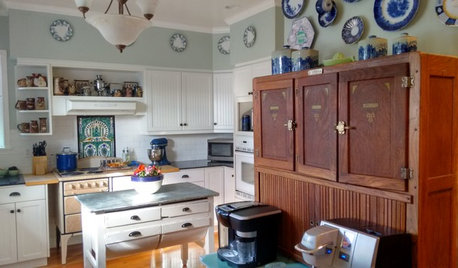
KITCHEN DESIGNKitchen Recipes: Secret Ingredients of 5 One-of-a-Kind Cooking Spaces
Learn what went into these cooks’ kitchens — and what comes out of them
Full Story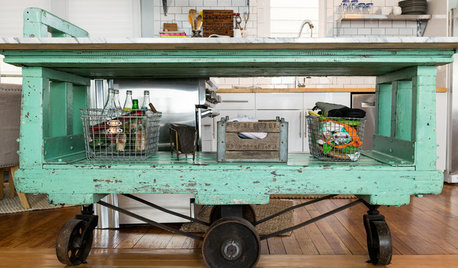
KITCHEN DESIGNKitchen Recipes: Factory Cart Inspires a Dream Cooking Space
These homeowners' kitchen was almost nonexistent, so they whipped it up from scratch. See what they cook there and get the recipe too
Full Story
DECORATING GUIDES10 Recipes for Shabby Chic Style
Rustic furniture, floral fabrics, sparkling chandeliers. Here are 10 easy ways to bring the romantic cottage look into your home
Full Story
HOUSEKEEPING7 Chores You May Be Doing Wrong
Find out the best way to clean glass and change a duvet cover — and why you should remember to look up
Full Story
LIFEPortrait of a Terribly Good Neighbor
Sometimes the best kind of neighbor isn't the kind you'd expect
Full Story
MOST POPULARTrending: 13 Warm, Inviting Kitchens You’d Want to Wake Up To
Some of the most popular kitchen photos uploaded to Houzz in summer 2018 offer a recipe for creating a welcoming design
Full Story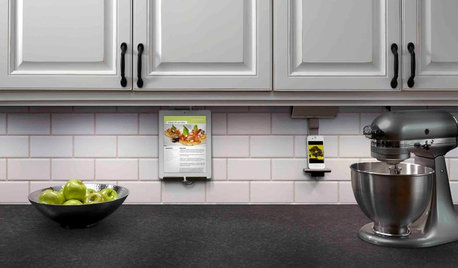
KITCHEN DESIGNHouzz Call: What’s Cooking in Your Kitchen?
Most of us turn to recipes, videos and culinary shows when we cook. Where do you set your cookbook, tablet or TV screen?
Full Story
SMALL HOMESHouzz Tour: Sustainable, Comfy Living in 196 Square Feet
Solar panels, ship-inspired features and minimal possessions make this tiny Washington home kind to the earth and cozy for the owners
Full Story
LIFEHow to Get Along With the Neighbors — and Live Happier at Home
Everyone wins when neighbors treat one another with kindness, consideration and respect
Full Story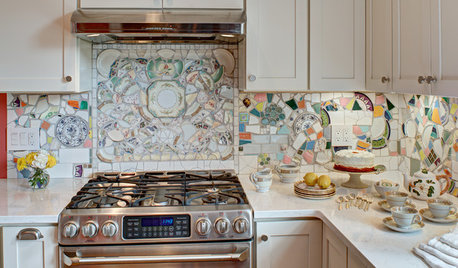
MOST POPULARKitchen of the Week: Broken China Makes a Splash in This Kitchen
When life handed this homeowner a smashed plate, her designer delivered a one-of-a-kind wall covering to fit the cheerful new room
Full Story


colleenoz