

Food for cat with urinary crystals
4 years ago
Featured Answer
Sort by:Oldest
Comments (6)
Related Discussions
Urinary blockage...so frustrated
Comments (40)My kitty has had obstruction problems as well. First doctor recommended the prescriptions diet as well as the be-all, end-all, as in "noting else will work." Cat didn't like the (crappy) food; he was back to the practice within 2 mos. Happily, there was a "relief" vet there covering for the bully who owned the place. He recommended extra fluids with his regular food (raw), SPRING water (distilled pulls needed minerals from the body; the minerals in spring water are NOT what cause the blockage) AND, prophylactic use of sub-q fluids, tapering down to prn. It had been more than 18 mos now and all has been well until my prescription for sub-q fluids rand out. Can't seem to find another vet who uses that philosophy and can't find the "relief" vet. I am getting worried. We're going to 6+ weeks since his last sub-q fluid administration (125ml/day for 8 days at beg of each month). Anybody know how to track down a "relief" vet in the central Florida area? Thx....See Moredry food for cats that can't eat dry food ;)
Comments (11)Lukkiirish, the problems with your cats was not due to wet feeding. Dry food is made to shatter IF the cat bites down on it. Of course, when it does, it's nothing but mealy grit that easily lodges in the gingiva. This leads to periodontitis, resorption, and other painful conditions. The only way to care for cat teeth at home is to brush them. Your claim that dry food is good for feline oral health is no different to claiming that eating saltines will clean your own teeth. If you know the anatomy of a cat's mouth, you can see that there are no chewing surfaces, ie., the molars are high on the outside and low on the inside near the tongue. This facilitates shearing action, which, rather than chewing, is what a cat's mouth is evolved to do. Chewing animals have flatter molar surfaces, so that food can be kept in place for chewing. Imagine the action of a mortar and pestle. The tool is designed to hold stuff in place for grinding. That's what your teeth are made for. Cat teeth are shaped to provide a scissor-like action. So, on that alone, you can understand why dry food is useless for feline oral health. Next, dry food is by nature very high in carbohydrates. It must be, since the plant matter is needed to glue the meat meal grit into kibbles. If you're reading labels, good-but if you're not translating them, then you have no idea what you're feeding your cats. Any claims on dry food labels of "50% protein" are utter hogwash. Firstly, any plant matter that is useful protein in any other animal feeds is also considered useful protein in cat food, despite the fact that cats cannot utilise plant protein. You need to know how much animal protein is in the mix, and manufacturers are not always going to tell you that if you call them. Secondly, you need to calculate dry weight to get a grasp of how much of ANY protein is in the mix. If you're lucky enough to get facts from the manufacturer, then you still do the maths. The best dry food on the market is probably less than 20% animal protein, which is grossly insufficient for obligate carnivores. Then you need to consider that cats are not particularly interested in drinking water. Everyone claims that "my cat drinks plenty of water!" But no one can tell you how much water "plenty" is! A cat's natural diet is prey, which is about 70%-80% water. So is wet food! Dry food? Under 10% water. Cats will drink, but are not thirst-driven, so are unable to know if they're getting enough water to function. The dry-fed cat will walk away from the water dish long before it has consumed sufficient water. As a result, dry-fed cats have undue strain on kidney function, digestion, urinary function, and who knows what else because they are always dehydrated. Dry-fed cats are also far more likely to be obese and to develop diabetes and hypertension. Oh, and let's not forget how many dry-fed cats end up with an excess of urinary crystals or even blockages! This is almost always due to dry feeding, which leads to concentrated, alkaline urine. Cats need the sufficiency of wet food fluid intake in order to reduce urine's concentration and to flush out crystals. The higher animal protein in wet food helps to maintain appropriate urine acidity. Another interesting thing is that so many people are completely hoodwinked by the"grain-free" movement! It doesn't matter! Grain-free does NOT equate carbohydrate-free! Grains are often primary suspects in food allergies. The grain-free bandwagon needs to be halted for the sake of our cats. Grain-free dry foods contain as much carbohydrate as do grained foods. You'll frequently see claims that cats in the wild will eat the stomach contents of their prey, but this is not fact. Cats are not keen on stomach acids needed for plant breakdown and carefully avoid eating any part of prey digestive tracts. I suppose that laboratory cats who are only fed digestive tracts will consume them in hope of avoiding starvation, but not cats in more normal surroundings. Lastly, I'm always hearing from people who claim to have cats who were dry-fed only, and lived to be 32 and never had a problem. Well, genetics can make some cats lucky enough to slip past troubles, but these are very much the minority. I also suspect that some of the owners were lying about the cats' longevity, or the cats had outdoors access so supplemented their dry food with nice juicy prey. It is also likely that the cats were never taken to the vet so any problems they may have had were never diagnosed. It's like the centenarian who, when asked the secret to his long life, answers " booze, cigars, and unrestrained sex!". Does that mean that EVERYONE should live like that in order to become a centenarian? Of course not. I see no problem with using dry food in place of cat treats. It's less expensive. Ten to twenty pieces of dry food in a day are amazing as training rewards. But there is no real benefit to dry feeding....See MoreCat with severe food allergies AND crystals
Comments (17)The only symptom she has is a high ammonia smell in the litter box. Her urine never smelled so potent before. She hasn't been tinkling in the house or exhibited any unusual behaviors. But then I noticed she was going outside (in her pen) so just wanted peace of mind that she was healthy and not peeing too frequently. Other than that, the Health Meter cat litter turned green, too (should stay yellow). The package doesn't say what green means... I can't believe the first vet gave me all of that incorrect information and was trying to put my cat through dietary changes that weren't in her best interest. I don't believe her second opinion vet thinks she's going to have problems. The only thing that stood out for him was the USG levels. He said that there was an at-home treatment for hydrating a cat but didn't even feel it was necessary at this point. He said she was okay to stay on the Prairie food (I don't really have any easy options) but canned would get more fluids in her system. That is all that we are doing right now. I was going to fill up her pool this weekend to see if she'll play in it and drink some extra water, too. I would like to do some more research on food and see if she can eat something even better than the Prairie. The foods cause immediate diarrhea so I need to wait on that. Right now she appears to be battling the darn herpes virus again from the stress of going to the vets. So, I'm really trying to get as much canned in her as possible because that's how I can get the Lysine into her. It took me months to get her respiratory problems resolved, I thought she was home free....See MoreDo you feed a low-magnesium cat food?
Comments (9)I have a dog that once had a UTI and was put on RX food for crystals. I wasn't happy about the ingredients (or the price!) and eventually snipped the tag off with the protein, moisture, fiber , etc percentages and checked EVERY food on the shelf in many stores. I eventually found one that was nearly identical and switched him (Biljac Reduced Fat). At his next vet visit I was asked-are you still feeding rx food? I replied no your food is cr@p, showed her both food labels and ingredients and she had no problem with me switching. Its been almost 4 years. The type of food he apparently needs ins lower in protein. His coat looked much shinier in just a couple of weeks, due to better food! As for the cat-I recently fired my vet after researching his kidney condition. I found some things questionable. I figured since he was doing well, all was well. But know I think-he was doing well in spite of some of the things in his treatment plan! Anyway-enough about him, thats off topic. What I meant to say is-you should be able to call any manufacturer to find out the magnesium content of their food. People do it all the time on the kidney board for phosphorus. See what it is in the rx food, then try to get as close as possible to it, and the percentages on the side panel....See More 4 years agolast modified: 4 years ago


Related Stories
PETSSo You Want to Get a Cat
If you're a cat lover, the joys outweigh any other issue. If you haven't lived with one yet, here are a few things to know
Full Story
PETS15 Design-Friendly Places to Hide the Cat Litter Box
Built-in solutions include putting it in a cabinet, under the stairs, behind a wall and inside a window seat
Full Story
PETS10 Tips for Keeping Indoor Cats Healthy and Happy
It's National Cat Day: Ask not what your cat can do for you (because it will ignore you) but what you can do for your cat
Full Story
PETSHouzz Call: Send in the Design Cats
Post your best photo of your cat at home, in the garden or with you in your studio. It could be published in a featured ideabook
Full Story
PETSConfessions of a New Cat Parent
Here’s what I learned about adoption, litter box setups, cat hair management and the joy of feline companionship
Full Story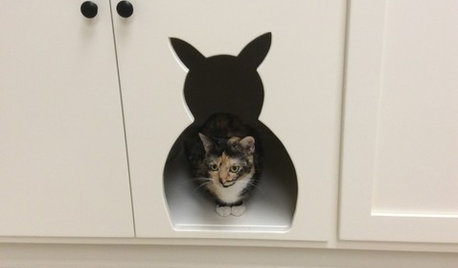
PETSReaders Share Options Galore for Cat Litter Boxes
Houzzers recommend their cat box solutions and customized hacks
Full Story
PETSHow to Find a Rescue Cat That’s a Good Fit for Your Household
Australian TV’s emergency veterinarian discusses what to consider before adopting a cat and introducing it to your home
Full Story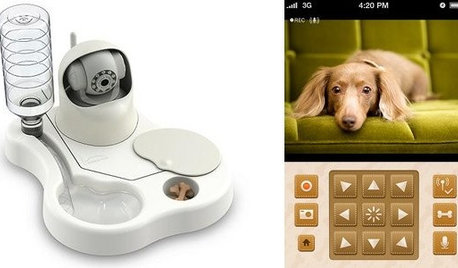
HOME TECHTo Feed and Protect: Care for Your Pet From Afar With New Devices
You might miss the nuzzles, but your dog or cat won't miss food, water or monitoring with these high-tech feeders and cameras
Full Story
PETSDealing With Pet Messes: An Animal Lover's Story
Cat and dog hair, tracked-in mud, scratched floors ... see how one pet guardian learned to cope and to focus on the love
Full Story
GARDENING GUIDESHow to Bring the Joy of Bluebirds to Your Garden
Attract these beautiful songbirds with nesting habitat and food sources, including berry-producing trees and shrubs
Full Story

rob333 (zone 7b)