

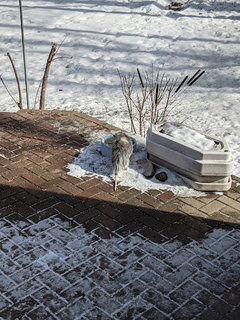
‘America’s Most Misunderstood Marsupial’ — Article in The Atlantic
4 years ago

Featured Answer
Sort by:Oldest
Comments (14)
Related Discussions
question re the 'ivy question.'...
Comments (33)Yard - my initial question presupposed that, since I don't remember reading anything in English sources about dire effects on trees etc., there must be some reason for that in terms of something different there than here (e.g. pests of some sort or other unidentified conditions...) It was probably misleading of me to use the word garden when I was interested in the bigger picture also - although I did also wonder about it in gardens too... (Bahia and Ink's input helped answer that question, as well as a recent post on GW that included comments from an English gardener on controlling ivy in the garden - she does much the same things as I do to control the ivy coming from my neighbours...) It just occurred to me to check the RHS web site re ivy. Interesting... While this doesn't explain why the ivy would be more damaging in areas of North America, it's interesting to see the English perspective on it: "Just how harmful is ivy? Here are some facts that will help you decide; - Ivy growing on trees is often thought to be a serious problem, endangering the health of even very large trees. However, its presence on the trunk is not damaging and where it grows into the crowns this is usually only because the trees are already in decline or are diseased and slowly dying - If the branch canopy becomes thin and allows sufficient light to enter, the ivy will develop into its arboreal form. Fraxinus (ash), a naturally thin, open-crowned tree may suffer heavy infestation, and for this reason ivy on ash trees is often controlled - When trees grown for their stem or bark, such as birch and some acers, keep the stems or trunks free from ivy - On other trees, ivy can be allowed to grow on the trunk, although one problem with very old or damaged trees is that the ivy may hide cavities which, in time, could gradually enlarge and possibly affect stability - Ivy is not a parasite; the short, root-like growths which form along climbing stems are for support only. Its own root system below ground supplies it with water and nutrients and is unlikely to be strongly competitive with the trees on which it is growing - Ivy has much wildlife value. As ground cover in woodland, ivy greatly lessens the effect of frost, enabling birds and woodland creatures to forage in leaf litter during bitter spells. Growing on trees, it provides hiding, roosting, hibernating and nesting places for various animals, birds and insects (including butterflies), particularly during the winter months and in areas where there are few other evergreens. Note: If you are concerned about an old or diseased tree, always seek professional advice from an arboriculturist or tree surgeon." Their recommendation on how to control it when it is an unwanted groundcover and you don't want to use chemicals: "Dig up all stems and woody roots. This may be difficult on heavy soils or where vegetation is very dense. Where the site is not needed for planting, an alternative control method is to clear away all top growth before laying weed-control fabric and a 10-15cm (4-6in) deep layer of bark mulch. Leave in place for at least two growing seasons." I would bet that a big part of the problem here is likely due to the greater presence of evergreen conifers here that are not evolved to live with evergreen vines. I'm not sure about the PNW, but most forest vines here are deciduous, so are likely less stressful on the trees when they climb on an evergreen conifer. And I wonder if the local bird populations have developed a strong preference for this 'exotic' food source... :-) Note that the RHS info only seems to be talking about deciduous trees and makes reference to ivy having value particularly in the absence of evergreen trees. So I think the the difference in the type of trees in forests between here and there is very much likely to be a key factor in how ivy performs in the environment here relative to there....See MoreCan anyone explain some organic rationales?
Comments (53)In the interest of being "fair and balanced" (despite the negative connotations that term may engender for some) I would recommend a book called "The Truth about Organic Gardening" by Jeff Gillman. In it he describes several organic practices, and compares them with non-organic methods, with an eye to efficacy, expense, practicality, and environmental impacts. He does a good job of explaining not only practices and rationale, but an open-minded attitude towards synthetic inputs, and is not afraid to point out the drawbacks of organic methods. The one area that I find the book lacking is in an examination of the involvement of fossil-fuel resources in the two methods, but in general it is a good comparison that seems to avoid the non-scientific aspects of organics that some seem to find a turn-off. (Thank you, by the way, for the compliments. All those years watching Perry Mason finally paying off) ;^) Here is a link that might be useful: Organic rationale book...See MoreNew Words
Comments (21)I like to find words from other cultures for which we have no concept in our society. I was fascinated by this example from Finland, as we in the US are likely to be shot as trespassers if we wander too freely without permission on private lands... From the Finnish: "Jokamiehenoikeus"---"The right for anyone to gather wild berries, mushrooms, flowers, to freely roam and travel the countryside, so long as you don't intrude on peoples" privacy." What a wonderful concept. From what I understand, a similar value exists as well in Germany and the UK....See MoreInteresting article in NY Times about CryptoWall
Comments (22)Sindely ... you don't have to go to the bad neighborhood ... it sends hit men out to find you. ============= http://www.proofpoint.com/threatinsight/posts/malware-in-ad-networks-infects-visitors-and-jeopardizes-brands.php "Malvertising attacks use online advertising channels to infiltrate malware into the computers of unsuspecting users by embedding malicious code within legitimate advertisements on trusted websites. " "Without having to click on anything, visitors to the impacted websites may be stealthily infected with the CryptoWall 2.0 ransomware. Using Adobe Flash, the malvertisements silently âÂÂpull inâ malicious exploits from the FlashPack Exploit Kit. The exploits attack a vulnerability in the end-usersâ browser and install CryptoWall 2.0 on end-usersâ computers." Here's a partial list of known infested sites - (biased because it was an Aussie research group) - which have since been cleaned up. Yahoo! Finance, Fantasy and Sports (yahoo.com, Global 4, US 4), AOL (realestate.aol.com, US 37, Global 119), The Atlantic ( theatlantic.com, US 386, Global 1,206), 9GAG (9gag.com, US 528, Global 201,), match.com (US 203, Global 631), The Sydney Morning Herald (www.smh.com.au, Australia 13, Global 780), realestate.com.au (Australia 17, Global 1,656), The Age (theage.com.au, Australia 34), stuff.co.nz (New Zealand 9), societe.com (France 54, Global 1,649), Dumpert (dumpert.nl, Netherlands 24), Flirchi (flirchi.com, India 106, Global 1,129), Weatherzone Australia (weatherzone.com.au, Australia 111), Brisbane Times (brisbanebrisbanetimes.com.au, Australia 183), RSVP (rsvp.com.au, Australia 351), The Canberra Times (canberratimes.com.au, Australia 403), Time Out (US 1,145, Global 1,816), The Beacon-News (beaconnews.suntimes.com, US 1,178), Merca2.0 (merca20.com, Mexico 229), clicccar.com (Japan 1,124), iPhone for Hong Kong (iphone4hongkong.com, HK 112), Noticias Argentinas (noticiasargentinas.com, Argentina 784)...See More- 4 years ago
 4 years ago




Related Stories
FLOWERS AND PLANTSEvoke the Mid-Atlantic’s Indigenous Landscape With These 7 Vines
Use these natives to fill gaps, create a shady cover or add a vertical element
Full Story
REGIONAL GARDEN GUIDESDelight in Summer’s Garden Glories — Here’s What to Do in June
Wherever you live in the United States, these guides can help you make the most of your summer garden
Full Story
GARDENING GUIDESGreat Design Plant: Anemone Canadensis Adds Pizzazz to Water’s Edges
Plant Canadian anemone along pond, lake or stream edges for a splash of white flowers in late spring
Full Story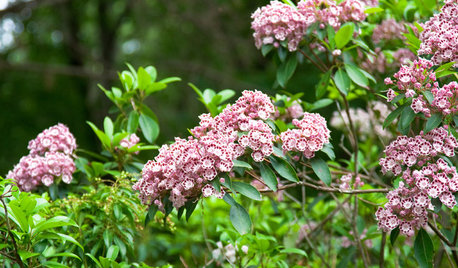
FLOWERS AND PLANTSKalmia Latifolia’s Origami-Like Flowers Shine in the Shade
This shade-tolerant shrub, also known as mountain laurel or calico shrub, thrives in East Coast woodland gardens
Full Story
SPRING GARDENINGEnjoy the Peak of Spring Gardening — Here’s What to Do in May
Bid the frost farewell and treasure the blooms. No matter what U.S. region you’re in, one of these guides will help your garden flourish
Full Story
MOST POPULARArchitectural Icon: The World’s First Bauhaus House
The Haus am Horn in Weimar is the first architectural example from the famed school, and the only one in the German city where Bauhaus began
Full Story
MOST POPULARSpring Gardens Are Blooming — Here’s What to Do in April
Get the guide you need for gardening in your U.S. region, with tasks, climate-appropriate plantings and more
Full Story
SPRING GARDENINGSpring Gardens Are Waking — Here’s What to Do in March
Excitement fills the air when gardens come back to life. These guides will help you make the most of yours
Full Story
MOST POPULAREnjoy Your Summer Garden — Here’s What to Do in July
Our July gardening guides take the guesswork out of summer watering, pruning and planting. See our tips for your U.S. region
Full Story
MOST POPULARWhat’s Your Neutral: Beige or Gray?
A designer shares 10 tips for using the neutral shade that works best for you
Full Story
tsugajunkie z5 SE WI ♱