

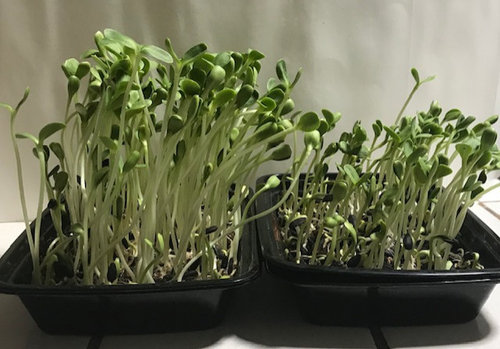
Chapter 2: A City Gal Attempts Micro Greens
6 years ago
last modified: 6 years ago

Featured Answer
Sort by:Oldest
Comments (7)
 6 years ago
Related Discussions
The straight scoop on Micro-Herd?
Comments (15)Thanks dood, I do try to back up what I say with pictures as evidence, rather than hollow talk, stuff that I have copied and pasted or just rhetoric. I think that we over think and over worry a lot of this stuff. Here is an example: This is a near record, if not THE record for rainfall for our area. Consequently a very good (or bad depending on which side you are on)year for fleas. Because of our dogs misery, we had to treat the yard for fleas the other day and used some bug b gone product in a fertilize spreader when it looked like it was going to be no rain for most of a day. It got the fleas, but much to my dismay, I found in the yard thee next day after the next heavy downpour. Some of them could have drown of course, some usually do, however I was very encouraged a few days later to see (all the little black spots) of an apparently still healthy population of earthworms. Mind you, this is after two years of severe drought which really took it's toll on them. I am still not seeing much evidence of the little red wigglers, but as I understand it, they do not burrow deep to escape the drought like the regular earthworms. My conclusion is that they are pretty resilient, danged tough and can withstand a lot of adversity and come back strong. Consequently, I would not worry at all about spraying a little bit of round up on the foliage of unwanted weeds and grasses. I think that it goes right down the plant stem and kills the roots and is deactivated with contact with the dirt. Just my observations and thoughts. Bill P....See MoreMy latest attempt...to grow Abies
Comments (38)Below is the correspondence i had with Dax in response to his request for a grafted fir on Abies firma for Dave. I do not believe he represented my position accurately. I did suggest Dave was a fir killer as am I. I know full well how hard these firs are to grow in a hot humid climate, and I have killed a bunch trying to figure out how to grow them here in central North Carolina. My point to Dax was if Dave can not grow an Abies firma successfully there is no reason to think a grafted fir on Abies firma would survive. I did offer an older Abies firma for Dave to try out. Dax did not respond to my suggestion. I figured if he could get that to live, then he could try a grafted one. Also a young fir graft is just a bad idea to plant in the ground. The roots are just too prone to root rot when they are young(my opinion, and experience) I offered suggestions about media pH, and water issues as a posibility of Dave's problems. Growing a grafted fir in my climate is by far the most difficult horticultural challenge i have ever faced, and I place a high value on the ones that live, because many do not. I'm am sorry if Dax thinks i am a cheapskate, but i did offer a trade, which i think is reasonable. Dax did not respond to my suggestion. I think a trade is reasonable considering the amount of time and effort i have put into these grafts. Maybe I am not familiar with conifer growers codes of conduct, but I believe I offered a reasonable suggestion for Dave to get a grafted fir, and my suggestion was not responded to. Even if my name was not used when Dax described our exchange from his perspective, i think he completely misrepresented our exchange. I'm sorry if I did not want to give away something for free(plus shipping) to someone i do not even know(Dave), after someone I only had corresponded with for just a few short days(Dax) requested a favor. Now I am getting maligned, and I really do not think i deserve it. Carl W. March 29th 2010 Dax, Would a Abies firma seedling be alright(I have some larger ones), or does it have to be a grafted fir. Is he able to grow fir seedlings? I hate to send one of my hard to come by grafted firs to a fir killer. All mine are on Abies firma which is suppose to be a zone 6-9, and dcsteg appears to be 5 b. Cutting it close. My preference for a grafted fir would be a trade for another plant, or some scion wood next winter. I have some one gallons (last years grafts) that I may be able to part with, but I would like to get a second flush this spring to make sure they are reasonably strong. I personally would not try and plant something that young in the ground if that was his plan. If he is killing firs, has he checked his soil/media pH, and water. Abies firma will not tolerate alkaline or neutral pH for long. Something close to a 5.0 to 5.5 is suppose to be ideal for firma. I have alkaline water and over time the water alters the media pH, and the plants get really sick or die. I have improved my media, and will be injecting citric acid this year to keep them happy....See MoreGreen Board. Is it green or white? Please tell us.
Comments (36)So many of our cities are busting at the seams - population density growing and land fills long gone in and around urban areas. Lets make more garbage - lets buy it at the box and we can change it in two years when we are making more money. Why do we live this way? Why are we all so concerned for our planet and so many people just do nothing? I am a father of 3 beautiful girls. My eldest is 8 and in grade 3. In grade one they teach you about power smart - eco options and what to do if there is an earthquake or fire. When your 6 year old (now 8) starts on you for not powering down the Mac Book you know the schooling is working. Then you think??? How can I make this little girl so proud of her Daddy? Daddy changes. Daddy is a builder. Daddy starts learning how to be a better builder and to build more green. Now this same little one is 7 and we are renovating our home. What can I do to be greener? How much of my home can I save? Answer: A-lot. A year goes by your middle one is 6 your house isn't finished because you won't settle - you had to keep everything and build it right. More talk about the Hydro and more talk about our fish, our recycling and starving kids in Africa. Their is terrible loss in Haiti - this saddens my eldest to a level I was unaware she could feel. My heart breaks - what can I do. Do more. Do it today. Make a difference. I ramped up my recycling, saved everything I could and those scraps - that garbage. Why throw it out? I can take 10 minutes; I have the skill and the tools - why not chop up these bits and bites and given them to my 4 year olds preschool. This is a Montessori program and the teacher is passionate about crafts, visual learning. Crafts are expensive. What does it cost me? An hour (there is always chit chat at drop off) nothing. Easy. Now there is a new University program in need of garbage for an arts course. New art. Green art. I build luxury bathrooms and work with beautiful tile and product. I always have waste. Why dump. The kids can glue it. I have spoken with my suppliers and they are going to save for me - crap, junk, and garbage. Maybe a can or two a month - not much. But one more step forward. How can I do more? Think. Think. Why not help online. Save people from making mistakes and then save a little more garbage in 3-7 years time. This has been my last year. Helping, Building, Recycling, Saving. Now today Im a better man, I do more - but I push myself. What else? It pains me to overhear bad advice in our "Box" stores. They give it out every day. Many unskilled kids and weekend warriors working part time. I went under cover and disguised myself as overweight, father of 3 and hit the "Box Stores" for some advice. I visited them all in Vancouver, North Vancouver and West Vancouver - many of these stores more than once. This took me three days to complete over our Canadian long weekend. I visited 2 of my tile suppliers and also 2 building yards more geared to contractor business than every day retail. The results where mind blowing. The advice so bad it enraged me. I ask you this. "How can these stores endorsed by our celebrity builders dispense advice that can make a home sick - make a home unsafe. A home that leaks. A home that is unsafe because of unapproved non-fire rated wire. Why can I go into a store and buy flashing for a window in a city infested with leaky condos and the flashing does not meet current code??? Is it right that these same stores then profit from the looming rebuild. And a round and around you go. In the end more waste and this waste is the bad kind, old insulation, drywall, concrete board etc." We have codes here in our town and you have yours. Should it not be some sort of company policy that an employee actually reads the instructions on a product label before dispensing advice as an "expert" or "flooring associate"? Can an employee who helps sell products to build my bathroom at my box store tell me that it is OK to use drywall and mastic for my tub shower? This is one of the most known no no's - yet this advice was given to me by 3 of 10 "Experts". So when your busy trying to clean up the dishes, answer your emails and you let your kids play in the bath for an extra half hour (it's great to hear them laugh at bath time) - think about who built this shower, how it was built and it if the backside of those shower walls are covered in mold? Why are our kids so sick all the time? These new products are incredible. There is no reason for kids to get sick, homes to rot or a house to burn to the ground. Stores should point out product, stock shelves - but if they want to tell you how to do something they better dam well know what they are talking about. Another question for you to ponder; "Why is it that when I go into my plumbing and electrical wholesalers the staff are not allowed to tell you what to buy. You have to ask for it by name? Think about it???" But at the Box they can advertise that they can help but in fact send you out the door with a weekend project that no pro could do in 4 days. I'm going to change this - myself. Right now. I started on Friday and hope to have solid progress to report by weeks end. I'll be contacting Rona tomorrow and will share my insight in their staffs training. Look Girls! Look at what we did as a family and for whom we did it for. Our friends. Their friends. The planet. Because it's the right thing to do and to not turn a blind eye. Look how one little bathroom contractor can change a multi million-dollar company(s). Makes me proud to see my daughter well up when I shared the good news today that Home Depot is going to change. And not just in my town. But Canada wide! I was contacted by Tiziana Baccega Manager, Public Relations & External Affairs The Home Depot Tel:416-412-6570 Fax: 416-412-6792 and she thanked me for my insight and made me fill quite confident that this retraining will happen and will happen soon. I will keep you posted. It is wrong that the retailers profit and while they wait for the rebuild we get sick - breathe mold and we send our kids to this very spot every day to breathe more. No No No. It is not right - and I am going to stop it. "Waterproofing a shower is not something you can almost do perfect. When it's perfect. It's good enough." - John Whipple __________________ ....See MoreANOTHER attempt at the kitchen Floor Plan (Picture)
Comments (36)Seems decent and very workable to me, as well as attractive. I think it does a good job of giving you your partially open kitchen. Are you going to be able to leave the peninsula open, with no post? I really prefer this cleaner look. You didn't replace the fridge in the floorplan with more cabinets for dish storage, but they seem to be there in the 3D rendering, so that's good. If it were mine, I might want to wait to finish the perimeter of the kitchen, then mock up an island, trying it in different lengths and in different positions to make sure and have it the best it could be. If it suits your style sensibilities, you could even get something that had a bit of character to it...Something different than matching your cabinets. This is a minor detail and maybe just personal opinion, but I'm not a fan of diagonal corner cabinets and think a 90-degree door in the upper corner would better fit the style of kitchen you're designing. Better access, plus more classic/timeless, especially since you have no other angles. The only way it'd be better is to widen the kitchen to be able place a wider island with prep sink in better proximity to be a prep area near the stove. Overall, I give this plan a thumbs up. I wouldn't be at all disappointed to see this kitchen in a house I was considering buying. It would be a big plus....See More


Related Stories
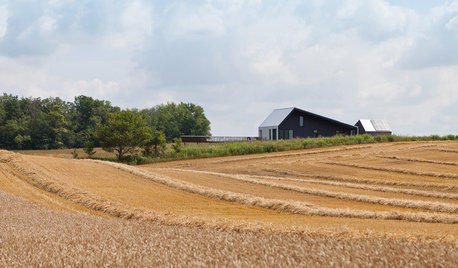
GREEN BUILDINGOff the Grid: Ready to Pull the Plug on City Power?
What to consider if you want to stop relying on public utilities — or just have a more energy-efficient home
Full Story
COMMUNITYTogetherness Take 2: Is a Cohousing Community for You?
Missing that sense of connection? Consider the new breed of neighborhood with a communal bent
Full Story
MOST POPULAREasy Green: 23 Ways to Reduce Waste at Home
Pick from this plethora of earth-friendly ideas to send less to the landfill and keep more money in your pocket
Full Story
BOOKS11 Great Children’s Books About Home (and 2 Honorable Mentions)
Homes come in many different shapes and sizes, and these kids’ books highlight the tallest, the smallest, the oldest and the silliest
Full Story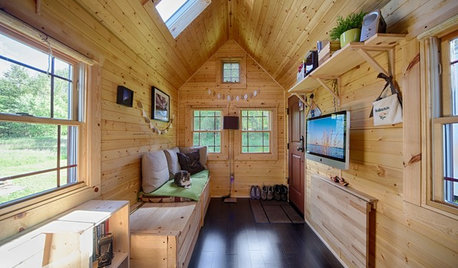
SMALL HOMESHouzz Tour: Sustainable, Comfy Living in 196 Square Feet
Solar panels, ship-inspired features and minimal possessions make this tiny Washington home kind to the earth and cozy for the owners
Full Story
HOUZZ TOURSMy Houzz: Luminous and Low Maintenance in New Orleans
See the new build that replaced a hurricane-ravaged house, beginning a new chapter for a retiring couple
Full Story
HOUZZ TOURSHouzz Tour: A Seattle Home Reaches for High Sustainability
Tapping into rainwater, sunlight and natural ventilation, a Washington state home gets both green cred and a gorgeous look
Full Story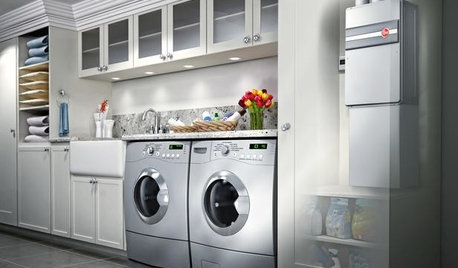
GREAT HOME PROJECTSHow to Switch to a Tankless Water Heater
New project for a new year: Swap your conventional heater for an energy-saving model — and don’t be fooled by misinformation
Full Story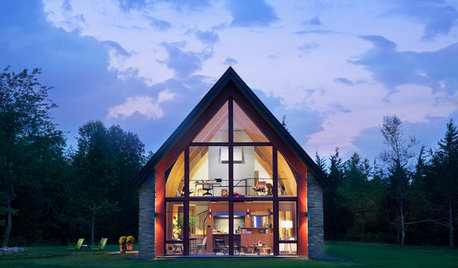
GREEN BUILDINGThe Passive House: What It Is and Why You Should Care
If you don’t understand passive design, you could be throwing money out the window
Full Story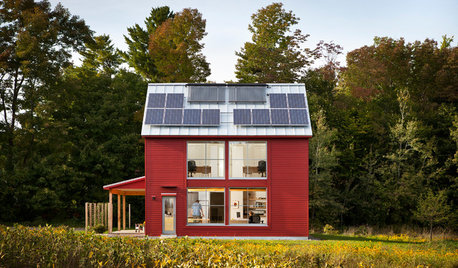
GREEN BUILDINGGoing Solar at Home: Solar Panel Basics
Save money on electricity and reduce your carbon footprint by installing photovoltaic panels. This guide will help you get started
Full Story
annie1992