

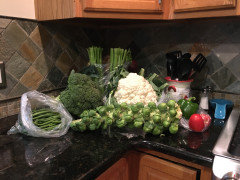
Another question....what is your grocery budget
6 years ago
Featured Answer
Sort by:Oldest
Comments (54)
 6 years ago
- 6 years ago
Related Discussions
Your Garden Budget
Comments (16)I probably spent more money per square foot when we lived in Fort Worth with a largely shaded yard and many, many flower beds under the trees that needed color from annuals and perennials to brighten up the landscape. I worked full-time then, had a small child, and also had more disposable income since we then were a two-income family. I raised very little from seed--almost no flowers from seed except zinnias and celosias, and even most of my tomato plants were from purchased plants, at least until I started growing heirloom types in the mid-1990s and then I had to start growing my own from seed because back then it was rare to see an heirloom type in the nurseries and garden centers. I spent far too much money at Calloway's Nursery every spring buying many flats of bedding plants. (Is it my fault that a Calloway's Nursery sat right between my employer's facilities and our home? How could I drive by every day without stopping in and buying something occasionally?) I consider every penny spent on the garden to be money well-spent. Partly that is because my garden is large and produces tons of produce every year, but also because I enjoy the work involved in gardening and I'd do it anyway even if all I grew was ornamental plants. One reason I kept enlarging the garden every year and growing more and more vegetables, fruits and herbs is because organically-grown produce is so expensive. A couple of years ago, our row of sugar snap peas produced around 35 lbs. of sugar snaps. We ate them constantly, and put a huge amount in the freezer that we then continued to eat for most of the next year. At that time, a 10-oz. package of organic sugar snap peas was going for either $3.79 or 3.89 a package at the Wal-mart closest to us. I never would have bought 35 lbs. of sugar snaps at the grocery store at those prices. I could garden more cheaply than I do now simply by growing a lot fewer varieties--like, for example, growing 8 or 10 different tomato varieties instead of 70-90 different varieties. Or by growing a couple of bean varieties instead of a dozen or two. I love the diversity, though, of having many kinds because of their different flavors and, especially, many colors of produce. When I am picking bush snap beans, for instance, and look down at my bucket and there are bean pods in shades of green, yellow, pink, purple and red as well as green or yellow streaked with red or purple, that gives me a joy I just don't get from picking only green bean pods. I also love freaking out our friends by growing stuff that is the "wrong" color like red or yellow carrots, purple broccoli or blue potatoes. My garden is not, and never has been, about money. There are too many intangibles that cannot be measured in dollars and cents. The expense of watering in summer is the most aggravating part of gardening for me, but we just always plan for the water bill to be higher in July and August than it is the rest of the year in the same way that our electric bill is higher in summer than it is the rest of the year....See MoreWhat's your home garden budget/costs?
Comments (11)It is just that similar questions come up often on many of the forums. Harvest always gets "is home canning cost effective" and "can you really save money", etc. questions. And Veggie gardening gets "How much money can I save with growing a garden" and does "growing a garden make financial sense" (linked it below), and "why spend all my time gardening when I can go to the store", etc. questions. And so on. Most every forum has at least one or two similar discussions each year. And the one point that consistently comes out of those discussions - aside from the fact that there is no way to accurately do it much less place an accurate value on the returns - is that the money, the costs, and the costs vs. the produce obtained isn't the issue. Those are not the reason most folks garden and most find it totally irrelevant. But it seems it is only the non-gardeners or accountants that have trouble relating to that fact. :) The important issues for most are the far better quality of the food produced and the enjoyment gardeners get out of the process. There are nutritional issues, commercial food-safety issues, as well as save-the-American-gardener debates that come up some times. But it always boils down something along the line of "no, I don't keep track of the costs involved because they aren't what matters to me". Sure folks can relate major expenses like fencing, a tiller, etc. but the day-to-day costs? Nope. We have a greenhouse business - garden plants for sale - as well as gardens for our own use. Sure I keep books on the greenhouse and can detail how much I spend on seeds, containers, potting mixes, fertilizers, water, heat, electricity, transportation, etc. etc. etc. Could or would I want to do that for my home gardens too? Not in this life. Why take all the enjoyment out if it? So I guess my question would be why does DW want you to do this? What can it prove or disprove? Is she trying to prove it is a waste of time? No way IMO but only you can decide that. That it costs more than just buying food? Initially it very well may. 10 years from now, especially given the rising costs in food, it could well be mandatory. What will be gained from doing so besides a lot of paper work and so time better spent in the garden? And how would you plan to go about doing it? Those are the questions that never seem to get answered. Just some thoughts to consider. Dave Here is a link that might be useful: What crops make financial sense?...See MoreHow strict is your budget?
Comments (32)A budget is the plan that one makes seeking to block out what one's expected expenses may be during a coming period. The crunch comes with the accounting - writing down all of one's expenditures. Did you note that I said, "all" of one's expenditures - that's where one finds out where the money is going. Best to write it down daily for a while, to get into the habit of keeping track of it in one's mind. If one buys stuff for cash without getting a receipt - write it on either individual slips, or one ongoing piece of paper. Reconcile the amount in the wallet and what the report in the account book shows rather frequently, in the beginning, until the habit becomes established - then maybe once a week will do. I have a large sheet of paper, with five columns on the left for date, info, Income, Expenses and Balance on Hand. When I find that there's less in the wallet than the record shows, if I reconciled fairly recently, usually the missing amount is a single item, which makes it easy to remember what item I forgot to write down. If it's only a couple of items, it's not so bad - but when it's 5 or 6, that's when it gets difficult. Then, usually the next step is to quit, saying, "This thing isn't working"! But - if one persists - the payoff can be quite surprising - in terms of more money on hand. Then, over on the right side of the large page, I have a number of columns, headed by the various items that I've included in my budget. I enter each item purchased under the appropriate heading, sometimes splitting them between two when they relate to several disparate items bought in a store that sells a wide variety of stuff. Then at the end of the month I add the various columns to see how closely those amounts are to the amounts that I'd budgeted monthly (or 1/12th of the annual amount) for those issues. While it's not a good idea to write one's budget in stone and force one's self to conform, it's easier if one adjusts the budget to conform to one's needs. If one feels too confined by the budget, the chances may be stronger that one will decide to dump the whole project. The system is meant to be liberating, not confining. The only one to whom one must answer for one's expenditures is one's self - you don't need to apologize to anyone (except immediate family, maybe) - certainly not to us. Quite often one finds that when all of the expenses are written down, some of the totals at month end cause quite a surprise - and one decides that one does not want to spend that amount of money on such an item in future, so some adjustments are in order. The purpose is to redirect one's spending to items of higher priority on one's scale of important systems in one's life. If one saves early in life and can afford to make a 25% down payment on a home, rather than 15%, that saves a lot of dollars of interest expense, over a number of years. Money that can be used for other things. This whole issue is about building greater freedom for one's self, financially, as the years go by. Have a great week, everyone. ole joyful...See MoreYou know you are trying to budget when.....(fill in your answer)
Comments (27)Another thought that comes to mind is "Pennies from Heaven". I'd never heard of this till probably a week before my Father's death in 2002, but then when my mother was getting into the limo for the funeral, there was a penny. She also found one getting out of the limo at the cemetery. (Of course, one of the cars broke down right in front of the Home Depot store... Daddy was with us all the way!) I've never found any 'pennies from heaven', but I have found multiples of 10. Dimes, ten dollar bills, Ben Franklins in unexpected places! Maybe the pennies are a sign. I found a penny today, just laying on the ground. But it is not just a penny, this little coin I found. Found pennies come from heaven, thats what my Grandpa told me. He said Angels toss then down, oh how I loved that story. He said when an Angel misses you, they toss a penny down. Sometimes just to cheer you up, make a smile out of your frown. So don't pass by that penny when you're feeling blue. It may be a penny from heaven, that an Angel's tossed to you....See More- 6 years agolast modified: 6 years ago
- 6 years agolast modified: 6 years ago
 6 years ago
 6 years agolast modified: 6 years ago
 6 years agolast modified: 6 years ago
 6 years ago
 6 years ago
- 6 years agolast modified: 6 years ago
 6 years agolast modified: 6 years ago
- 6 years agolast modified: 6 years ago
- 6 years ago
- 6 years ago
 6 years ago
 6 years agolast modified: 6 years ago
- 6 years agolast modified: 6 years ago
 6 years agolast modified: 6 years ago
- 6 years ago
 6 years ago
 PRO6 years ago
- 6 years ago
 6 years ago
- 6 years ago
- 6 years ago
- 6 years ago
 6 years ago
- 6 years ago
- 6 years ago
 6 years ago
 6 years ago
- 6 years agolast modified: 6 years ago
- 6 years ago
- 6 years agolast modified: 6 years ago
- 6 years ago
- 6 years agolast modified: 6 years ago
- 6 years ago
- 6 years agolast modified: 6 years ago
- 6 years ago
- 6 years ago
- 6 years agolast modified: 6 years ago
 6 years ago
- 6 years ago
- 6 years ago
- 6 years ago
- 6 years ago
- 6 years ago
 6 years ago
- 6 years ago
Related Stories
REMODELING GUIDESConsidering a Fixer-Upper? 15 Questions to Ask First
Learn about the hidden costs and treasures of older homes to avoid budget surprises and accidentally tossing valuable features
Full Story
DECORATING GUIDESDecorate With Intention: Great Vision, Small Budget
Can you just picture how you want your home to look but feel stymied by lack of funds? These suggestions can help
Full Story
KITCHEN DESIGNKitchen Remodel Costs: 3 Budgets, 3 Kitchens
What you can expect from a kitchen remodel with a budget from $20,000 to $100,000
Full Story
LIGHTING5 Questions to Ask for the Best Room Lighting
Get your overhead, task and accent lighting right for decorative beauty, less eyestrain and a focus exactly where you want
Full Story
WORKING WITH PROS11 Questions to Ask an Architect or a Building Designer
Before you make your hiring decision, ask these questions to find the right home design pro for your project
Full Story
PLANTING IDEASStretch the Budget, Seasons and Style: Add Conifers to Your Containers
Small, low-maintenance conifers are a boon for mixed containers — and you can transplant them to your garden when they’ve outgrown the pot
Full Story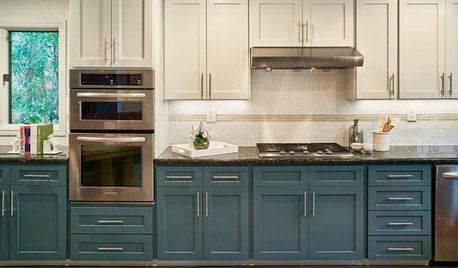
KITCHEN OF THE WEEKKitchen of the Week: Refacing Refreshes a Family Kitchen on a Budget
Two-tone cabinets, vibrant fabric and a frosty backsplash brighten this eat-in kitchen
Full Story
DECORATING GUIDESBudget Decorator: 25 Fab Projects With 1 Paint Can
Whether there's only an inch left or your paint can overfloweth, these household painting projects will get your creative juices flowing
Full Story
DECORATING GUIDES5 Questions to Ask Before You Design Your Dining Room
Set up your dining room with the colors, furnishings and artwork you love, and you'll never be hungry for style satisfaction again
Full Story
WORKING WITH PROS12 Questions Your Interior Designer Should Ask You
The best decorators aren’t dictators — and they’re not mind readers either. To understand your tastes, they need this essential info
Full Story
blfenton