

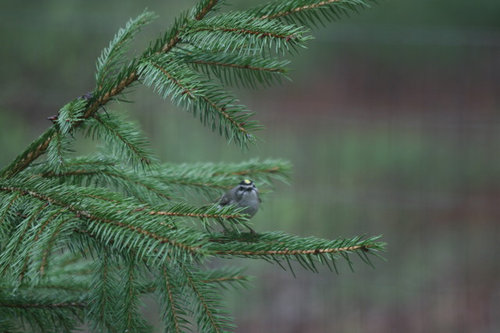
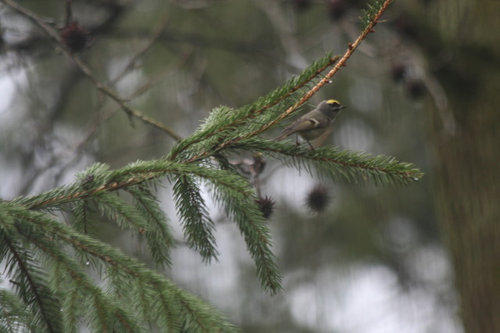
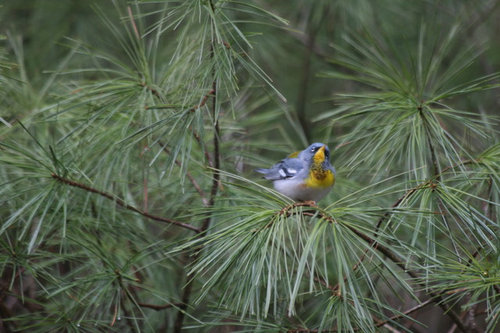
Golden Crowned Kinglet and Northern Parula
8 years ago
Featured Answer
Sort by:Oldest
Comments (8)
 8 years ago
 8 years ago
Related Discussions
Bird Sightings 3
Comments (102)Hi every one! Can you believe it? I still cannot believe my luck and I was there!!! Again while on my way to work this morning there was someone white and *quite* chunky looking flying across the road. I pulled over, backed up a bit, and admired a stunningly beautiful snowy Owl perched on top of a utility pole. This one was much larger than the first Owl I had seen and was more heavily barred. The barring seemed darker / black. I believe this Owl was a female as her face, nape of the neck and center of the breast were white. From what I was able to research that does describe the female snowy. Maybe this was an immature but I did not find much description of them. Any way ... I am 113% sure this was another Snowy Owl! What a wonderful start to the day! As my luck would have it, I did not have my camera in the car for the past week. Had the camera been there then for sure the Owl would NOT! LOL! So that was a great start to the day. I was 20 minutes late to work but work is just soooo over-rated. LOL! The rest of the day was downhill but who cares? I saw another Snowy Owl! The Owl was about 1 mile south of the earlier sighting on Rt. 83 in N. Ridgeville again. C3D and 2 Snowy sightings this year!...See MoreHummingbirds in Florida?
Comments (238)I live about 20 miles east of naples, FL. I keep a journal for various interests and one of the things i've been keeping track of is hummingbird visits to my yard. I counted the number of days I saw HB's in my yard and it came to 188 days in the past year. They have been feeding on firebush plants. These plants bloom constantly except for a 6 to 8 week period in winter. When they are not blooming, I put up a tray type feeder to keep the birds around. I have two types of firebush: hamelia patens and calusa firebush. The hamelia flowers are a yellowish orange and the calusas are bright red. The birds don't seem to have a preference. The only differnce I can see is that the calusa flowers seem to close up during the hottest part of the day. Whenever these plants are blooming, the birds completely ignore the feeder. Right now I have about 20 of these plants in my yard, varying in size from a foot tall to almost 6 feet. I only bought 7 plants , then propagated the rest from seed and cuttings....See MoreMigration is finally starting!
Comments (1)I agree with the id. I've only ever seen them on vacation, or the uncommon wanderer through our area. It is so difficult to take photos of warblers! Good job catching this one during your window of opportunity....See MoreBirds and other mobile features in the garden 2018 #2
Comments (92)Pretty grey fox, Claire. Also I keep going back to look at those charming photos of the fox mom and kits, Jane. I miss the family of red foxes that used to have a den in the woods just above our property line. The puppies (I know they are kits, but I call them puppies) used to chase each other in circles and wrestle one another in the corner of the meadow. We loved to watch them. This little fellow came out of the garden I where I was working, and then scooted across the lawn back to his hiding place when it saw me. These aren't exactly wildlife, but they are creatures in the (water) garden. They are doing the happy fin and tail dance, glad to be out of their tub in the cellar for the summer. I wonder if frogs will join them this year. The brook is fairly low, so they may come looking for better water....See More- 8 years ago
- 8 years agolast modified: 8 years ago
- 8 years ago
- 8 years ago
- 8 years ago
Related Stories

FALL GARDENING7 Reasons Not to Clean Up Your Fall Garden
Before you pluck and rake, consider wildlife, the health of your plants and your own right to relax
Full Story
More Discussions
catherinetOriginal Author