

Please help identify this plant!
8 years ago
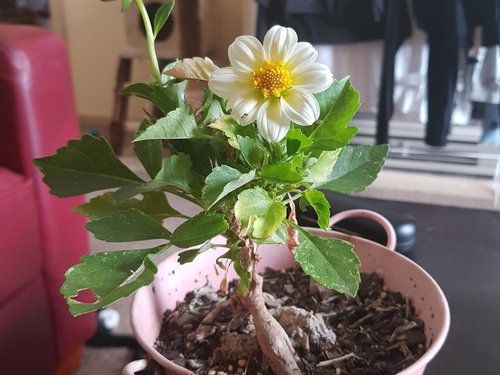
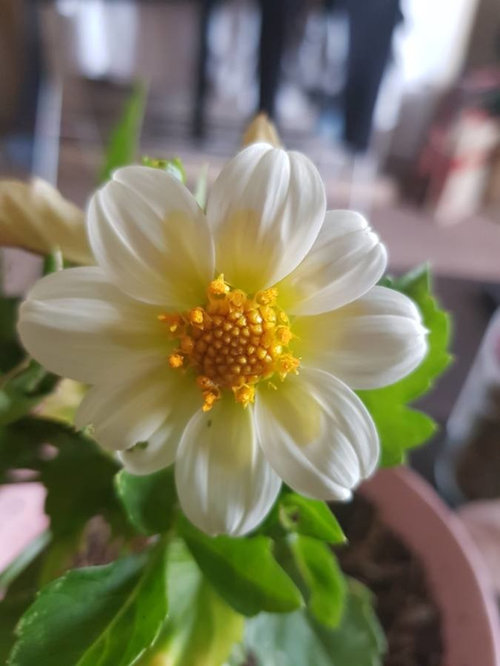
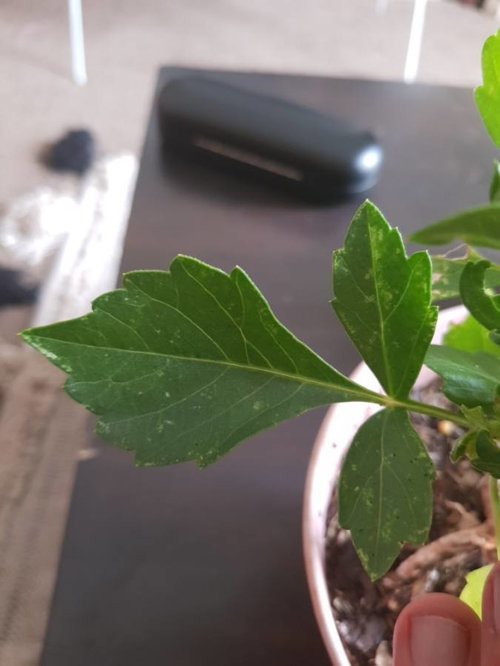
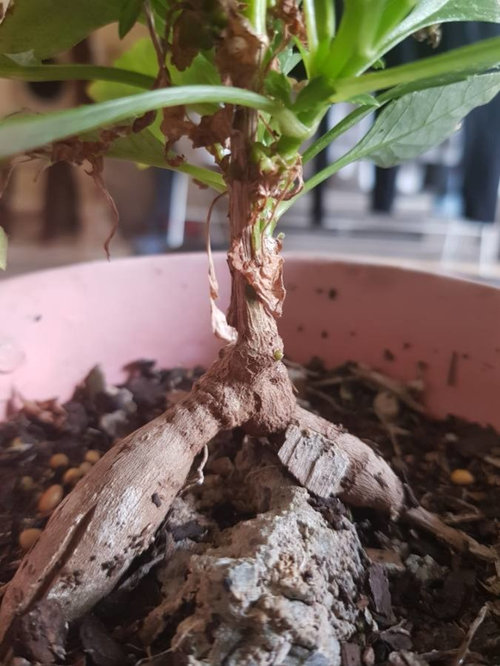
Featured Answer
Sort by:Oldest
Comments (15)
 8 years ago
- 8 years ago
Related Discussions
Please help identify this plant
Comments (13)Happy to share a suggestion. The leaves on yours look more like D. stramonium to me. (And after 2 hours, a wrong suggestion usually has objections.) But for either species, agree, likely not included intentionally, or at all, with your wild seed mix. They just show up sometimes. https://gobotany.newenglandwild.org/species/datura/inoxia/ https://gobotany.newenglandwild.org/species/datura/stramonium/...See MorePlease help identify these plants. Thank you!
Comments (14)“But didn't want to seem too needy.“ Not to worry about that, Joe. For those of us who hang out here, plant ID is fun (not that I am personally of any use with Florida plants). We just ask that you not include more than one or two kinds of plants per thread....See MorePlease help identify this plant
Comments (5)Cynthia, as Tyler above points out, it's reverting to normal growth. It can easily be grown on its own roots, but was likely grafted to accelerate its growing (which it has done splendidly). Be careful of this plant's sap - depending on your sensitivity, it can be an irritant or worse to skin, and definitely keep it away from all mucous membranes, If you're going to trim it for cuttings (or to take the load off of that graft), have some warmish water to daub the cuts in - that will slow down the milky latex bleeding....See MorePlease help identify a plant!
Comments (4)Arum italicum. Considered invasive in most areas but a commonly planted species due to it's persistent Winter foliage, fairy-lantern spathe, and red berry cluster in Fall. Variegated forms 'Marmorata ' and 'Nebulosa' are most commonly planted but seedlings can and often do revert. Critters like the seeds so they spread it widely....See More- 8 years ago
- 8 years ago
- 8 years ago
- 8 years ago
- 8 years agolast modified: 8 years ago
- 8 years ago
- 8 years ago
- 8 years ago
- 8 years ago
- 8 years ago
- 8 years agolast modified: 8 years ago
Related Stories
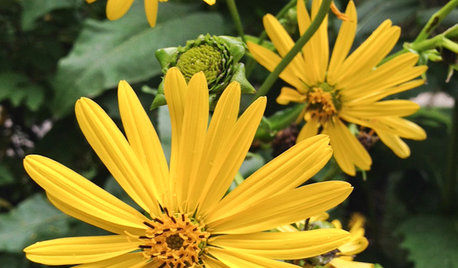
GARDENING GUIDESGreat Design Plant: Silphium Perfoliatum Pleases Wildlife
Cup plant provides structure, cover, food and water to help attract and sustain wildlife in the eastern North American garden
Full Story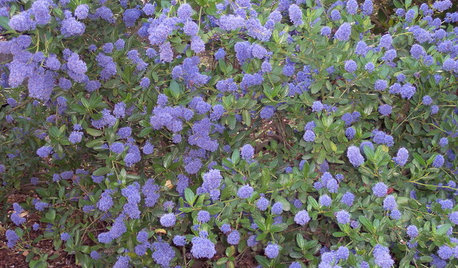
GARDENING GUIDESGreat Design Plant: Ceanothus Pleases With Nectar and Fragrant Blooms
West Coast natives: The blue flowers of drought-tolerant ceanothus draw the eye and help support local wildlife too
Full Story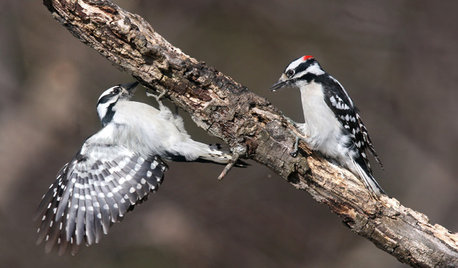
GARDENING FOR BIRDSBackyard Birds: How to Identify Two Common Woodpeckers
Downy and hairy woodpeckers have similar coloration and behavior. But there are two big differences that separate them
Full Story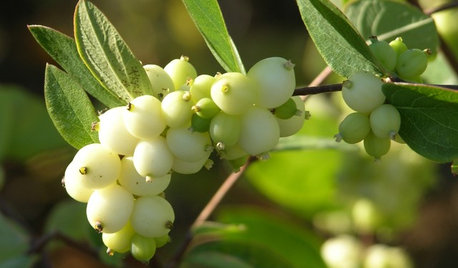
GARDENING GUIDESGreat Design Plant: Snowberry Pleases Year-Round
Bright spring foliage, pretty summer flowers, white berries in winter ... Symphoricarpos albus is a sight to behold in every season
Full Story
GARDENING GUIDESPathway Plantings That Please the Senses
Add some color, life and intrigue beside your sidewalk with these 7 suggestions
Full Story
FLOWERS AND PLANTSHelp Monarchs and Other Butterflies by Planting Common Milkweed
Summer-blooming Asclepias syriaca is an important larval host plant for the monarch butterfly and attracts a number of pollinating insects
Full Story
GARDENING GUIDES8 Unthirsty Plants Help You Save Water in Style
Spend less effort and money on your landscape with drought-tolerant and native plants that liven up your yard
Full Story
GARDENING GUIDESHelp Fuel the Monarch Migration With These 6 Prairie Plants
Try these nectar-rich beauties and help autumn monarchs
Full Story
SUMMER GARDENINGHouzz Call: Please Show Us Your Summer Garden!
Share pictures of your home and yard this summer — we’d love to feature them in an upcoming story
Full Story
MOVINGRelocating Help: 8 Tips for a Happier Long-Distance Move
Trash bags, houseplants and a good cry all have their role when it comes to this major life change
Full Story
hoovb zone 9 sunset 23