

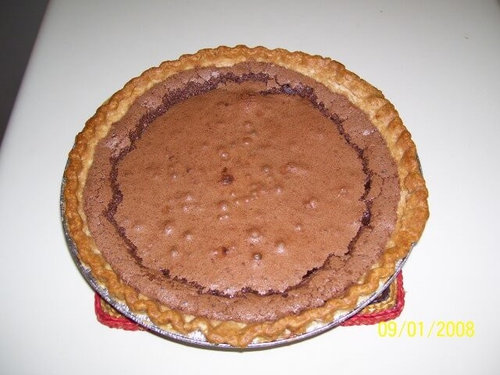
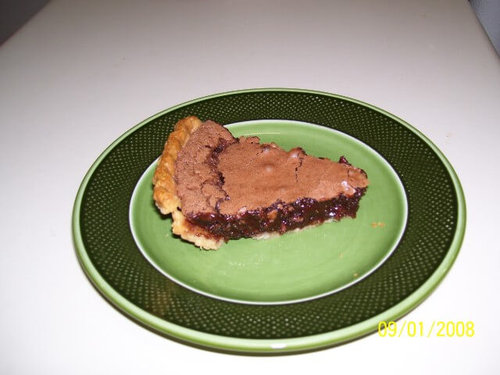
fudge pie, anyone remember making it?
9 years ago
Featured Answer
Sort by:Oldest
Comments (36)
 9 years ago
 9 years agolast modified: 9 years ago
Related Discussions
Anyone remember pie suppers?
Comments (19)Oh yes! I have heard about 'pie suppers', except in my case, it was 'box lunch or supper' that contained a pie. The last one I attended was in the 1950's. It was a community fund raiser held at a country school. The box lunches were acutioned, one at a time, and went to the highest bidder. The young men did their best dectective work to try to discover which box belonged to their favorite girl so they could concentrate their bids on that box. Well, they got it right only about 50% of the time. The gals could hardly contain themselves during the bidding because they knew their own box and several other as well. After the bidding was finished, the gals that belonged to the boxes walked to the winning bidder revealing who he had won to dine with. It was supposed to all in good fun, but jealousy could rear its ugly head and spoil the atmosphere. Maybe this is why it lost popularity, or becasue small, close knit, isolated, communities are a thing of the past....See MoreIf anyone's not totally sick of talking about pie crust
Comments (57)I debated on whether to add this since it is long. It was submitted by Marys1000 back in Oct '08. Don't know which forum. But it was a lot of fun to read and you might enjoy it: Here is an article I found very informative in my search for info on pie crusts. She spent a lot of time actually baking with lard, oils, goose fat, and even suet. November 15, 2006 Heaven in a Pie Pan: The Perfect Crust By MELISSA CLARK A FEW years ago, I achieved perfection in a pie crust and it smelled like pig. Not in a muddy, barnyard way, but with a very subtly meaty, nutty aroma. Carefully confected with part butter and part freshly rendered lard, this pie pastry was everything baking-book authors and bloggers wax poetic about: a golden-brown-around-the-edges epiphany richly flavored and just salty enough to contrast with the sweet apple filling, the texture as flaky as a croissant but still crisp. It shattered when you bit it, then melted instantly on the tongue. The only problem with my masterpiece, I told my guests as they licked the crumbs off their plates, was that I was never, ever going to make it again. Because what they didnt see was the outsize effort that went into acquiring and preparing the not-so-secret ingredient: leaf lard, the creamy white fat that surrounds a hogs kidneys. The veritable ne plus ultra of pig fat, its far superior to supermarket lard, which is heavily processed stuff that can have an off taste. But leaf lard is hard to track down (I special-ordered it from a friendly butcher) and a headache once you get it. Step one: pick out any bloody bits and sinews, chop the fat into pieces, and render it slowly in a double boiler for eight hours. At the end of the day, be prepared for a kitchen that smells like breakfast at a highway diner, and a pan full of dangerously molten fat crowned with cracklings. The leaf lard may have made great crust, but, like homemade cassoulet and puff pastry, this was a culinary Everest I felt no need to climb twice. Everest became a lot more manageable when I discovered that rendered leaf lard was available at the Flying Pigs Farm stand at the Union Square and Grand Army Plaza Greenmarkets on Saturday and by mail order. With this convenience at hand, I decided to have a pre-Thanksgiving pie crust baking binge to see whether, with the prep times and mess not being a factor, lard pastry was really the best when tested next to my favorite standby, an all-butter crust. Or was my memory of the lard pie crusts sublimity simply a hallucination caused by long hours of porcine toil? And while the kitchen was a floury mess anyway, why not test a variety of other fats to see how they affected the flakiness and flavor of the final crust? With fat as my variable, I decided to keep all the other ingredients in the crust as straightforward as possible. That ruled out using a mix of flours with different protein levels (like bread flour, cake flour and Wondra). For this pie, I went with all-purpose all the way. But before I started baking, I did some research in the pie crust recipe canon. Most crusts were a combination of shortening and butter, or all butter, so I started there. I first made five crusts: all-butter; all-shortening (I used the trans fat-free kind now on the market); 50-50 butter and shortening; 70 percent butter to 30 percent shortening; and vice versa. Crisp, flaky and sweetly luscious with deep, browned flavor, the all-butter crust was the hands-down favorite. The shortening crust, however, was a bust among tasters. Even when combined with 70 percent butter, all agreed that the unpleasant greasy film the shortening left on the palate was not worth the vague texture improvement. Shortening is much less expensive than butter. Is it popular with bakers because of the cost? Rose Levy Beranbaum, author of "The Pie and Pastry Bible" (Scribner, 1998), gave another explanation. Because shortening is manufactured for stability at extreme temperatures (both hot in the oven and cold in the fridge), it is very easy to work with, she explained in an interview. "Shortening crusts enable you to get fancier decorations that will hold up when you bake," she said. Once she mentioned it, I realized that even the quickly crimped borders on my shortening crusts stayed pert in the oven compared to the butter border, which melted into Gaudí-like undulations. With round one going to butter, I next experimented with oil crusts inspired by the Mediterranean appeal of a pie pastry scented with extra-virgin olive oil holding a caramelized pear-pomegranate filling. I tested several olive oil variations, chilling the oil in the freezer before cutting it into the flour, and trying other desperation measures like adding egg to one, baking powder to another, and some butter to a third. Then I went on to test canola oil, grapeseed oil, coconut oil and ghee. Not one managed to even get close to a minimally acceptable flakiness level. I had better luck using chilled mixed-nut butter (you could use any natural nut butter, such as peanut, hazelnut, cashew, almond and so on). Combined with regular butter, it turned out a marginally flaky, cookie-like crust with a toasted nut flavor that goes particularly well with pumpkin pie. A dozen or so pies down, it was finally time to pull out my hero, the rendered leaf lard. I pitted it against an array of animal fats beef suet (the fat surrounding the kidneys), duck fat and processed supermarket lard just to see what would happen. The processed lard was not available at my Park Slope supermarket, but I scored it in a nearby bodega. I ordered rendered duck fat online, and picked up suet from the butcher, who charged me a token dollar and told me he usually threw it away. Then I baked and baked. The whole house took on a rich pastry scent with undertones of roasted meat and butter, tinged with ginger, nutmeg, thyme and honeyed apples from the fillings. Not wanting to give up the flavor of butter entirely, I tested all the recipes using half butter, half other animal fat, and also at a ratio of 70 percent butter to 30 percent other fat. I also made a few crusts using all high-fat, European-style butter. The crusts were spectacular, each in its own way. The high-fat butter produced a crust that was markedly flakier, more tender and puff-pastry-like than those made with regular butter. It also shrank a bit less when I pre-baked it, and had an irresistible, browned butter flavor. This was the perfect crust for anyone not inclined to include meat products in a dessert. But overall, the favorites were the crusts using 70 percent butter and 30 percent animal fat. Any more animal fat pushed the meatiness factor too far onto the savory side of the pie spectrum, making these better for quiches than for fruit and custard fillings. Of the three animals, pig, cow and duck, the duck fat crust had the lightest flavor and, texturally, struck the best a balance between crisp and flaky. The pie crust revelation, however, was the suet pastry. As easy to work with as the shortening crust, it retained its shape perfectly in the oven, baking up crisp yet marvelously tender and flaky. It was nearly as delectable as the leaf-lard crust, tasting rich and slightly meaty, though not identifiably beefy. Suet is easy to find (most butchers can get it for you) and inexpensive. One caveat: suet is sold unrendered, but, as I discovered by way of my own laziness, you do not need to render it. Simply cut out the pinkish bits, finely dice or grate the chilled white fat, and toss it in with the butter. More refined bakers might blanch at the idea; if youre one of them, go ahead and render to your hearts content. Still, the leaf lard crust was as gorgeous as I remembered. Puffing up in the oven, and crumbling deliciously when you cut it, it took the crown. That very mild hint of bacon was happily still there. Not so with the processed lard pastry, which had an off flavor veering toward barnyard. Now, after my brief moment of pastry satisfaction, Ill move onto the next obsessive round of pie crust testing. Theres a whole roster of fats Ive yet neglected goose fat, marrow, foie gras fat, browned butter, truffle butter ... and if anyone out there has a source for bear fat, Ill try that too....See MoreWho is having fudge pie this Thanksgiving?
Comments (15)Phyllis, here it is. I cooked mine in individual ramekins and filled each one with 3/4 cup of the custard and it only made 6. Next time I won't cook as long I did cook mine the full length and shoulda taken out when I put the knife in the first time. Should have taken out at 45 minutes instead of 50. Pumpkin pie without the crust and my grandson ate the last two this afternoon topped with vanilla ice cream. Individual Pumpkin custard 3/4 cup granulated sugar 1 teaspoon ground cinnamon 1/2 teaspoon ground ginger 1/2 teaspoon salt 1/4 teaspoon ground cloves 2 large eggs 1 can (15 ounces) 100% Pure Pumpkin 1 can (12 fluid ounces) Evaporated Milk Directions PREHEAT oven to 300 F. MIX sugar, cinnamon, ginger, salt and cloves in small bowl. Beat eggs in large bowl. Stir in pumpkin and sugar-spice mixture. Gradually stir in evaporated milk. If desired, cover and freeze filling for up to one month. When ready to bake, simply defrost, mix well and proceed with recipe. POUR into eight 6-ounce ramekins or custard cups. Place ramekins on baking sheet. BAKE for 45 to 50 minutes or until knife inserted in custard halfway between center and edge of ramekin comes out almost clean. Cool on wire rack for 2 hours. Serve immediately or refrigerate. Top with dollop of light whipped cream, if desired. ***Served mine at room temperature...See MoreNo one has mentioned this year: KT fudge pie
Comments (19)Glenda, I love that pie. But, like you, just for one it is a bit much. I may make it to take to work with me tomorrow. Meanwhile, here is how I have it saved on my computer: Posted by glenda_al Been making this for years and years, 8 inch pie. So easy 1 stick butter 1 cup sugar 1/4 cup flour 1/4 cup cocoa 2 eggs beaten 1 tsp vanilla Melt butter, stir in rest of ingredients Bake in pie shell, 325 35-45 minutes. Mine bakes in 40 minutes. Serve with a dollop of cool whip...See More- 9 years ago
- 9 years ago
 9 years ago
 9 years agolast modified: 9 years ago
 9 years ago
- 9 years ago
- 9 years ago
- 9 years ago
 9 years ago
 9 years ago
- 9 years agolast modified: 9 years ago
 9 years ago
- 9 years ago
- 9 years ago
 9 years ago
- 9 years ago
 9 years ago
- 9 years ago
 9 years ago
 9 years ago
 9 years ago
- 9 years ago
- 9 years ago
- 9 years ago
- 9 years agolast modified: 9 years ago
- 9 years ago
- 9 years ago
- 9 years ago
- 9 years ago


Related Stories
LIFEThe Good House: An Experience to Remember
A home that enriches us is more than something we own. It invites meaningful experiences and connections
Full Story
BUDGET DECORATING14 Ways to Make More Money at a Yard Sale — and Have Fun Too
Maximize profits and have a ball selling your old stuff, with these tips to help you plan, advertise and style your yard sale effectively
Full Story
FEEL-GOOD HOMESimple Pleasures: Make Do and Mend
Experience the satisfaction of fixing, repurposing and creating things yourself around the home
Full Story
DECORATING GUIDESA Glimmer of Gold Leaf Will Make Your Room Shine
Make a unique, unexpected statement in any space with this precious metallic finish
Full Story
KITCHEN OF THE WEEKKitchen of the Week: 27 Years in the Making for New Everything
A smarter floor plan and updated finishes help create an efficient and stylish kitchen for a couple with grown children
Full Story
THE HARDWORKING HOMESmart Ways to Make the Most of a Compact Kitchen
Minimal square footage is no barrier to fulfilling your culinary dreams. These tips will help you squeeze the most out of your space
Full Story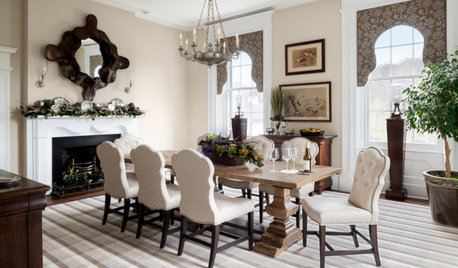
HOLIDAYSYour Checklist for Entertaining Season
Follow this guide to set the scene and your table for the holidays
Full Story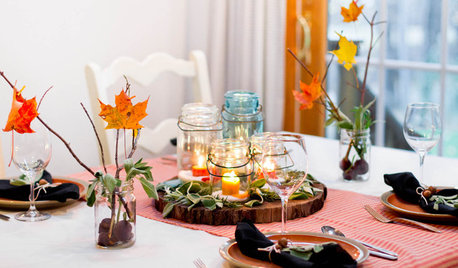
MOST POPULARThe Not Naturally Organized Parent's Guide to the Holidays
This year get real about what you can and cannot handle, and remember the joys of spending time with the ones you love
Full Story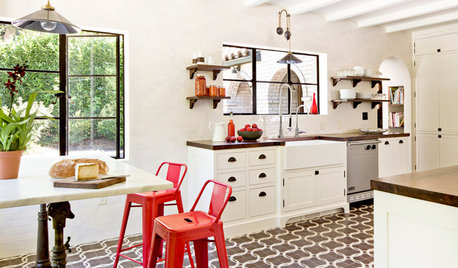
KITCHEN DESIGN16 Scrumptious Eat-In Kitchens and What They Want You to Serve
Whether apple-pie cheerful or champagne sophisticated, these eat-in kitchens offer ideas to salivate over
Full Story
PRODUCT PICKSGuest Picks: 20 Perfect Housewarming Gifts
Celebrate anyone's new digs with thoughtful, inspired gifts as low as $10
Full Story

matti5