

Georgia IRS no longer providing printed publications
9 years ago
last modified: 9 years ago
Featured Answer
Sort by:Oldest
Comments (28)
Related Discussions
North Georgia now on total water ban
Comments (67)I think they will just make it very expensive for us. Then the wealthy and the businesses will have green gardens and the rest will have tumbleweeds. I'll probably have a brown lawn surrounded by my pines which are so old that they can make it on their own. I hope my established roses can survive but I worry about the younger own root bands I just planted. Bathwater for them I think. Our air quality is so bad- I got 2 rain barrels but after seeing the toxic amber water that came off the roof after a months of no rain, I just dumped it all out. Now they don't get filled unless it has rained a few days to clean off the roof. Actually, I have hose water in them now, just in case theres a quake. I'm sorry you have to see your garden suffer. It's unfair that people can waste all they want in their homes but gardeners cant water their prized plants. I was using a bucket to rinse my laundry out on the back lawn and it was work but I felt good about it....See MoreGeorgia Native Plant Guide Released
Comments (7)tinasam, I admit that until AlbertoÂs question I had just taken a very quick look at your posting before, since although Georgia and NJ do share quite a few plants in common, I didnÂt think itÂd be that useful to me. I hadnÂt noticed the similarities between your user name and the authorÂs name. Correct me if IÂm wrong, otherwise congratulations on your book! Always good to see another book on the topic! Alberto, youÂve asked a question I definitely care about. I hope other people add to this, but there are some thoughts. I let nurseries I go to know IÂm interested in native plants in the hope theyÂll start carrying moreÂand of course that would make my plant buying much easier. Two things that I remembered from reading about what individual people can do (I donÂt remember where I saw these; maybe it was on one of these forums) are to start writing articles or letters for local papers, and to get involved in local government to get more natives plantings done in public areas. (or write a book on the topic for that matter) I suppose having an absolutely stunning native garden might get more people interested. Sharing native plants from my yard that people like is one definite way to get natives in their yards. I mostly just try to get people interested when I can. IÂm usually focusing even more about the negative effects of invasive plants, and so while IÂm very glad if people become interested in natives, itÂs even more important to me that they know the reasons to avoid invasives. If thereÂs an appropriate opening in conversation IÂll bring up the topics. In terms of invasives, IÂve actually printed out a short handout from the US government that explains the issue that I like because I think it gets the point across quickly and clearly. Depending on somebodyÂs interest during such conversations IÂll just about always offer to supply them with links, and might lend them books and/or offer to research which native plants might work well in their gardens. If somebody is already interested in gardening for wildlife I think pointing out the benefits of using native plants is often much easier for them to see. A book that many people will tell you is inspiring and that I also found very easy and enjoyable to read is "Noah's Garden: Restoring the Ecology of Our Own Backyards" by Sara Stein. It tells about how she became interested in this and her experiences in it. She was gardening in New York state, but I think the main points would still apply. If you havenÂt read the thread on this forum on "Explaining Why Natives" you might find it interesting. It doesnÂt really address your question, but part of it kind of related. The first half of it had its last post in early September. Good luck making progress. -- Lori...See MoreCan we chat about public opinion?
Comments (31)Happy New Year, Everyone! I think that Meghane is giving us an outstanding example on how we could educate the public more effectively. Maghane, as our resident vet, I'm curious about the percentage of animals you see coming from a 'mill' source vs. the BYB. Overall, do you see any difference in health between the two? I would like to take your commercial and show the puppy coming from a nice couple's home to it's vet appointment. Until I started reading the threads on here, I never realized there were so many purebreds in the shelters. The public doesn't have such a positive opinion about shelter animals, either. If I owned a shelter, I would advertise it just like a petting zoo advertises. Come out and meet all the different kinds of animals, see the lovely animals donated to the facility, free admission, 'family day' on Saturday's... It's much more enticing than the depressing, homeless, unwanted, discarded animals route. You girls were talking about educating children so I looked into what kind of education they are getting. The Humane Society has some literature for teachers and parents. They put out a newsletter which they say reaches 200 million children nationwide. I'd be interested to know how much time is really devoted in the classrooms to the material. Ultimately, it's the parents that need to educate the children in their own pet selections. I looked a little more in-depth into what the Humane Society is doing for our education. Their 2008 Financial Report is on-line. They spent $6,746,114. in both education and research (it's a combined total for both). But to put this into some sort of perspective their revenue was $131,281,161.00 of which over 100 million dollars was unrestricted. Due to their total lack of response on a personal issue, I'm pretty down on their organizational structure. This isn't to slight the worker bees (often volunteer, no less) out on the front-lines. That's an incredible undertaking and full credit is due. However, I shared the public opinion that when a problem arose, they were there immediately taking action. That was not my experience. We actually hang up on them when they call for funds now so I don't get their fund-raising literature. In 2008 they spent over 27 million in fund-raising. On the surface, it seems that they are adept on raising money :). Clubbing seals in the head certainly gets people to reach into their pockets. So do starving dog photos. They've made great strides for the seals in a relatively short span of time. Why do we still have starving dogs after so many years? If they can run fund-raising campaigns so effectively, why can they not run educational programs more effectively? The financial report doesn't show how much revenue was received from people making donations with the intention of stopping the mills. It leaves the lingering question in my mind as to what their revenues would be to help the chickens if the mills were gone. There appears to be confusion about breeders. I've actually communicated with a small group of ethical cat breeders. There is not an easy way for us to distinguish between a reputable breeder and a byb breeder. Hence, if we started using the term "pet peddler" people would become a little more alert. Better yet, if the reputable breeders with start calling themselves something different than 'breeder' we could begin to segregate. One of things I have found is that we really don't understand what a reputable breeder does as far as costs. We tend to use the monetary cost of the pet to determine the quality of the animal. A $200 puppy sounds like a quality pup and a $50 pup is the same puppy from someone not trying to make a profit from us! Neither is factual. The group I spoke with seemed open to the thought of actually putting up on their web pages the true costs that go into the animals. I truly think if this information was easily obtained, the educational value would be immeasurable. I'm sure it varies from breed to breed but it is very expensive to produce a healthy animal. The continuous health screenings on their animals costs a lot. There is a lot of care and concern about each animal in their program. I've reached a small group within TICA for cats. They were receptive to start helping to educate the cat community in different way. There is equal frustration on their side that we are not making educated purchases. Does anyone in here know of a way to reach some groups of ethical dog breeders? Maybe if we could open up communication between us and the ethical breeders, some of the confusion would subside. Do you have any more suggestions on how they could help us? I'm willing to put them out there. People seem to have the same views about the AKC. (lol - saintpfla - registering your couch)! I went to the CFA, Cat Fancier's Association, to see what kind of education they are putting out for cat consumers. OMG! They say that a purebred cat price starts at about $300. I don't know the cost of all purebred cats, they must vary. I know the Bengals from reputable sources are in the neighborhood of $1,000 and I found the Abyssinian are the same. So, if you are just surfacing around without educating yourself, you're thinking you are getting bilked by a reputable breeder. It's somewhat misleading. They've given cat consumers 3 avenues to buy our purebred kitten. The Want-Ads (which means internet to most now), pet stores and reputable breeders. It didn't come across to me that using a reputable breeder is for health. And a pet store? They write that the kittens sometimes come from kitten mills. Why wouldn't they completely discourage using the pet store since it would be hard to determine if it is a mill kitten or not? Just because a kitten doesn't have a runny nose or eyes does not mean it's healthy! If you take a look at the pricing schedule, you're led to believe the cost is based on looks. Yes, you pay more of a premium for a perfect look, however, if you aren't showing your pet, you still need to pay a premium for health - not $300. The cat breeders seem to follow this same pricing structure so the health concerns are not immediately apparent. Is this the same for dog breeders? It costs between $20 - $60 to register your cat (depending on the number of generations requested). I don't anticipate buying another purebred any time soon. However, since I don't show, I will refuse to register an animal again until I see some changes within the information they are providing. I micro-chip so have a solid identification on my pet with both my contact info and my reputable breeder's contact info on my new kitten. I don't find any value in the registration paper. I had registered her with TICA but the paper sits in my file drawer. Here is a link that might be useful: Cat Fanciers' Association...See MoreHVAC company won't provide a labor warranty if we use a Nest
Comments (35)Zone systems (zone boards specifically) are designed electrically to have proper sized transformer. Again with the VA rating? Yes, this isn't voodoo magic. If the electrical loads (24v) are not properly sized to the transformer you will have erratic system behavior. For that reason, I would NEVER choose the Nest for those kinds of applications. The odds are low that it will work and / or for very long. Heavy system loads. These loads change thru out the season. If you want something to work, shouldn't it just work any time rather than sometimes? It's one thing to get a system to work in 80 degree weather, it's quite another to keep it working under a 95-100 degree heat wave. This comment is primarily directed at a HVAC zone system. (in case others without a zone system read this thread) I haven't had any issues with Ecobee, but I don't see this kind of T-stat all that often because Ecobee is primarily designed for use in commercial type applications. I am a Texas licensed HVAC contractor and service the Katy, Texas area. TACLB28416E...See More 9 years agolast modified: 9 years ago
- 9 years agolast modified: 9 years ago
- 9 years agolast modified: 9 years ago
- 9 years agolast modified: 9 years ago
 9 years agolast modified: 9 years ago
- 9 years ago
- 9 years ago
- 9 years agolast modified: 9 years ago
- 9 years ago
- 9 years ago
- 9 years agolast modified: 9 years ago
- 9 years agolast modified: 9 years ago
- 9 years agolast modified: 9 years ago
 9 years ago
 PRO9 years ago


Related Stories
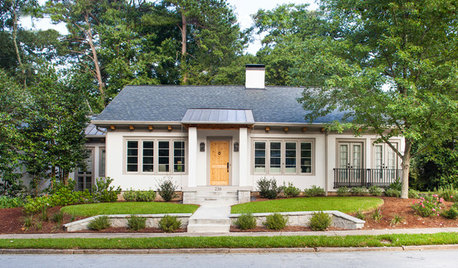
BEFORE AND AFTERSHouzz Tour: A Georgia Foreclosure Gets a Major Overhaul
Gutting and redesigning turn a mishmash 1925 home into a unified haven with better flow
Full Story
CITY GUIDESHouzz Travel Guide: Atlanta for Design Lovers
You'll find world-class museums, restaurants, hotels and shops in Georgia's woodsy, welcoming and charming capital
Full Story
KITCHEN DESIGNDesign an Easy-Clean Kitchen
"You cook and I'll clean" might no longer be a fair trade with these ideas for low-maintenance kitchen countertops, cabinets and floors
Full Story
MOST POPULAR9 Reasons to Buy a Painting
No print or poster can rival the power of an original painting, chosen by you, for where you live
Full Story
HOUZZ TOURSMy Houzz: Bridge Building Redefines a D.C. Row House
A new rooftop deck and elevated walkway give a Capitol Hill couple an enviable outdoor haven away from noise on the street
Full Story
HOME OFFICESThe 20 Most Popular Home Office Photos of 2015
Technology paves the way for space-saving work areas, while designers make up for small sizes with style
Full Story
BUDGET DECORATINGBudget Decorator: A Most Affordable Gallery Wall
Need to fill a wall on the cheap? See how to make use of something pretty cool you may already have
Full Story
HOME OFFICESDream Spaces: Home Offices You’d Be Delighted to Work In
Warm lighting, comfortable furnishings and pleasing views can make you want to head into your home office each day
Full Story
STANDARD MEASUREMENTSThe Right Dimensions for Your Porch
Depth, width, proportion and detailing all contribute to the comfort and functionality of this transitional space
Full Story
HOMES AROUND THE WORLDMy Houzz: Author Makes Her Home in a Quiet Corner of Hertfordshire
British novelist Freya North refreshes a dated bungalow to create an idyllic country home for her family
Full StorySponsored

lucillle