

Seen in a yard in south Florida
9 years ago
Featured Answer
Sort by:Oldest
Comments (7)
 9 years ago
Related Discussions
Landscaping Ideas for South Florida Home
Comments (3)A few more ideas for you. Plumeria -- how could I forget? So fragrant, and so many colors to choose from. They will grow to small tree size where you live, so plan accordingly. Another colorful option -- ti plants, or cordyline fruticosa -- many colors, shapes and sizes ranging from greens to vivid pinks, burgundies, and combinations. Don't overlook exotic anthuriums, very long-lasting waxy flowers in shades of red, pink, green, purple. They will brighten your shady areas with tropical punch. Perhaps you can grow heliconias and torch gingers -- a lasting display of exuberant tropical colors and exotic forms. These can be large or small, be sure you know mature size before you buy. Ixora -- I understand this is fairly common in South Florida, but they make a colorful contribution, are somewhat compact, and the lacy effect of the flowers will be a contrast to some of the others I've mentioned. Hope these suggestions are helpful....See MoreSouth Florida soil question
Comments (3)Most freshwater lakes in SW Florida are dug, so you may be on spoil rather than natural soil (Lake Trafford near Immokalee is the main exception). However, a natural soil with two distinct layers and a hardened lower layer is extremely common there. It is a spodosol and the second layer is very dark and commonly called "hardpan." Citrus normally grows fine on this. Perhaps it got uncovered by preparing your lot for building. But a hard light-colored sand would be pretty unusual in Florida and might be carbonate silt-rich dredge spoil. Carbonates there more have nutritional problems, mainly iron and manganese (not magnesium) deficiencies....See MoreWhich is better, north Florida or south Florida?
Comments (27)johnb51: That's what I have heard: that SW side is more economical and less crowded but it probably depends on 'where' exactly lol. I would have to be zoned agriculture and away from the larger cities a little bit since I have chickens and loud roosters. They do make good fertilizer! :P I was also born in L.A. but later moved to Phx AZ. I love it in FL. The humidity took some getting used to compared to the Southwest. I've been out here 3 years now. marinfla: I like your mango story. Its funny how little things can change our lives. Your yard sounds like paradise. I can't wait until I can put my fruit trees in the ground and not worry about freezes so much. Bob1016: Sounds like you had quite an education in fruit trees since you were very young. What a nice environment to grow up in! I can imagine that you miss it and your grandfather quite a bit. njoasis: Sounds fun! I just bet they do! Can you make a good mojito? lol...See MoreLarge Epipremnum aureums on central and south Florida trees
Comments (21)That is all correct. The upward-curved vine tip will occur when the vine is growing along the ground, because when it encounters a vertical surface it is positioned to take advantage of it. The same curve will happen when it grows past the top of the vertical surface and is hanging in space because it is still seeking a vertical orientation. If it were to grow straight on the ground and in the air, it would pass the tree or vertical surface instead of attaching to it and climbing it. A straight orientation hanging in the air would put it on a trip back to the ground. This plant is programmed to climb. If it grows on the ground, its leaves are small, and its tip is curved upwards. It grows small leaves to support its growth and focus all of its energy towards elongation. Internodes are long, and it is REACHING to find something to climb. When it encounters a suitable surface and attaches, it has achieved mission number 1. Leaves get larger, and the vine thickens with each new leaf. Internodes get shorter, the tip straightens because it is vertically oriented and attached. If the tip curved now, it would launch itself out into space and defeat mission number two, which is reaching the canopy, where it can get the premium quality light. Right now it is putting all of its energy into growing large leaves, large vines, and large aerial roots to grip its host. It is happy in this position, growing the largest, most robust leaves and vines that are simply not achievable without being attached. It is still reaching (upward), but not with the same desperation. Its needs are being met while it pursues mission number 2. If you were to pry the tip away from its host, each new leaf will grow smaller, the vine will grow thinner, the internodes will lengthen, and the tip will curve toward a vertical orientation. Now it is again in reaching mode, elongating desperately in search of a new host. Now I am not a botanist, and i havent read any books on the subject. I learned this by observing its behavior when i encounter it. Maybe someone that has some botanical training can confirm or correct my hypothesis....See More- 9 years ago
- 9 years ago
- 9 years ago
- 9 years agolast modified: 9 years ago


Related Stories
HOUZZ TOURSHouzz Tour: Eclectic, Artistic Florida House
Mehndi art, thrift finds and splashes of color energize a Zen-like South Florida home
Full Story
HOUZZ TOURSMy Houzz: Bright Island Style for a Florida Vacation Home
Hand-me-downs and new pieces mix happily in a midcentury home on a sunny South Florida island
Full Story
HOLIDAYSPersonality Swoops in for a Florida Community's Christmas
Yards and homes in this retirement neighborhood in Florida take full advantage of loosened holiday decorating rules
Full Story
CONTEMPORARY HOMESHouzz Tour: A Modern Marvel in Boca Raton
Contemporary cool mixes with midcentury style to create a sculptural estate in south Florida
Full Story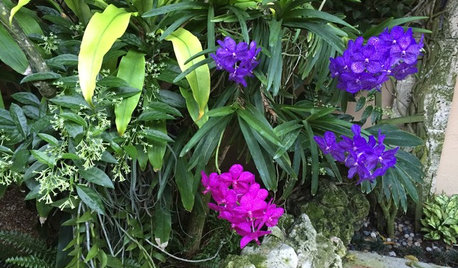
INSPIRING GARDENSThe Garden That Orchids Built
The owners of a famous orchid nursery create a sanctuary for themselves in South Florida
Full Story
HOUZZ TOURSHouzz Tour: Step Inside (and Out) a New Florida Showhouse
2012 'New American Home' at International Builders Show celebrates latest materials and ideas for luxurious, indoor-outdoor living
Full Story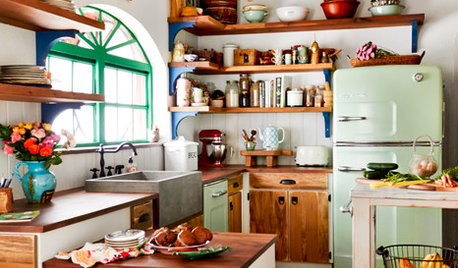
HOUZZ TV FAVORITESHouzz TV: Animals, Love and Color on a Florida Farm
Farm-fresh style is just right for this family of 6 — and their horses, dogs, cats, chickens, zebus, birds and pig
Full Story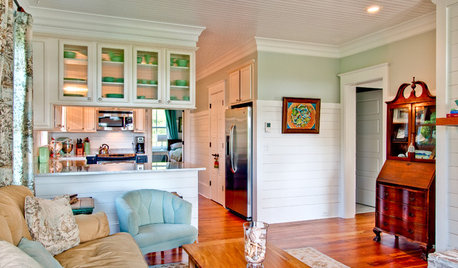
COTTAGE STYLEHouzz Tour: Lowcountry Charm for a South Carolina Cottage
Smart design and beautiful views help a family of 5 live comfortably in 1,200 square feet
Full Story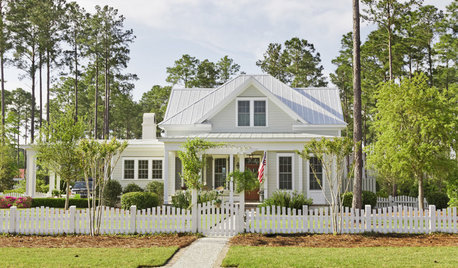
HOUZZ TOURSMy Houzz: A Storybook Cottage in South Carolina
Whimsy and color rule in this children’s book author’s home
Full Story
Sponsored
User