

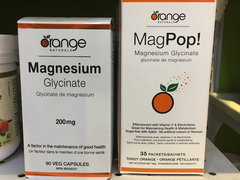
Magnesium supplements?
9 years ago
Featured Answer
Sort by:Oldest
Comments (36)
 9 years ago
 9 years ago
Related Discussions
What makes this non-organic in California?
Comments (3)It must run afoul of the California Organic Products Act of 2003. No idea whether this really makes it "bad." "Organic" is now a government-industry partnership for both better and worse. (I think mostly better, but I think we could have done better somehow, using a systems of words for better education. "It's chemicals" really leads people to non-scientific judgement. We are chemical beings. We are and need chemicals ... just the good kind, wherever they come from.)...See MoreFall organics application and info. for alkaline soil
Comments (3)Hi Krista - your roses look fabulous so it must be OK. I also wonder if there are others with success in fall topping. Hi Ingrid: The website with a table on organics reported 1 to 3 months for alfalfa meal to decompose. I threw alfalfa meal on my 8' tall white pine in July - we have lots of rain, now there's still some left-over crust. It didn't do any good for my white pine (still yellowish, NOT lush) - last year blood meal worked better (this has iron). Roseseek (Kim) is right about Nitrogen moves with water, versus phosphorus and potassium stay put where it's applied. Here's what EarthCo (the soil-testing company) has to say about phosphorus, taken from their booklet: "Phosphorus doesn't move far from where it was first applied... it must be worked into the roots zone. Phosphorus is locked up when the soil pH is too high or too low ... this must be adjusted PRIOR to its application." Alfalfa tea does both: acidifying the water, and releasing the phosphorus after 1 week of stinky fermentation. That's why the Aussie reported 15% to 30% increase in wheat yield through phosphorus in a liquid, versus ineffective results with granular phosphorus. When I tested with red cabbage extract, alfalfa meal came out more reddish and more acidic than peat moss at pH of 4. What I like about alfalfa tea is that you don't burn roots with concentrated acid. Diluted with water, it is a mild acid which unlocks phosphorus in your soil, and moves its own released phosphorus to plant roots deep below the soil. When I used the accurate litmus paper for fish tank, my water pH is very alkaline at 8. It's best to water roses that prefer a pH of 6.5 by bringing down the pH of alkaline tap water with alfalfa meal, or making a basin around the soil and filled with even more acidic coffee grounds. I have wasted enough money on worthless soil-test kits from stores - so here's my conclusions to save others wasted time & money: 1) the most accurate pH test for your water is litmus paper for fish tank. 2) The most accurate pH test to compare many substances is to chop red cabbage small, boil in distilled water, and mix your soil in when the water is hot (it dissolves calcium and magnesium better). Then compare the solution above your soil with other solutions: miracle Gro potting soil(pH of 6.5), vinegar (2.4 to 3.4), baking soda (pH of 9), and peat moss (pH of 4). Soil deficiency in magnesium is rare except in sandy soil. About 1/3 of soil are deficient in potassium, so banana peels are always safe for fall dressing. I don't like manure dressing since it's high in salt. I am testing the coffee grounds dressing so see if the growth in the spring is green. Below is another guy's rating on many soil test kits from stores, including Rapid-test. His conclusion is the same as mine: they are all worthless, a waste of money. The Canadians recommend nitrate as the best source for fall dressing for wheat crops (nitrate works best in cold weather). Here is a link that might be useful: Wayne's rating of soil-test kits....See MoreCalcium Supplement Question
Comments (7)Pooh, I don't have the answer to your question, but I do know that if you don't keep the calcium and magnesium balanced, one will deplete the other. Also, if you are low on magnesium, it will cause muscle spasms, including heart attacks. Remember, your heart is a muscle, and when it spasms, it is esentially a heart attack, tho that is not by any means the only cause of heart attacks. Good luck with, and congratulations on the weight loss. Tami...See MoreMucilagenous comfrey for healing bones, bruises, arthritis
Comments (0)All mucilagenous herbs are used to soothe the digestive and respiratory systems, inclucing ulcers and sore throats, but there has been some concern about an association of comfrey and liver problems, and it is banned as a herbal remedy in several countries. I have no first-hand knowledge of any problems even though this herb has been consumed by many people I know for a lifetime without any ill effeccts. It is, however, recommended without reservation for external application. Every part of the plant can be uses and the fresh leaves and stems are easiest to use. For internal application, mucilagenous herbs need to be simmered to release the gelatenous property of the plant which heals bones, cartiledge, bruises, muscles. You can drink it in tea or use the leaves like spinach, or you can make a poultice by packing a mush of the leaves, raw, simmered, or frozen, around the affected part of the body. If the frexh leaves are not available, dried leaves or roots will do. Cover with plastic wrap and replace before they get smelly, at least twice a day. In Germany, comfrey is now only recommended for external use. Previously, its roots or leaves were used in "... teas, wines, tinctures, creams, poultices, and herbal baths for problems of muscles, joints, bones, wounds, infection, bruises, arthritis, fractures, swelling, varicose veins, stomach, and other ulcers ..." according to the renouned herbalist Maria Treben. For broken bones and arthritic joints, it is also beneficial to obtain the gelatenous ingredients of animal origin. The richest sources for boiling a gelatenous broth are chicken (or other bird) feet, veal and sheep (or other immature animal) bones. Boil the cartiledge until it is soft enough to eat. These remedies are most effective preventively, if used on a regular basis. You will see the effects in strong fingernails, healthy hair, and more flexible joints. Other mucilagenous plants are basswood blossoms and leaves (Linde), ground linseed (the seed of the flax plant), okra, and any other plant which feels gooey when chewed. Silica-containing herbs such as horsetail and enzyme-containing fruit such as pineapple and papaya are also helpful for the problems under discussion. Remember that calcium cannot be absorbed by the body without sufficient magnesium, the mineral which is leached out of the top soil by unnecessary watering which is rampant in North America. Chelated magnesium supplement is the most effective and it does not interfere with digestion as other forms of magnesium....See More 9 years ago
- 9 years ago
 9 years ago
- 9 years ago
- 9 years ago
 9 years ago
- 9 years ago
- 9 years ago
- 9 years ago
- 9 years ago
- 9 years ago
- 9 years ago
 9 years ago
- 9 years ago
- 9 years ago
- 9 years ago
- 9 years ago
- 9 years agolast modified: 9 years ago
- 9 years ago
- 9 years ago
- 9 years agolast modified: 9 years ago
- 9 years ago
- 9 years ago
- 9 years ago
- 9 years agolast modified: 9 years ago
- 9 years agolast modified: 9 years ago
- 9 years ago
- 9 years ago
 9 years ago
- 9 years ago
- 9 years ago
- 9 years ago
- 9 years ago
Related Stories

LIFE12 Effective Strategies to Help You Sleep
End the nightmare of tossing and turning at bedtime with these tips for letting go and drifting off
Full Story
FRONT YARD IDEAS10 Ideas for a Front-Yard Edible Garden Your Neighbors Will Love
Choosing attractive, well-mannered plants and sharing the bounty will go a long way toward keeping the peace
Full Story
DECORATING GUIDESHow to Work With a Professional Organizer
An organizing pro can help you get your house together. Here's how to choose the right one and gain your own clutter-clearing skills
Full Story
HEALTHY HOMEHow to Choose a Home Water Filtering System
Learn which water purification method is best for your house, from pitchers to whole-house setups
Full Story
LANDSCAPE DESIGNNatural Swimming Pools: More Beauty, No Chemicals
Keep your skin and the environment healthy with a pool that cleans itself, naturally
Full Story
GARDENING GUIDESWhat's Wrong With My Plant? Leaves Often Hold the Clues
Learn how to identify common plant ailments by reading their leaves
Full Story

Alisande