

Volunteer? Liatris
10 years ago
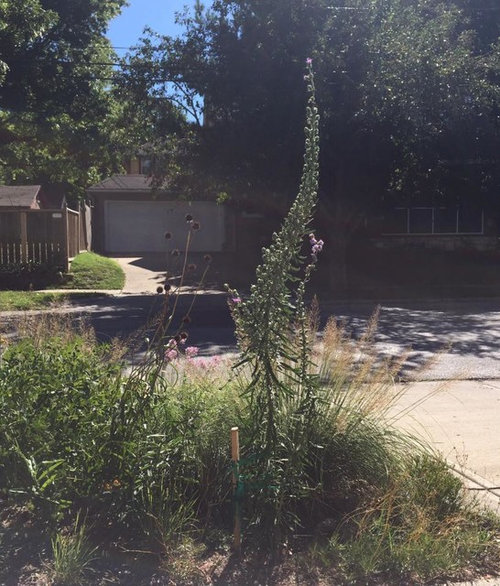
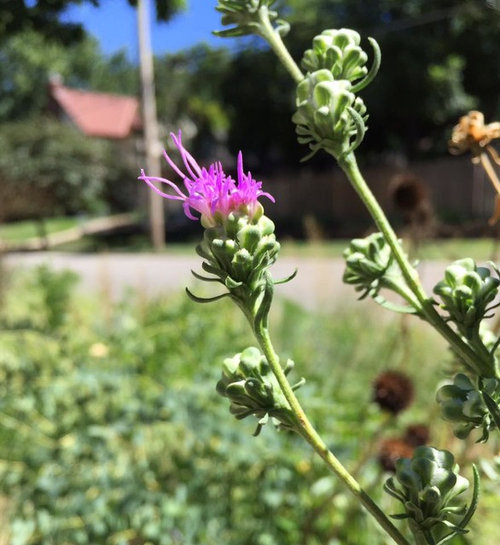
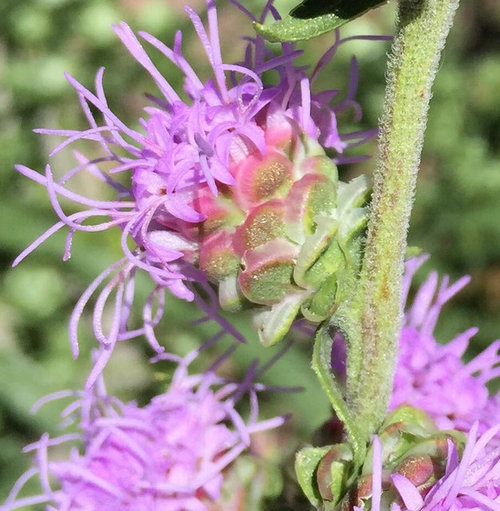
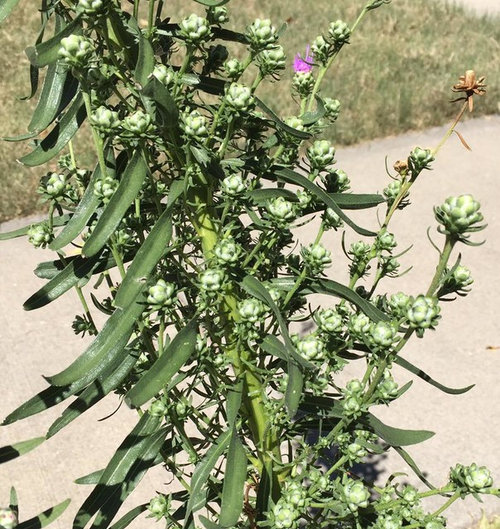
Featured Answer
Sort by:Oldest
Comments (12)
 10 years ago
Related Discussions
Question about Liatris Kobold Original Gayfeather, Blazing Star
Comments (14)Lovefornature, My bed with the liatris is mostly yellows, whites, and purples. The purples are a bit of a hodgepodge of reddish to bluish purples. That is always the problem with purple. This half-circle bed is big enough so that the reddish ones can be placed on the left and the bluer ones are kept to the right side. I have a variegated miscanthus grass (green and white) and several burning bushes in the background, along with a high pruned and heavily thinned crabapple tree in the center. Underplantings include several clumps of purple coneflower, a large purple daylily which is very similar in color to the Kobold, a white daylily (which means in dl speak slightly yellow), yellow trumpet lilies (quite tall), several Moonshine (yellow) yarrows (also tall), a big clump of balloon flowers (blue purple), two varieties of bellflower (lighter blue purple to darker blue purple), lactiflora and glomerata (milky and clustered), several Purple Dome asters for fall color, a large stand of Becky Shasta daisies, a small clump (3 plants and still small after 3 seasons) of digitalis grandiflora (soft yellow), some Moonshine coreopis, an edging to the right front of sedum mediovariegata (yellow variegated), and sedum Frosty Morn (white & green variegated) to the rear around the miscanthus, and probably a half dozen other plants I forgot. If it were me planting your area, I would plant the clear bright red Jacob Kline monarda somewhere else in your garden. The rest of your selections would work well together with the liatris. Purples and bright red can work together and be very striking, but you need to get the combo exactly right, usually with a nice quantity of dark, chartreuse, or bronzy foliage. Also the monarda is a fast grower and your bed could quickly become the "red garden". Raspberry Wine monarda, which someone else mentioned, would work well I think with liatris....See MoreShort video B-flies/ liatris patch
Comments (11)Well, thanks for all the nice comments and new info. Sherry, so pleased to hear some came up! To combine a few answers: The patch is alongside my "driveway", I never planted a single seed or rootstock...Mother Nature did all the work, after I burned the brush out. I do alternately cut or burn it once a year..in late winter/early spring. I do this in several other areas as well, resulting in wide variations of flowers/grass/brush due to slope, moisture levels, soil type etc., but all patches lure butterflies and various pollinators. Due to limited success with purchased/planted stuff, this has become my "minimal effort" volunteer B-fly gardening technique... ; -) I adopted this method after Katrina and a minimal tornado opened up large gaps in the tree canopy...otherwise known as "making lemonade," it works for me in large part because I can burn "out there" Going offshore for two weeks...till next time....See MoreWANTED: Coreopsis seeds or seedling volunteers
Comments (0)I'm looking for Coreopsis seeds/seedlings but it seems all I can find are the doubles. I'd prefer singles. Straight yellow or Moonbeam would be fine. I'll need about ten of them. I have various seeds from native wildflowers to trade. Asters, Liatris, Blue Hyssop, Gaillardia, etc.. Also many different volunteers eg. Hardy Geraniums(various), Columbine (blue&white), Jacob's Ladder, False Sunflower, etc.....See MoreHell Strips 2018
Comments (60)I haven't updated since the start of April, so here is what has happened so far. 1) I extended my strip by another 25 feet or so. (I'm calling it Curb2.) I dug it out so that the middle of my strip is lower than the edges, creating a mini-rain garden/bioswale. In the other part of the strip (Curb1), the middle is higher than the edges. This means mulch if forever spilling onto the sidewalk. I bought a bag of 65 bare roots and corms from Costco for about $20. The 50 Liatris have since come up. The 5 Echinacea, and 10 Kniphofia did not. Popsicle sticks mark the plantings. I later added a couple of 'Blonde Ambition' blue grama (Bouteloua gracilis), a common milkweed (Asclepias syriaca), two tropical milkweed (Asclepias curassavica) and one 'Silky Gold' tropical milkweed. 2) In Curb1, I added: *two 'Black and Blue' salvia *two Hill Country penstemon *three little bluestem. (I have so bluestem plants, I don't know what to do with them! I potted up a dozen, threw about 20 in the compost pile. It's a little sad, since it took me a whole year to grow them.) *two Gregg's mistflower *one snake herb (Dyschoriste linearis) *two Salvia greggii--one 'Purple', one 'Nuevo Leon' *one creeping red sedum *eight groundcover thymes--one 'Doone Valley', 7 'creeping' I labeled the milkweeds, so I wouldn't accidentally dig them up in the spring, before the leaves emerge (like I did this year). 3) Things I removed: The red yucca that I had planted in Curb1 was not doing well. I dug it out and it now lives in a pot on my patio. It was replaced immediately with bamboo muhly (Muhlenbergia dumosa). The gaura I planted in the spring died in the heat. My Agastache "Blue Boa", that after looking good all spring, suddenly declined, dried up and died. I tried to save it, giving it extra water, drenching with ammonium sulfate (in case it was cotton root rot), but nothing helped. In it's spot, since I was afraid it might have been a soil borne disease that killed the agastache, I dug out all the soil--about 12" wide and 8" deep--and replaced it with compost and expanded shale. I've planted a 'Mystic Spires' salvia, just last week. 4) Things really started to fill out in June I even got some milkweed blooms! (Asclepias viridis) (Asclepias curassavica 'Silky Gold') (Growth in Curb2)(Please excuse the purslane. I thought I'd try it as a living mulch. 5) Today (Late July) Curb 1 has finished for the summer, and it looking tired. (I believe that I'll get another flush from the Walker's Low catmint in the fall.) I'm impressed with how much the Gregg's dalea has grown (the silvery groundcover in the foreground). Last year, in a different spot, it hardly grew at all, and the nurseryman I purchased the plant from told me that it was a slow grower. I guess it just needed to find the 'right place'! Curb 2 is looking great....See More- 10 years agolast modified: 10 years ago
- 10 years agolast modified: 10 years ago
 10 years ago
- 10 years agolast modified: 10 years ago
 10 years ago
- 9 years ago
- 9 years ago
- 9 years agolast modified: 9 years ago
- 9 years ago
- 9 years ago

Related Stories
GARDENING GUIDES6 Plants That Beat Butterfly Bush for the Wildlife Draw
It's invasive, a nonnative and a poor insect magnet. Check out these better alternatives to butterfly bush in the garden
Full Story
GARDENING GUIDESAttract Hummingbirds and Bees With These Beautiful Summer Flowers
Roll out a welcome mat for pollinators to keep your landscape in balance and thriving
Full Story
GARDENING FOR BUTTERFLIESBe a Butterfly Savior — Garden for the Monarchs
Keep hope, beauty and kindness alive in the landscape by providing a refuge for these threatened enchanters
Full Story
GARDENING GUIDESTop 10 Native Plants for the Northeast
For a low-maintenance, wildlife-friendly landscape, use native plants adapted to the climate and range of soils in the Northeast
Full Story
GARDENING FOR BUTTERFLIES3 Ways Native Plants Make Gardening So Much Better
You probably know about the lower maintenance. But native plants' other benefits go far beyond a little less watering and weeding
Full Story
WINTER GARDENING6 Reasons I’m Not Looking Forward to Spring
Not kicking up your heels anticipating rushes of spring color and garden catalogs? You’re not alone
Full Story
FLOWERS15 Native Flowers That Attract Butterflies
By picking plants from this list that are right for your location, you’ll get colorful blooms and support pretty pollinators
Full Story
FRONT YARD IDEASBefore and After: Front Lawn to Prairie Garden
How they did it: Homeowners create a plan, stick to it and keep the neighbors (and wildlife) in mind
Full Story
INSPIRING GARDENSWhat We Can Learn From Longwood Gardens’ New Meadow
Sustainability, ecology, native plant communities ... this public garden is brimming with lessons on horticulture for home gardeners
Full Story
GARDENING FOR BUTTERFLIESGarden for Wildlife to Reap Rich Rewards
When you plant with animals and insects in mind, you make gardening easier, the planet healthier and yourself more present
Full StorySponsored
More Discussions
User