

Power Company sent me a big box of energy saving stuff
10 years ago
last modified: 10 years ago
Featured Answer
Sort by:Oldest
Comments (14)
 10 years ago
 10 years ago
Related Discussions
saving energy while canning
Comments (17)I would not recommend heating large quantities of water in the microwave and transferring it to the pot. When water boils in a pot, the molecules at the bottom turn to steam, make bubbles, and rise to the top. Microwaves (the waves themselves) heat whatever molecules they hit, so you get molecules of steam mixed in throughout the water. This can cause the water to "explode" if you jostle it and there are a lot of steam molecules that suddenly get together and rapidly rise out of the liquid. It's not too common, because usually either the bubbles would escape sooner, or there wouldn't be too many steam molecules, but I would think with a bigger batch of water there's more room for variation in the process so more chance of overheating the water, plus way more potential for injury. Lpinkmountain, I assume you are already keeping the pot lidded whenever possible as it's heating? That helps a lot. I have a tall speckled enameled stock pot from Target or Walmart that actually does fit quarts, with just enough room for an inch of water to slosh out only a little while boiling. Electric stoves are actually more efficient than gas because less heat escapes around the pot since the heat transfer is mostly by conduction (touching) rather than convection (hot gases flowing, e.g. the products of combustion on a gas stove). With a gas stove, the extra heat would go into your house. If you have air conditioning, the cost to cool your house would be a little lower with an electric stove than a gas stove. Do you have air conditioning? And what kind of heat do you have? I believe you are too far north for a heat pump, so maybe you have gas or oil heat? I wonder if the rise in your electric bill is caused more by your summer A/C usage than your canning. Heating and cooling are the largest costs on a residential electric bill, by far. Other things do make a difference, but if you can during the "shoulder season" when you aren't using heat or A/C, you should compare that bill to the ones in July and August. Luckily electricity is cheap in Virginia (disclaimer: I am proud to work for the electric utility). During January I set my gas-boiler hot water radiator system to 62°F, and when I felt cold I blasted my electric space heaters (several hours a day). My gas bill went up by $100 ($200 total for gas and water). My electric bill went up $10 to $45. One last thing, I think Ken made a "think-o" up there. Power = voltage x current (watts = volts x amps), so 1000 watts on a 110-volt plug would be about 10 amps, while 1000 watts on a 220-volt plug would be about 5 amps. That's why high voltage is useful for high-power applications like stoves and dryers. Melissa...See MoreVenting to avoid a HOT Kitchen and save energy
Comments (17)antss, I really appreciate your expertise. I just wanted to contribute in a "thinking out loud" manner. Some of this 'common sense' is based on day to day experience. I've worked in a room that got terribly hot,... till I opened a stairway door, allowing a natural draft for the hot air... A friend of mine just moved in the same building to another apartment that had an extra corner room with windows and remarked how much cooler it was with the extra ventilation. The idea being to create a natural chimney effect. I assumed the heat would accumulate from people checking on the food, opening and closing the oven door, and just the mass of humanity that can warm up any room. Even in a little coffee house concert space it can get warm very fast unless you can open some doors and get a draft going. Since warm air rises, blowing it out (and some of those panasonic ceiling fans blow 400+ cfm, I thought it would help to get rid of the stale warm air that accumulates at the ceiling, and the make-up air(very important), I assumed would just come from an open kitchen plan, since most newer kitchens are not sealed off. Maybe they could have floor vents and bring the air up from under the house. I'm not designing anything, just offering a suggestion. Finally, I studied passive energy systems in college, and alternative energy. Decades ago, I lived in a windmill powered house with passive solar heat collectors. Much later I learned the benefit of "swamp coolers" in the SouthWest. I'm certainly no expert, just neighborly. And I don't mind it if you say I'm full of hot air....See MoreI should have saved my energy!
Comments (30)you don't need utility company power to get through the wiring and drywall stage. When they are running wires they need to drill through studs. They can use portable gen sets or battery operted drills for that. I ran all the wire for the second story and basement and never used a plug in electric drill - all done with battery tools. My electrician used a gen set to not only run their drills but also to run their microwave to heat up lunch - how civilized is that! For the drywall - they need to run screw guns to secure the drywall and dremmel tools to make the cuts around boxes and recessed lights. We did have utility power for that stage - but I can't see why they could not run the power gen set to run those - or use battery operated tools. You will need power to run the well pump if you have one. If you need water then you will either need to truck in the water or wait for the power. If the electrical is not in yet, then waiting 4 weeks for the power is probably ok. You still have to run the wires, get the electrical inspection, get the building and close in inspection, install the insulation, hang the drywall, tape and finish the drywall. In our case - this was a lot more than 4 weeks of work....See MoreDo you/would you allow the power company
Comments (32)We've been using a smart meter, that informs the power company of the times of day that the client uses power, and they bill at a lower rate for off-peak hours. Some claimed that their power bill went up, and I heard a figure of something like $20.00 a month from people in different jurisdictions, but that hasn't been our experience. When the landlord heard that it'd cost him about $40.00/month if he installed a separate service in his shop here (he lives elsewhere) ... ... he decided to run the whole thing through the one meter, and that I should tell him how much he owed for the shop. We just adjusted for last year's bill ... and the total was about $3.00 under $100.00/month (and he's happy with paying about 15%). I can't see working myself up into a tizzy about possible radiation that may be coming my way: it seems to me that it's peanuts ... and wouldn't be troublesome if I were to carry the thing around in my back pocket all day, every day. If you want to worry about something - how about the food that's increasingly sourced from all over the world, these days, and produced in factories that undergo what kinds of regulations ... and, supervision? Plus ... I'm of the opinion that much of our food produced and processed in-coutry isn't overseen nearly as much as it used to be: in some cases, they've worked out situations where the processors self-regulate. But to have the women/(men?) roast turkeys at home to bring to a turkey supper at the church ... ... has become a big "no-no"! ole joyful...See More 10 years ago
 10 years ago
 10 years ago
- 10 years ago
- 10 years ago
 10 years agolast modified: 10 years ago
 10 years ago
- 10 years ago
 10 years agolast modified: 10 years ago
- 10 years ago
- 10 years ago
Related Stories
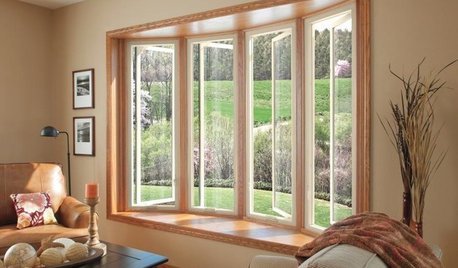
GREAT HOME PROJECTSUpgrade Your Windows for Beauty, Comfort and Big Energy Savings
Bid drafts or stuffiness farewell and say hello to lower utility bills with new, energy-efficient windows
Full Story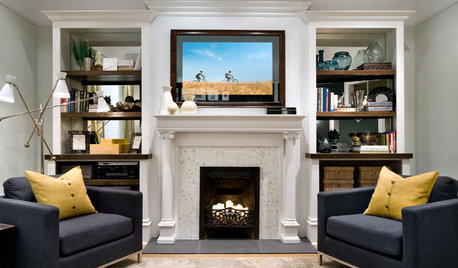
HOME TECHSave Your Decor — Hide Your Media Stuff
When you tuck boxes, wires and speakers into walls and ceilings, all you'll notice is your favorite shows or music
Full Story
GREEN BUILDINGWater Sense for Big Savings
Keep dollars in your pocket and preserve a precious resource with these easy DIY strategies
Full Story
DECORATING GUIDESHow to Save a Boring Box of a Room
Whip a ho-hum format and low ceilings into high-design shape with these ideas that offer a big new vision
Full Story
GREEN BUILDINGSunlight Used Right: Modern Home Designs That Harness Solar Power
Embracing passive heating principles through their architecture, siting and more, these homes save energy without skimping on warmth
Full Story
GREEN BUILDINGHouzz Tour: See a Maine House With a $240 Annual Energy Bill
Airtight and powered by the sun, this energy-efficient home in a cold-winter climate is an architectural feat
Full Story
KITCHEN DESIGN10 Big Space-Saving Ideas for Small Kitchens
Feeling burned over a small cooking space? These features and strategies can help prevent kitchen meltdowns
Full Story
GREEN BUILDINGOff the Grid: Ready to Pull the Plug on City Power?
What to consider if you want to stop relying on public utilities — or just have a more energy-efficient home
Full Story
GREEN BUILDINGZero Net Energy: A Hardworking-House Term to Know
Homes that consume only as much energy as they produce by renewable means are a goal for builders. Learn what ZNE means for you
Full Story
CONTRACTOR TIPSBuilding Permits: What to Know About Green Building and Energy Codes
In Part 4 of our series examining the residential permit process, we review typical green building and energy code requirements
Full Story

Fun2BHere