

Essential Oils for Fleas and Ticks on Dogs?
10 years ago
Featured Answer
Sort by:Oldest
Comments (16)
 10 years ago
Related Discussions
March 27...just pulled 7 ticks off my dog!
Comments (12)I omitted Frontline from my initial post accidentally, we have been using this for a couple years now, initially it worked very well and we would find ticks on the floor, some dead and some which had perhaps bailed off the dog, dead one's which were partially engorged but still in/on the dog. The effectiveness has waned over the last year and I find, during my twice daily close inspections, ticks in various states of engorgement regularly. Being yellow (the dog) the ticks are very easy to spot and usually they come out on top of the fur within a few moments of his laying down and I can walk over and simply pick them off and put them in my alcohol filled tick-jar; the only way to truly grasp the sheer number of ticks I find on him. He got lime disease two years ago, it was amazing in that it dropped him in three days; he went from his normal extremely active self, to me carrying him to the car for a trip to the vet in 72 hours flat. I presume that any mammal can contract lime disease? I am wondering, with their prevalence here, how much of an issue we will have with the goats, donkey, pony we are preparing for, and ticks/lime. I know right now I spend ten minutes in the AM and ten minutes in the PM with the dog giving a good petting/scratching/brushing in search of ticks and if the case will be the same with the other animals I fear I could be spending an inordinate amount of time searching them for ticks. Might cause me to reconsider....See MoreProblems with Frontline Flea Control
Comments (105)PLEASE TAKE MY ADVICE AND DO NOT USE FRONTLINE ON YOUR PET!!! It will KILL them!! Maybe not right away, but the effects it has on them can last for quite a while. This applies to heartworm medications as well! Our beloved dog Einstein was treated with Frontline before he was a year old, based on a recommendation of my Vet. I figured the Vet would know if there were any issues with this product and would not recommend anything that was bad (poisonous!) for our dog. After the treatment, he developed a huge sore on his back (at the treatment site) that did not go away for months. This was just the beginning. He began having asthma type symptom's after that. I knew exactly what had caused the problems. We only had Einy for six years when suddenly he got much worse and we took him into the Vet. They determined that he had cancer, but without opening him up, they could not determine exactly what organ was affected. Within a week of diagnosis, he died in my husbands arms. It was devastating! I would urge that people stand together to BAN this medication! This should not be on the market. Read all the warnings listed on the internet about this product. Give your dog or cat a bath. Fleas drown within a few minutes of being submerged. It is better than losing your pet like we did....See Moreticks, ticks and more ticks
Comments (41)USDA Studies: Ivermectin for Tick Control http://www.ncbi.nlm.nih.gov/entrez/query.fcgi?cmd=Retrieve&db=PubMed&list_uids=8667385&dopt=Abstract Knipling-Bushland U.S. Livestock Insects Research Laboratory, USDA-ARS, Kerrville, TX 78028-9184, USA. Whole-kernel corn was treated with 10 mg ivermectin per 0.45 kg corn and fed at rate of approximately .45 kg/deer per day to white-tailed deer confined in the treatment pasture, whereas deer in an adjacent control pasture received a similar ration of untreated corn. Treatments were dispensed from February through September of 1992 and 1993, and free-living populations of lone star ticks. Amblyomma americanum (L.), were monitored in both pastures using dry-ice traps to quantify nymphs and adults and flip-cloths to assay the relative abundance of larval masses. Control values that were calculated for all ticks collected in both pastures during 1993 showed 83.4% fewer adults, 92.4% fewer nymphs and 100.0% fewer larval masses in the treatment versus control pasture. Serum ivermectin concentrations in treated deer averaged 21.7 and 28.3 ppb during 1992 and 1993, respectively. These values compared favorably with the goal concentration of 30.0 ppb which was anticipated under ideal conditions. This study demonstrates that a freely consumed, systemically active acaricidal bait ingested by white-tailed deer under nearly wild conditions can significantly reduce the abundance of all stages of free-living lone star ticks. http://www.ars.usda.gov/research/publications/publications.htm?SEQ_NO_115=115671 The effectiveness of the endectocide, ivermectin administered daily to cattle infested with all life stages of B. microplus was evaluated. Cattle were treated at dose rates of 25 and 50 mcg of ivermectin per kg of body weight for a period of 21 days. While both ivermectin treatment doses were highly effective (>99% control), the 50 mcg/kg/d dose was more effective than the 25 mcg/kg/d dose against all life stages of the tick. The presence of ivermectin in the blood of the cattle caused high mortality in the ticks, as well as producing dramatic adverse effects in the reproductive capability of the ticks that were able to survive and detach from the cattle. Based on the results of this study, the potential for use of ivermectin and other acaricides with similar chemistries is encouraging. The use of these types of acaricides applied by different delivery systems, such as long-term boluses or medicated feed systems has great promise for future applicability in the Boophilus eradication program.... ...overall control achieved at both doses of ivermectin was >99% against all parasitic stages, the 50 mcg/kg/d dose was more effective (P http://www.afpmb.org/pubs/misc/researchreview2004/4b-Pound.ppt http://live.psu.edu/story/19217 Deer-free areas may be haven for ticks, disease Wednesday, August 30, 2006 -------------------------------------------------------------------------------- University Park, Pa. -- Excluding deer could be a counterproductive strategy for controlling tick-borne infections, because the absence of deer from small areas may lead to an increase in ticks, rapidly turning the area into a potential disease hotspot, according to a team of U.S. and Italian researchers. "Deer are referred to as dilution hosts or dead-end hosts," says Sarah Perkins, a postdoctoral researcher at Penn Stateâs Center for Infectious Disease Dynamics. "They get bitten by ticks but never get infected with tick-borne pathogens, such as the bacteria causing Lyme disease." However, deer are critical to adult female ticks in the last stages of their three-part lifecycle. Ticks use them for a final blood meal before dropping off to produce thousands of eggs, Perkins explains. Currently, health officials believe that removing deer from the equation could disrupt the tick lifecycle and leave fewer ticks to feed on rodents, which, unlike deer, can transfer a range of tick-borne pathogens. Ultimately the tick-borne disease will fade out. However, previous field studies show that removing deer sometimes leads to higher tick densities and sometimes lower, and the outcome seems dependent on the size of area from which deer are excluded. "Very few studies have looked at how removing the deer affects the intensity of tick bites on rodents, and how it relates to the size of the area from where the deer are excluded," explains Perkins, whose findings are published in the current issue of the journal Ecology. Researchers first collected data from published information on tick densities in deer excluded areas ranging in size from roughly 2.5 acres to 18 acres. Next, over a six-month period, they captured rodents from a 2.5-acre deer excluded area in the Italian Alps in a known hotspot for tick-borne encephalitis -- a disease passed to humans through the bite of an infected tick. "From previous studies we found that tick densities decreased in (geographically) large areas and increased dramatically in smaller areas," suggesting that there is a threshold area - from where deer are excluded - for tick populations to either increase or decrease, notes the Penn State researcher. Statistical analyses of ticks on the captured rodents indicated that compared to the control areas, the deer-excluded areas hosted a significantly higher number of nymph and adult female ticks, as well as a high prevalence of tick-borne encephalitis. Because tick-borne encephalitis is transmitted only between ticks feeding on these rodents, the findings suggest how small deer-free areas could quickly turn into a disease hotspot. "This goes somewhat against conventional wisdom. When you remove deer, it does not always reduce the tick population," says Perkins. "If you were to exclude deer from hundreds of acres, tick numbers will fall. But in an area less than 2.5 acres, you are more likely to increase tick density and probably create tick-borne hotspots." Researchers say the study demonstrates how the strategy of keeping deer away may work only for large areas but is likely to amplify tick populations in smaller areas. Fragmented patches of forest and small parks that are off-limits to deer could also turn into a disease reservoir, they caution. "We need to be cautious about keeping deer away from small areas, even peopleâs backyards, as it might only lead to more ticks that are infected with tick-borne pathogens," says Perkins. She adds that forest areas deer consistently avoid also have the potential of turning into a haven for tick-borne disease. Other authors of the paper include Isabella M. Cattadori, postdoctoral scholar, and Peter J. Hudson, the Willaman Professor of Biology, both at Penn State University, and Valentina Tagliapietra and Annapaola P. Rizzoli, Centro di Ecologia Alpina, Italy. A grant from the Autonomous Province of Trento, Italy, supported this work. The Penn State Center for Infectious Disease Dynamics is at http://www.cidd.psu.edu/. Contact Amit Avasthi axa47@psu.edu http://live.psu.edu 814-865-9481 Contact Vicki Fong vfong@psu.edu http://live.psu.edu 814-865-9481 The Pennsylvania State University © 2006 http://www.wildlifeprotein.com/index.cfm/fa/categories.main/parentcat/16705...See MoreTicks,ticks,ticks!
Comments (37)To quote the sage advice of the Springfield, MO band, "Big Smith": "If we didn't have those bugs attachin', we'd never know the joy of scratchin'" :) My job requires me to be miles in the wildnerness all day, nearly every day, all summer long. So, I just CAN'T use the poisons because I'd constantly be bathing in them. We just duct tape the bottom of our pant legs to our hiking boots, tuck in our shirts, and keep a roll of duct tape handy for seed ticks. Otherwise, we just enjoy the glorious feeling that comes from scratching those bites! Makes us know that it's truly summertime! Generally, we have between 1 and 1000 ticks on us by the time we get home, but we're happy and tired and know we're ALIVE! I know, I know, this isn't really helpful advice to most. But really, aside from the slim chance of a disease, there's really a lot of psychology involved in the desire to be rid of the "pests". Also, FWIW, I've heard that a tick must be attached 6-12 hours before a disease can be transmitted, presumably because the tick must be filled with some blood to have it sqeezed/regurgitated back into your body during removal. So, if you just keep up with picking them off.......See More 10 years ago
 10 years ago
- 10 years ago
- 10 years ago
- 10 years ago
 10 years ago
- 10 years ago

Related Stories
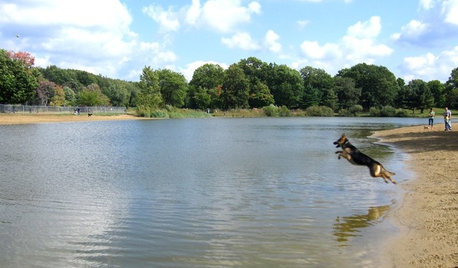
COMMUNITYDesigned for Dogs: 5 Fantastic Dog Parks Across the U.S.
Let your favorite pooch run wild at one of these specially designed public spaces. Not close by? Learn how to start a dog park yourself
Full Story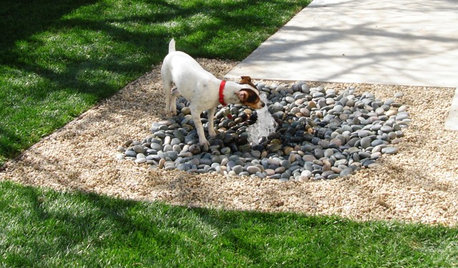
MOST POPULAR8 Backyard Ideas to Delight Your Dog
Cue the joyous soundtrack. These pet-friendly landscape and garden ideas will keep your pooch safe, happy and well exercised outdoors
Full Story
PETSRoom of the Day: Laundry Room Goes to the Dogs
Muddy paws are no problem in this new multipurpose room
Full Story
PETSHouzz Pets Survey: Who Rules the House — Dogs or Cats?
New data shows that pets make people happy, and pet owners love spending big to return the favor
Full Story
PETSWhat Chihuahuas Can Teach Us About Interior Design
Who knew these tiny dogs could be such a huge fount of design tips? Houzzers did
Full Story
CRAFTSMAN DESIGNMy Houzz: Small-Space Living in a Restored Bungalow
See how this homeowner celebrates his personal style, his flea market finds and the heritage of his 1919 Long Beach home
Full Story
THE HARDWORKING HOME8 Laundry Room Ideas to Watch For This Year
The Hardworking Home: A look at the most popular laundry photos in 2014 hints that dog beds, drying racks and stackable units will be key
Full Story
LIFEHow to Keep Your Pets Safe During the Holidays
To avoid an unwanted trip to the vet, be aware of these holiday-related hazards for dogs and cats
Full Story
PETSGarden Alert: 22 Plants to Keep Away From Pets
Avoid potential danger by keeping dogs and cats away from these landscaping and houseplant favorites
Full Story
REMODELING GUIDESGreat Compositions: The Dogtrot House
Historic breeze-capturing design inspires smart house plans for today
Full Story
ravencajun Zone 8b TX