

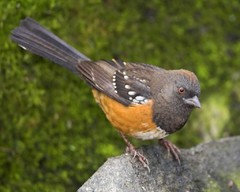
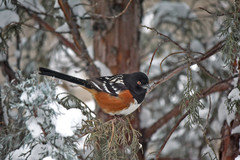
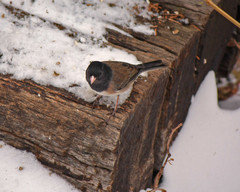
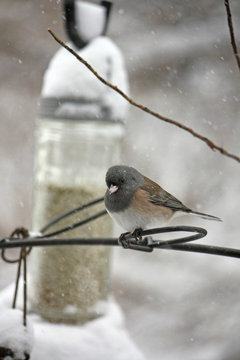
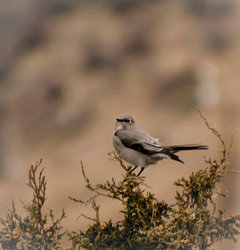
Here in Carson City, Nv a variety of birds appear briefly...
10 years ago
last modified: 10 years ago
Featured Answer
Sort by:Oldest
Comments (11)
- 10 years ago
Related Discussions
Are we educating people to love plants?
Comments (28)This is an excellent topic, and one that we need to keep in mind if we want to see a robust future of gardening, much less rose gardening. I agree that we seem to be growing into a much more "indoor" culture, which to me transcends the concerns about too much device time in the younger generation (as I sit here typing this into a device...). It seems like outdoor time is compartmentalized into particular uses, mostly sports or commuting, and spending time in the yard for fun isn't usually a consideration. Goal oriented sorts may indeed get hooked with vegetable gardens, and that's a great hook for economic benefits as well. I think the key reminder for us here is the word "plants" rather than necessarily "roses" as an entry into the love of gardening, and to take to heart Josh's other post about enabling people he runs into casually. Every time I see someone new move into the neighborhood at large, I make a point of bringing them fresh produce and inviting them to stop by my yard and browse for free divisions of the many perennials I have to share. I figure it's a multiple benefit - getting something free means that there's no loss to trying, seeing something work in someone else's yard makes it more likely in yours, it makes people think that they COULD do something more than boring with their own yards, and I'm offering my help as a fellow gardener for advice. We ran into a new neighbor this weekend as my daughter and I were selling girl scout cookies up the street, and even though I didn't have any produce to offer at the time (duh - back to zero this week again), the new neighbor did look grateful at the prospect of being able to do "something" with her yard. The other thing we can do is literally as well as figuratively plant seeds with our own contacts in the next generation. My own kids are firmly convinced of the benefits of gardening in at least the tangible sense of food and smell and visual impact, though they're variable in wanting to help very directly. Regardless though, I keep throwing out information on basic garden problem solving when the opportunity comes up, and I know from my own experience how well some of that can stick in later years. I mostly learned gardening from the vegetable plots with my father, and didn't have my own yard till nearly 20 years later, but I could still hear his voice coaching me in techniques that have held through the test of time. I make sure to pass these along to the neighbor children, some of whom have parents who appreciate yards but are self-proclaimed "non-gardeners" (they even broke down and sold a beautiful greenhouse when they bought the place that I would have given my eyeteeth for). One of these days, those kids may grow up to want their own vegetables and flowers, and I haven't given up on passing along extra plants (including roses) to those neighbors yet either. I've basely corrupted every other neighbor on every side of me with roses and other plants, so I'm watching for my opportunities to share the love of plants when they're ready. Like every other aspect of gardening, encouraging others to love plants takes patience, but I'm never willing to give up on the challenge. Cynthia...See MoreSoil amendment options in Reno
Comments (6)Amending the soil here strikes me as a losing proposition - unless you stick to raised beds and square foot gardening (along with heavy mulching). Much to my surprise, bamboo will grow here - but it will cost you in water. A lot. Don't do it. Xeriscape instead. I fully understand the need for green - but some things we just shouldn't have in this area, because they just aren't suited and water is not unlimited. Outdoor pools and huge expanses of lawn are only two of the many things that just ought not to be here. Xeriscape. Look for plants that are drought tolerant - such as yellow trumpetbush, lantana, etc. The UNR has a lot of online resources to help you find native or at least adapted landscaping options that will minimally impact your use of water. You may water your lawn only 3 days a week in Reno, during restricted hours. Xeriscape instead and keep the lawn to a smaller space where you can relax and enjoy it, instead of trying to sod and maintain an entire yard. Plant trees and shrubs in catchment basins. Make use of native or adapted ground covers where ever possible. Xeriscaping does not mean putting down black plastic and then dumping rocks on it. Look around at other people's yards to get some ideas. Make use of pergolas and arbors (and climbing plants such as Cardinal Climber, Scarlet Runner bean, or clematis) to provide shade. Build a patio of paving stones or a wooden deck instead of solid concrete to allow water to seep in instead of running right off. Plant drought tolerant varieties. If there is an outdoor patio or deck, it will be burning hot for most of the day unless it is shaded. A pergola or partial roof is necessary if you expect to have the use of the area throughout the day, and not just in the early morning or late afternoon/evening. A wooden deck won't be nearly as bad as a concrete patio - but it'll still be too hot to spend time out there during a large portion of the day unless there is shade (or it is on the north side of the house). Our patio is on the south side of the house and it is unusable most of the day in large part because of the reflected heat from the concrete. But back to "soil amendment" - once you stop trying to turn this into a climate that it is not and cannot be, there is a LOT you can do to satisfy the need for green. Some things that I struggled to grow in lusher climes do VERY well here - such as lavender, rosemary, and German thyme. German thyme (and some other thyme varieties) make nice ground covers or edging plants for raised beds. Dwarf rosemary and thyme both will spill over edges of raised beds very nicely and in an attractive manner. All three plants are well adapted to the dry, gritty soil typical in many areas (there is clay in the flood plains to the south). All three are drought tolerant, and in fact don't typically do well in anything other than well-drained soil. You won't need to water these much or at all sometimes. Roses do VERY well here and don't require nearly the level of care they do in wetter climes. For the garden, I am using the same technique I have been using for several decades, only with no need to deal with slugs. Mulch, mulch, mulch! In an urban setting like this, I use broken down cardboard boxes (such as are used for shipping or moving) as a weed barrier, cover with the cheapest landscaping mulch I can find (currently 2.50 @ Home depot for 2.5 cu ft), plant in raised beds, and square foot garden. Wet down the soil in the raised bed - I amended the native soil with some peat moss, dug down as close to 10-12" as I could get because that is where your garden plants will keep 90% of their roots - break up hardpan at the bottom, if any. Wet the cardboard and lay it on the damp (but not waterlogged) soil. Cover with an inch or so of the wood mulch. Drip irrigate. Cut holes through the cardboard for individual plants, leaving enough space around the plant so that water can soak directly into the soil from your emitters. Plant them indented - sort of in a basin, to catch, retain, and deliver more water directly to the roots. For row veggies like carrots, lay cardboard between rows. Cover over all with the wood mulch. This cools the soil significantly even in a raised bed and makes it much more worm-friendly, as well as providing garden veggies with a cooler, more evenly moist environment for root development. If you are building new raised beds above grade, I'd just break up the top 6" of the native soil, work in some of your soil mix, and fill with a good soil mix. Look for Al's mix on these forums and go from there. You will still need to mulch. If you are trying to recreate a mid-western style garden, in a huge plot at ground level, that just isn't your best gardening solution in an area like this, no matter how much you amend the soil. By amending the soil significantly, you are making it inappropriate for native plants, and you will still need to water like a mad thing. It will also take DECADES and be a constant on-going process. Consider switching to a raised bed/square foot gardening approach instead - it will conserve water and make weeding/watering/growing much much easier. This isn't like many other places in the country, where wood mulch can be had for the asking for free or at very low cost. There are no sawmills here. There are no hay pastures to speak of and straw and hay are at a premium. If the municipality has a wood chipping facility, I haven't found it yet - but in this arid region with few trees, I'd be surprised if there is enough yard waste to warrant such. I'm pretty sure drip irrigation is limited to the same days and conditions as the lawn watering schedule - I think that's for all automatic watering. You are allowed to hand water at any time - but your water bill will be much smaller if you minimize that to emergency situations and/or container plants. Because we just moved in here, I don't have drip irrigation set up and am watering my dozen or so plants this year by hand - but next year the drip irrigation will be in place and I will build additional self-watering raised beds out on the otherwise useless Astroturf a previous owner thought would be a wonderful idea (it wasn't). Check out the Master Gardener classes this coming spring at your local extension office - learn about xeriscaping. You are not limited to cacti and sagebrush in a xeriscaped yard. Some xeriscape plants are quite attractive, such as the lavender, lantana, yellow trumpetbush, and many other xeriscape-appropriate plants that can serve to stabilize soil and attract bees, butterflies, and birds. There are some quite attractive xeriscape-appropriate ground covers that will help to conserve what little moisture there is and cool the soil. Planting xeriscape-appropriate plants with a mind to water conservation will give you an attractive but still sustainable landscape. It doesn't have to be tumbleweeds, rocks, dirt, and concrete. You will still amend the soil, but on nowhere near the scale necessary if you are trying to recreate the soils from less arid regions. Finally, be aware that because of the swing in temperature between day and night, we get frosts here earlier and later than you would think, going by day time temps. Average last frost date is mid-April; average first frost date is mid-September. You can extend this somewhat if you can protect plantings. Mid-August is the time to plant fall crops of lettuce etc. Some useful UNR extension publications: Irrigating your vegetable garden Raised Beds Desert Landscape & Gardening Becoming a Desert Gardener Container Gardening Gardening Guide for High-Desert Urban Landscapes Getting Started with a Vegetable Garden - planting dates! The All Seeing All Knowing Lawn Care Manual More can be found at - UNR Extension Publications UNR Extension Resources Keep in mind that a lot of the publications are for Southern NV (eg Las Vegas, Mojave, Moapas Valley) - so check to make sure the specific information is useful to YOUR area here in Reno. And remember that areas of Reno can differ dramatically in elevation, and a small change in relative elevation can make the difference between success or failure with a particular plant, even if it is a native species. BTW - if you are interested - backyard chickens are legal in Reno and Sparks. Much to the dismay of my son, heh heh heh! Backyard Chickens in Reno Check with the city but they seem to be legal in most places inside the city limits. Here is a link that might be useful: Desert Denial - Get Over It! This post was edited by zensojourner on Mon, Jul 21, 14 at 15:32...See Morefruit tree planting
Comments (12)PerennialK, I grow peach, plums, and figs here. If you are in an area where there's lots of eastern red cedar trees, be aware that there is a disease called Cedar Apple Rust that thrives in the presence of both apples and cedars, though you'll never see it if your area has only apple trees and no cedars, or only cedar trees and no apples trees. You'll have to treat your trees annually to prevent Cedar Apple Rust from becoming a problem on both the apples and crabapples. I've chosen to avoid the whole issue by just not planting apples or crabapples because I don't want to deal with spraying them. I raise the peaches, plums and figs organically with no spraying whatsoever and I don't think that would be possible with apple trees because our property is surrounded by thousands of acres of grassland infiltrated heavily by cedar trees. In some of that acreage, there's more square footage in cedar trees than in native grasses and forbs,. On our own land we cut back the cedar trees. We've removed a lot over the years, but new ones are planted constantly, especially by the birds, and it is a battle we'll never really win. So, if you are surrounded by cedars, be prepared to do battle to prevent Cedar Apple Rust. I haven't planted a pomegranate tree here, but if I was going to plant one, I'd plant "Wonderful". We do have native persimmons and native plums here in addition to the improved cultivars of fruit trees that we've planted. Peaches and plums both produce well for me some years, but the frost gets all the blooms and fruit in other years. I'd say that 1 out of every 3 years there is no crop from the peaches and plums, 1 out of every 3 years there is a huge crop and 1 out of 3 years there is a moderate crop. I just preserve tons of them via canning and freezing in the good years, so we have some to eat even in the bad years when the crop fails. My friend who grows cherries gets a good crop from them slightly less often then we all get peaches and plums, and his apricots produce a crop maybe 1 year out of 3. I'm in southcentral OK and apples and crabapples are tricky to grow here, and the friends that I have who have the best luck with apples here do follow the standard spray program recommended by OSU. I've linked the OSU Fact Sheet on growing fruit trees in the home garden. It is full of helpful information. Choose your fruit tree varieties carefully so that you are choosing trees with a high number of chilling hours. This will help keep the trees from blooming too early and having the blooms and young fruit freeze every single year. Still, in our erratic climate where springtime temperatures may be in the 70s or 80s even in February or March, there's always an issue with stone fruit blooming too early---even those with the recommended number of chilling hours for our climate. In addition to growing tree fruit, you also can grow blackberries, dewberries, and (if you have sandy, well-draining soil with an acidic pH), blueberries. You also can ammend somewhat unsuitable soil in order to get it to the right pH to keep blueberries happy. Strawberries do well in some parts of Oklahoma where the soil and moisture levels are to their liking. So, it is possible that if you plant several fruit trees and several kinds of berries, you'll be harvesting some kind of fruit every year. Fig trees produce more consistently for me than anything else here does because they will produce a second crop even if the first round of fruit freezes in spring's weather. I usually get both an early summer and fall harvest from the fig trees. Some of us grow citrus trees in pots and overwinter them in greenhouses or indoors. I never get more than a handful of lemons or oranges off my trees, but I enjoy growing them anyhow. They're worth growing just for the delicious aroma of their blossoms alone, even if you never get a single fruit from them. Dawn Here is a link that might be useful: OSU: Home Fruit Trees...See MoreStarling Invasion!
Comments (35)We switched to feeding safflower, thistle and upside down suet feeders along with fruit, jelly and nectar, after our first year living in the country. We moved from the city to a rural area in Wisconsin and decided to put nest boxes out for bluebirds and wrens, our first year we had mostly HS but we also had one set of bluebirds and one set of tree swallows. Before the little ones had a chance to fledge the HS killed them and nested on top of them, we were sick over this. I removed all the nest boxes and started researching on how to keep the non-native and rough birds away. The switch to the foods we place out on our property was the biggest part of not attracting the non-natives and rougher birds. When the HS try to take over the nest boxes in the spring I shoot them, it is the best way to keep them out of the box, plus it gets rid of another non-native invasive bird. I tried removing their nests at first but they are persistent and do not give up until you get rid of them. We now get one or two nesting pair of bluebirds and usually four to five nesting pair of tree swallows and a pair of nesting wrens(all have fledged within the last week and a half) the few starlings that come in the yard to feed on bugs in the grass do not stick around long ( they get shot as well). This is not intended to offend any bird lovers ( we are bird lovers at our house ) it is only to tell how we deal with the invasive non-native birds that are taking over the territory of our native song birds....See More 10 years ago
 10 years ago
 10 years agolast modified: 10 years ago
- 10 years agolast modified: 10 years ago
- 10 years ago
- 10 years agolast modified: 10 years ago
- 10 years ago
- 10 years ago
- 10 years agolast modified: 10 years ago

Related Stories
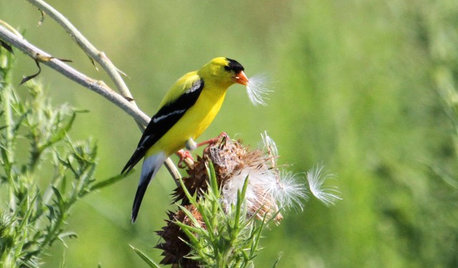
GARDENING FOR BIRDSWild Birds Transform a Woman’s Garden and Life
How Sharon Sorenson created a wildlife haven and became the Bird Lady of Southern Indiana
Full Story
HOME TECHThe Inevitable Future of Drones Around Your Home
As Google joins the push for airborne deliveries, it seems only a matter of time before neighborhoods are buzzing with drones. Is that OK?
Full Story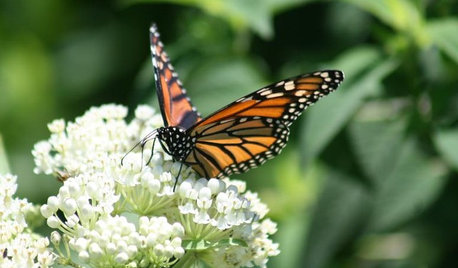
GARDENING FOR BUTTERFLIESBe a Butterfly Savior — Garden for the Monarchs
Keep hope, beauty and kindness alive in the landscape by providing a refuge for these threatened enchanters
Full StorySponsored
More Discussions
tsugajunkie z5 SE WI ♱