

Genetic testing questions
11 years ago
Featured Answer
Sort by:Oldest
Comments (6)
 11 years ago
- 11 years ago
Related Discussions
Genetically modified food question....
Comments (7)Hybrid seeds are those seeds that have been genetically modified through the normal cross pollination, the transfer of pollen from one plant with certain desirable characteristics to another plant with other desirable characteristics in the hope that a plant with other more desirable characteristics will be produced. So yes a hybrid plant would be a GM plant, but that is a normal process and has been happening for eons. What we refer to as Genetically Modified Organisms, GMOs, are plants that have a gene that would never get into a plants DNA in a normal way, cross pollination, and only can be inserted in a laboratory. No testing has been done to determine if these organisms are safe for human consumption, and some are known to not be. Unfortunately, many of the GMO plants have cross pollinated with non GMO plants and those laboratory inserted genes are now very prevelant in those plants that have been modified this way. Fortunately not all plants have yet been, but to be sure yo do not get some of these your best choice when selecting seeds is to choose organic....See Moremicrotoms, genetics, light levels question
Comments (8)Trying to keep it simple: Most forms of dwarfism are due to a recessive gene. The one you mention, 'microtom', is the result of at least 3 recessive genes. These are referred to as "bird's nest" types. To get this type of habit requires the brachytic gene "br" and the presence and interaction of 2 alleles of the sun dwarf gene "sd" (specifically the alleles "sd-2" and "sd-3"). Unless one crosses it to another parent that already has at least one of these genes there is about a 1 in 64 chance (4x4x4) of finding one with that outcome in a F2 line. So if one wants to find at least 4 different ones to select from they'd need to look at about 256 plants. The good thing is one wouldn't necessarily need to grow out that many to maturity as it is pretty easy to do some partial selection for that habit in the seedling stage by about 4-6 weeks (throw out the tall ones)....See MoreGenetic Testing for dogs
Comments (1)i've never done it but the way i understand it, the over-the-counter tests you buy at pet stores will only give you a generalization of what *could be* mixed with the pom. to get a more accurate result, you would probably have to send a cheek swab or blood test to a reputable lab, maybe a university vet hospital or something like that. thanks for rescuing the little guy!!...See MoreViable seed in Cara Cara orange - question of citrus genetics
Comments (9)The contraption below uses 18 watt CFL's. It has 12 of them. There is enough room for 16 *** 5 gallon bucket trees or one year i did 16 pepper plants in 5's. The walls of the box should be aluminum foil lined. This holds the heat and humidity in. In my case 50% of my heating bill is the meter charge before I use any gas. It cost just as much to heat with gas as it does with CFL's. Might as well grow beats, citrus trees and garden starts. If I lived in KY just 5 miles south I would not get that meter fee and it would be a waste of money. Might as well purchase my garden starts from home depot and buy my citrus fruits at Kroger's fruit department. Save my yard for apple peaches pears and plums. June 23rd my birthday comes. If you heat with oil, electric, or propane, It is no more to heat with CFL's. Might as well grow citrus trees in the basement. Pip is absolutely correct with his diagram for an open room. The center bulb can be remove with only a little loss to the trees. however if you use the container I use with the bright white/foiled walls you can do what I did. T*****T******T******T **L****L****L****L T*****T******T******T **L***************L T*****T******T******T **L**************L T******T******T******T The above was the exact setup for my pepper plant. I was picking peppers 5 weeks before frost safe set out date. It really does pay to grow green and peppers in with your citrus tree with the $$$$avings in organic produce and tree growth advancements. Notice the beets on the first level to provide heat for the roots of the citrus trees above. We had a death in the family and my wife collected many memories. As a result we have no room anywhere in our house and we lost the ability to grow greens. The greenhouse is not warm enough. Heating the greenhouse is $$$$$$$$$$$$ out of the question. The link below shows the things I did that REALLY WORKED WELL. Here is a link that might be useful: http://s1094.photobucket.com/user/wreristhechimney/slideshow/sunshine2013...See More 11 years agolast modified: 11 years ago
- 11 years ago
 11 years agolast modified: 11 years ago
Related Stories
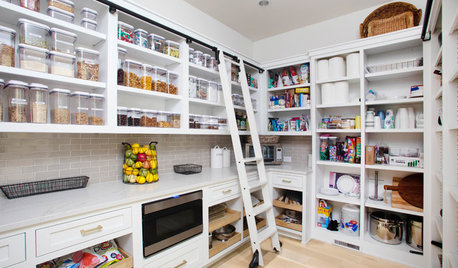
KITCHEN DESIGN9 Questions to Ask When Planning a Kitchen Pantry
Avoid blunders and get the storage space and layout you need by asking these questions before you begin
Full Story
GREEN BUILDINGConsidering Concrete Floors? 3 Green-Minded Questions to Ask
Learn what’s in your concrete and about sustainability to make a healthy choice for your home and the earth
Full Story
SELLING YOUR HOUSE15 Questions to Ask When Interviewing a Real Estate Agent
Here’s what you should find out before selecting an agent to sell your home
Full Story
WORKING WITH PROS12 Questions Your Interior Designer Should Ask You
The best decorators aren’t dictators — and they’re not mind readers either. To understand your tastes, they need this essential info
Full Story
WORKING WITH PROS9 Questions to Ask a Home Remodeler Before You Meet
Save time and effort by ruling out deal breakers with your contractor before an in-person session
Full Story
DOORS5 Questions to Ask Before Installing a Barn Door
Find out whether that barn door you love is the right solution for your space
Full Story
LIGHTING5 Questions to Ask for the Best Room Lighting
Get your overhead, task and accent lighting right for decorative beauty, less eyestrain and a focus exactly where you want
Full Story
REMODELING GUIDESConsidering a Fixer-Upper? 15 Questions to Ask First
Learn about the hidden costs and treasures of older homes to avoid budget surprises and accidentally tossing valuable features
Full Story
MOVINGHiring a Home Inspector? Ask These 10 Questions
How to make sure the pro who performs your home inspection is properly qualified and insured, so you can protect your big investment
Full Story
MOST POPULARThe Right Way to Test Paint Colors
Here are 5 key steps to take to ensure you're happy with your wall paint color
Full Story

rob333 (zone 7b)