

Life skills: swimming
11 years ago
Featured Answer
Sort by:Oldest
Comments (35)
 11 years ago
Related Discussions
Lack of follow up skills and memory.
Comments (7)I'm curious what his behavior was like while you were discussing the Phelps/calories article. Was he enthusiastic and engaged? Or was he even then on another planet? Did he read it himself, or just listen to you? Were there any distractions in the room, like TV or another person, or something else he was doing? If this is a matter of bad habits, then fixing it is a matter of learning new habits to replace them. I have boys ages 15 and 12. It is the 12 y/o's routine chore to empty the kitchen trash can. When he was first assigned this duty a year or so ago, he would often forget to replace the bag with a clean one. I would just say "You forgot something." At first he would look at me for a few seconds, baffled, then his brain would get around to it and he'd get the chore right. Now he forgets every now and then, and all it takes is a word or a look from me and he's on it, or he remembers on a delay on his own before I get the word out. My 15 y/o must unload the dishwasher whenever it needs it. The time is random, just whenever I've run it, so it's not something he does at a certain time every day. But I might say "Unload this when you get home." He remembers most of the time, if he didn't do it I just say "You forgot to do something" and he does it with apologies. * If he wants me to take him somewhere, he ALWAYS remember! LOL. We went through a time when he would not put things away in the right places (I think he was trying to get fired). And my pet peeve, he would stack larger pans on top of smaller ones after my kindly worded instructions, then my sarcastic reprimand (you could stack the plastic rings when you were 1!). Finally, after having the stack collapse when I opened the cupboard, I made a big, loud mess: I removed every pan and baking dish and lid from the cabinet, dropped them on the floor, and said "Fix this!" That was probably 6 months ago, and it hasn't happened again. I know my kids are going to forget sometimes and make mistakes, but when I see a habit forming I try to redirect them. Nicely, then with a sense of humor, then I get harsh. I do not like to repeat my directions over and over like a broken record, and I do not. When I see it wasn't followed through, I point it out as a question. "What did you forget to do?" "Where does that go?" "What are supposed to be doing?" "Where are you supposed to be?" Then I wait for an answer. If they really don't remember, I give them clues, b/c I know they know, somewhere behind the distractions, they have that answer in their brains! In doing this, I think I am making them think for themselves instead of me thinking for them, and hopefully, just maybe, working towards initiative. If my DS left a mess in the sink after brushing, I wouldn't fuss about it, I'd just say something like "Dude, you left a mess." They get the hint. When I need their attention, I make sure I have it. I turn of TV, radio, close the book, remove the Gameboy, and make sure I have eye contact. I tell them and use gestures (like counting my fingers). Then I ask them to tell me what I just said. I do that with all my kids, 6 to 15, and always have. At the younger ages, I saying "Where are my eyes?" But I will even say it to the older ones when they are really distracted. My 12 y/o will look around me to see the TV even when I'm standing 2 feet from his face and saying "Look at me." He knows I'm there, but has no idea I'm talking to him. He can really space out if he is focused on something, from TV to a board game to building Magnetix. He just really doesn't like to give up his attention easily. He is smart, teachers use the word "brilliant" in math, logical and a problem solver. His mind is always working on something. So when I need to "interupt" his thinking, it sometimes takes a lot to make sure he is really hearing me or focusing on what I want him to do. I could see one of my boys answering "no, no projects due" and then later asking to go to the library or use the internet for some research for the project they "didn't have" a couple hours earlier. The thing would be when I asked "do you have a project" it might have been while he was on his way to the bathroom, or waiting to ask if a friend can come over... so his mind was waiting to talk, not listening. When they ask later, I can even hear myself saying "Do you remember that part 2 hours ago when I said: Do you have a project?" And the child will honestly tell me "You didn't ask me that." It happens, people of all ages don't always listen when their mind is on something else. But we can set up the environment to make sure our kid is listening first. I do it almost every day. I will ask a kid "Do you want milk or water," that's it, really, two choices. They answer, and I give them the opposite. Or I have to ask again "What did you just tell me?" B/c as soon as I asked the question, my mind was already on asking the next question or giving some direction. So I'd make a plan to correct one behavior of his at a time. Be consistent, ask his input on what helps him remember. When you have a conversation, like about school, sit down and make sure nothing else is distracting. Make sure he makes a lot of eye contact and restates the questions, answeres, directions so you know it went in his brain and didn't float on by and into the unknown. I think the stuff you're talking about sounds like either normal adolescent behavior or normal individual quirks. Some kids will have more "space out" moments than others. However, it's still change-worthy behavior, something we want to guide them out of as they mature. But if you don't see some improvement after consistent redirection and attempts to build new habits after a couple months, I might check with a professional. Sometimes a subtle problem can be missed for a long time. Like you, when I see my kids doing something (or not doing something) that seems so "clueless" I marvel at the fact that they do well in school. I also have days when I wonder what kind of employees they are going to make! I just have to harden my resolve to teach them self-management and initiative! LOL I also have to remember that their little neurons are done yet....See MoreGirls' Life, Boys' Life (the difference)
Comments (53)Good points from the linked article, regarding juxtaposing the Fall fashion issue of GL against a Boy Scout magazine: ‘The Girls' Life cover is a sample size of one. While this particular cover appears to encourage teens and tweens to focus on their looks at the expense of everything else (and to tacitly say that being pretty is the only important thing) at first glance, a closer look at the magazine's web site quickly shows that previous issues bore covers focusing on stories about body acceptance, getting jobs, and dealing with bullies (and how not to be one) tucked amid pieces on fashion and celebrity gossip.’ ‘Karen Bokram is the founding editor and publisher of Girls' Life magazine. She told us that the outcry seems to stem from adults placing their own expectations and pressure on young people. She says that by the time girls are reading her magazine, they're already receiving mixed messages about what they're supposed to be (and with additional pressure from their peers to fit in), which is in part what her magazine is trying to help them navigate: I put this stuff in there, and once I point it out, people say — okay fine, you have a lot of high quality content, but you still should have it on the cover! And I'm like, okay, so we're shaming girls for having interests that aren't aligned with what you think they should be interested in? So getting good grades and making friends — which is on my cover — isn't within your wheelhouse? ‘...See MoreNeeding Study Skills help for DS
Comments (25)As a high school teacher I attend many parent meetings for various reasons: some are academic, some are due to behavior and some are the annual review of the IEP (individual education plan.) It's always helpful to have parents involved and willing to attend meetings. Reach out to your son's teachers and his guidance counselor to request a meeting. Your instincts, and the facts, suggest some intervention might be helpful, but listen to what his teachers suggest before getting any sort of outside tutoring help. My students have Chromebooks and almost all of my classroom material is online in a Google Classroom, which parents can have access to. I have teacher online access to a wide variety of teaching materials by the textbook publishers. In my current school the students still have access to hard copy textbooks. However I have taught post-high school where all the books were e-books. Many students chose to purchase their own books, preferring hard copies to have at home. In any case, the electronic classroom is here to stay-Chromebooks, iPads, laptops are all just one way to teach the digital natives. I find my students need structure in the form of two-column notes (the Cornell method of note taking), which I provide in an electronic format, making an e-copy for each student. This is common in high school and encourages active learning with the textbook. Does the teacher provide rubrics for assignments (we call them "Criteria for Success" at my school), which basically spells out what is expected of the student and assigns a point value for each category? This is a given for any individual or group assignment because it helps the student with organization and focus. Speaking of group work, this is the norm in high school for many types of assignments, with students being graded not only on their individual contribution, but also on their portion of the group work and presentation. I often allow my students to use their phones (which otherwise MUST be away!) to take a video for a project. They are sometimes allowed to use their phones or Chromebooks (with ear buds) to listen to music when working on an individual assignment. I have taught flipped classrooms, which was very interesting, but I'm not sure it is the most effective use of time, nor the best way to reach all students. Some classes that I have taught have been 100% online and others have been in a blended format, combining class time with online message board discussions. Your son will most likely be exposed to all of this in his high school and college years. Start with the teacher(s) and go from there. Boys are often much more challenged by the "executive function" skills required in high school. You are wise to recognize the change now in eighth grade. You may end up with tutors this year to help him prepare for high school. As an aside, I take my classes to the library for one period each week and it is scheduled on our daily agenda. Today, the last period class asked to skip it and I told them that was not even an option. I feel sorry that some of these juniors are ill-equipped (or unwilling) to handle a period of independent reading. In two years they will be in college. They ALL have a large junior English project that involves, reading, research, assimilation and writing so it's not like they have nothing to do! Olliesmom, I wish you the best as you support your son on his journey. I wish more parents were as astute as you are....See MoreExperience with a "life lease" or "life estate"?
Comments (32)A Cautionary Tale. Senior friends once bought a 'carefree' Over-55 Independent Living Home in Northern California. It was the best one-floor house they could find -- and afford -- when moving across country to be closer to family in a city an hour away. The house was perfect, and that was the sole positive. Like most of these Del Webb type developments, this one was built on raw land, part of a former almond orchard in this case. It was a golf course oriented community They don't golf. (Have I said enough?) They had nothing in common with the other residents -- who either lived for golf or were too frail to leave their homes. Yet every resident paid to maintain the course and clubhouse. Nearby towns were tiny, offering very limited resources, including *help*. The towns resented the Senior development residents, who voted down tax increases for improvements, including school referendums. Also, the 'hour' from family could easily become three hours depending on traffic. There was nothing for grandchildren to do at Grandma's, so the elders were always the ones commuting. (They also had to travel for medical needs.) Development lots were the size of postage stamps, and our friends lot was was only a few feet from the remaining orchard. This was lovely in spring, except for the giant wild rabbits that lived in it, and the spraying, but it was nasty at harvest time, with heavy equipment creating dirt and dust for weeks -- and the influx of displaced rabbits and insects. There were the usual four or five different models of smooth white homes, set a few feet apart on narrow streets. Residents came and went via their garages, and of course there were no children. There was no shade. Dead silence prevailed. When we visited, I was struck by the similarity to an over sized mausoleum. Much is often made of 'gated communities' being 'secure'. This place had a gate with a security guard...during the day..and no surrounding fence connecting to the gate. Our friends were able to move into the city after a few (long) years....See More- 11 years ago
- 11 years ago
 11 years agolast modified: 11 years ago
- 11 years ago
- 11 years ago
 11 years ago
 11 years ago
- 11 years ago
 11 years agolast modified: 11 years ago
 11 years ago
- 11 years ago
 11 years ago
 11 years ago
- 11 years ago
- 11 years ago
 11 years ago
- 11 years ago
- 11 years ago
- 11 years ago
- 11 years ago
- 11 years ago
- 11 years ago
- 11 years ago
 11 years ago
 11 years ago
- 11 years ago
- 11 years ago
- 11 years ago
- 11 years ago
- 11 years ago
- 11 years agolast modified: 11 years ago
- 11 years ago
- 11 years ago
Related Stories

GARDENING AND LANDSCAPINGSoak in the Good Life With Swim-Up Pool Counters
Perching at a poolside bar or even paddling to the front door are all possible with skillful design
Full Story
REMODELING GUIDESWood Floor Care: Polish Your Skills
Help your wood floors stay gorgeous by learning how to keep stains, dullness and warping at bay
Full Story
DECORATING GUIDES6 Easy Ways to Skillfully Hang Your Art
Get your art out of the box, off the floor or out of the closet — these simple hanging strategies will let you put it where it belongs
Full Story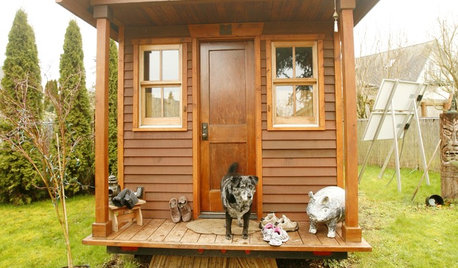
SMALL SPACESLife Lessons From 10 Years of Living in 84 Square Feet
Dee Williams was looking for a richer life. She found it by moving into a very tiny house
Full Story
CONTEMPORARY HOMESHouzz Tour: Contemporary Oregon Home Connects With Life on the River
Architects carefully nestle this home within its narrow waterfront site, while paying attention to details and materials inside
Full Story
TASTEMAKERSNew Series to Give a Glimpse of Life ‘Unplugged’
See what happens when city dwellers relocate to off-the-grid homes in a new show premiering July 29. Tell us: Could you pack up urban life?
Full Story
BOOKSCan Tidying Up Result in Life-Changing Magic?
Organizing phenom Marie Kondo promises big results — if you embrace enormous changes and tough choices
Full Story
HOUZZ TV FAVORITESHouzz TV: Life, Love and Purpose Down on the Farm
A Missouri native proves that you can go home again — and discover something entirely unexpected
Full Story
TRADITIONAL ARCHITECTURERoots of Style: Pueblo Revival Architecture Welcomes Modern Life
Centuries-old details of adobe construction still appeal in the desert Southwest, adapted to today's tastes
Full Story
LIFEHow to Simplify Life This Summer
Kick off your shoes, roll up the rugs and try a few more of these ideas for easier living
Full Story



musicgale