

Investing for your Future
11 years ago
Featured Answer
Sort by:Oldest
Comments (22)
 11 years agolast modified: 11 years ago
 11 years agolast modified: 11 years ago
Related Discussions
Investing in Future Demand
Comments (1)MarshallJohn = Al Gore?...See MoreHow to let others influence your investment income this year
Comments (4)After I'd bought some equity-based mutual funds, for that fabled "diversification", I decided that I didn't like the fees that I was paying to the managers - darn near as high as the income tax that I paid on on the average rate of gain (but some of the growth was deferred until I sold, of course). By the way ... when you own mutual funds that produce capital gain, in a regular account (not one of the tax-deferred retirement account ones) you must keep track of not only what you paid in the first place, but add all of those payiouts that they reported to you from time to time, usually annually, as the years went along, as they were reinvested. When you sell, your "cost" (for calculating capital gain) wasn't just the amount of your original investment, but included all of those distributions, that were reinvested. If you don't add those (usually annual) reinvested amounts ... you'll be paying tax on them twice - if they're outside of a tax-deferred retirement account! I decided some time ago that I prefer to buy individual stocks myself. On some of the stocks that I own, I used to be taxed at a low rate on dividends, and that rate was reduced even farther, recently. If I earn those dividends in a tax-deferred retirement account, I have no tax liability on the dividends currently, an advantage. But ... when I cash out, I pay tax at regular rate on every dollar ... so I lose the tax advantage that I would currently enjoy if they were taxable now. When I borrow to invest, for solid stocks, aiming at the long term - to fund that retirement - I use the current dividends that the stocks bought with the borrowed funds produce, plus some of the ones earned by the shares that I'd bought with my cash, to pay the interest on the loan ... and that interest is deductible. So I end up paying next to no tax on those dividends, or even gain a bit. When I take money our of my retirement account - taxed on every dollar, at full rate. When I sell some of my regular stocks (the non-tax-deferred-retirement-account ones), I deduct the amount that I invested originally (plus the reinvested dividends, if I have been using a dividend-reinvestment plan) anddeduct that from the amount of the proceeds of sale to find tha capital gain. I pay at regular rate on half of that capital gain ... but I get half of it free of tax. It makes sense, in this country, to keep bonds, GICs, etc. where the number of dollars originally invested won't grow, and the regular earnings are interest, that's taxed at top rate, in those tax-deferred retirement avccounts. Not equities, and certainly not Canadian equities. I'm nearing 80 years of age, and I have about 80% of my assets in equity-based investments ... and that suits me well. Good wishes to you for increasingly wise use of your income ... plus assets. ole joyful...See MoreIs your home an investment? (debate question)
Comments (37)Surprisingly, I think I'm going to be one of the few people saying "Yes"...but it's a very risky one. If you buy a home when prices are going up, you can make a killing. If you buy at the wrong time, you lose your shirt. The problem is a house is an extremely undiversified real estate portfolio that is heavily leveraged and comes with tax implications so complex most people don't understand them. People who would never think of putting 20% of their portfolio in one stock put the bulk of their net worth into a single piece of real estate without hesitation. Since the Great Depression it's been illegal to leverage your stock portfolio as much as people leverage their house...because people figured out leverage dramatically increases market volatility and risk. Basically it is an extremely risky investment that people think is safer because it is familiar. Worse, your house is an illiquid asset that people have so much emotionally invested in, they make decisions that aren't rational from a fiscal perspective. People don't necessarily sell their homes when they can no longer afford them. Yet when people start thinking about that new kitchen, they rationalize it as an investment and delude themselves into thinking they will get their investment back. Many buy a home with a vague notion they will sell it and retire off the proceeds. It bugs me when people ask questions about whether this or that luxury renovation will pay for itself. Statistics show the answer is "usually not". Even if it does, though...putting $20,000 into an "investment" that gives you the $20,000 back in 10 years isn't as good a deal as just putting it in your 401k. People tell you to go for qualities in a house that you don't particularly want because they will increase the resale value. On the other hand, if you genuinely *DON'T* want something others want, it is a chance to get a bargain when buying a house. Supply and Demand...the house that has what everyone is demanding right now is likely to be way more expensive, so you will pay less now. This doesn't apply if you are considering a change to your house that others don't like. Even then, though...Are you going to live in a beige house for 20 years because buyers like beige? These things are fads, and could change before you sell. Following the advice to "buy the most house you can afford" or getting an ARM are risky real estate market gambles...if the markets go down or you suffer a financial setback. you are screwed. As far as the real estate agent who didn't own a home: I find there are two types of real estate professionals. The "Mommy Track" (Or "Daddy Track") ones who are looking for a job with flexible hours...and the Hustler/Salesmen/Gambler type who dominates the top of the profession. The latter tend to be big spenders. There is statistical evidence folks in sales tend not to save money...so the high-end real estate agent you are thinking of may spend as fast as he earns and not have the down payment for a house. This post was edited by edlincoln on Fri, Sep 5, 14 at 1:40...See MoreYour high school wishes for your future....
Comments (19)I recall that in my high school yearbook, under my photo, it listed my ambition and words I live by. The words I try to live by are the same now as they were then....He who is not actively kind, is cruel. by John Ruskin. My ambition was: to be happy. Kind of simplistic, but I am a simple person and I really do believe being happy is something we choose for ourselves, and even though I have had a lot of ups and downs in my life, I can truthfully say that I am very happy. Anyway, that is what I had posted in my yearbook, but as for my life's work....I hate to say that I didn't give it much thought. I wanted to raise horses. I did that. Wish I hadn't. I never wanted to get married and had no plans to have children. I did get married very early on, mainly because my mother wanted me to. She believed I should get married and believed a man should support me. So I got married and I played, and my husband supported me. I didn't have a baby until I was in my mid 30's and I have no regrets about waiting. I only think it made me (not speaking for anyone but myself, so don't jump on me) a better mother. In some ways, having a baby late, was sort of like having a baby and a grandbaby at the same time. I was more settled and secure in myself. I ended up taking care of my mother, who had dementia, until she died in her 90's and then I took care of an elderly former neighbor and friend for 8 years, until he died. I promised him I would, so he wouldn't have to go in a nursing home. I rehabbed wildlife...mainly because I felt sorry for the orphans, and I am good at raising babies of all kinds. (Despite not wanting children...I am extremely maternal.) Now I do anything I want to do. I have no grandchildren. My daughter is secure...doesn't need my help. I wanted a mule. I bought a green broke mule. I need to get used to riding again...so I bought a horse. I plan to raise a mule foal. I plan to start riding again and ride every day for the rest of my life...if at all possible. Gee....I think I forgot the question. I'm sorry. I am happy though....See More- 11 years agolast modified: 11 years ago
 11 years agolast modified: 11 years ago
- 11 years agolast modified: 11 years ago
- 11 years agolast modified: 11 years ago
- 11 years agolast modified: 11 years ago
- 11 years agolast modified: 11 years ago
- 11 years agolast modified: 11 years ago
 11 years ago
 11 years ago
- 11 years ago
 11 years ago
- 11 years ago
 11 years agolast modified: 11 years ago
- 11 years ago
- 11 years agolast modified: 11 years ago
- 11 years ago
- 11 years ago
- 11 years agolast modified: 11 years ago
- 11 years ago
Related Stories
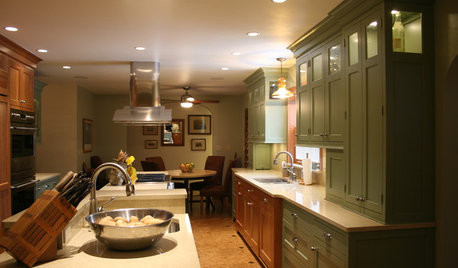
KITCHEN DESIGNSmart Investments in Kitchen Cabinetry — a Realtor's Advice
Get expert info on what cabinet features are worth the money, for both you and potential buyers of your home
Full Story
HOME TECHThe Inevitable Future of Drones Around Your Home
As Google joins the push for airborne deliveries, it seems only a matter of time before neighborhoods are buzzing with drones. Is that OK?
Full Story
INSIDE HOUZZMeet Our Future of Architecture Winners
Houzz and the AIA team up to showcase emerging talents in residential architecture
Full Story
HOUZZ TOURSMy Houzz: A 'Home of the Future' Finds Present Perfection
Rescued from the brink of destruction, a 1965 home gets a complete, thoughtful overhaul from a Dallas couple
Full Story
HOME TECHThe Future of Home Automation: Cheap, Wearable and Mobile!
Look for smart watches and glasses that can control your smart-phone apps, which in turn automate your home equipment
Full Story
GREEN BUILDINGEfficient Architecture Suggests a New Future for Design
Homes that pay attention to efficient construction, square footage and finishes are paving the way for fresh aesthetic potential
Full Story
GREEN BUILDINGThe Future of Smart Design: Reuse, Reduce, Recycle
See why reducing waste in a home construction project should appeal to every architect, designer and client
Full Story
HOUZZ TOURSHouzz Tour: A Manhattan Studio Gets a Bright Future
Sunny citrine walls bring zest to a young singleton's newly redesigned West Village apartment
Full Story
MOST POPULAR5 Remodels That Make Good Resale Value Sense — and 5 That Don’t
Find out which projects offer the best return on your investment dollars
Full Story
REMODELING GUIDESHouzz Survey Results: Remodeling Likely to Trump Selling in 2014
Most homeowners say they’re staying put for now, and investing in features to help them live better and love their homes more
Full StorySponsored
Elmer J Fudd