

Progresso Tomato Products
15 years ago
Featured Answer
Sort by:Oldest
Comments (20)
 15 years ago
 15 years ago
Related Discussions
Determining Productivity of Tomato Plant
Comments (15)Apologies if it seemed I wasn't taking your question seriously. I was. And I gave you what my definition of a high-yielding, a productive, plant is. But your question has some under-lying assumptions that just don't hold up IME. Believe it or not, most home gardeners don't count the number of fruit on their plants, they don't keep a running total of number or size, most don't weigh the fruit produced by each plant either, and most don't grow for yield anyway but for taste. A perfect example is Brandywine which has the reputation of being a low producing plant yet it remains one of the most popular. So for those of us in that group we define a high yield plant as one that makes a lot of tomatoes and has to be picked every 3-4 days. But over the years of growing literally hundreds of plants each year, hundreds of varieties, and growing those varieties anywhere from 4-15 years in a row, one can easily determine which varieties are high yielding and which are not in their particular garden IF that info is of interest to them. However that in no way means that same variety will be high-yielding for anyone else in their garden and their climate. This isn't to compare a beefsteak with a cherry tomato. That would be silly. That may seem silly to you but you would be amazed how many people do just that and post statements like "I only grow cherry varieties because they are so much more productive" or "why isn't my Brandywine setting fruit when my cherry tomato plants all have 100's of fruit on them". It's how you would define a yield from a particular type of plant. And how I define yield is does that particular variety consistently, year after year, out produce other similar varieties that I am also growing in my gardens. My Amish Paste produced 4 large fruit (over a pound) and there are about 6 more fruit still on the vine weighing about 8 oz. Would you call that a low, moderate or high yield? Compared to my Amish Paste plants growing in my garden, in my climate, with my feeding and watering regimen, I would call that very low. But that doesn't mean you can label Amish Paste as a low-yielding, low-productive variety or that I can call it a high yielding variety. There are too many other variables to slap yield labels on varieties. You got 3 doz. from Paul Robeson and over 3 years of trials I was lucky to get 3 tomatoes from each plant. So what do we label it? I have no idea what any of my fruit weigh because I don't weigh them unless they appear to be extra-ordinary - I just eat them. ;) Dave...See MoreHow can I make my container tomato plants more productive?
Comments (8)Yeah I see several possible explanations. One, you don't mention the type or variety of the plants so you may well be pruning off production with your "pruning suckers". Only indeterminate varieties tolerate pruning and even then some production is lost. That's why many container growers advocate no pruning unless it is absolutely required for some reason. Two you don't mention the brand name of the potting mix you use and that is crucial in container growing. No potting soil, no 'soil' of any kind works well in a container as it compacts. Three, daily watering, depending on climate/weather and the mix used, is very seldom needed in a 10 gallon container and only leads to root rot. Container growers have to learn to monitor the moisture content in their pots and water only when the plant needs it, not on some artificial schedule. And four, like Peter said, organic granular fertilizers seldom work in containers because there is no beneficial micro-herd in container soil to digest them so the plants can use them. All these points are discussed in greater detail over on both the Growing Tomatoes forum here and the Container Gardening forum as well. Dave...See MoreTomatoes with huge production?
Comments (20)Sey, In the hypothetical you describe, what do you mean by the term... "stabilized hybrid"? Do you mean that you've taken your own hybrid and stabilized it into an OP? If so, why would a seed company want to do this? I mean, where is their incentive? The benefit of selling a hybrid is proprietary product. Sure, a backyard gardener has the incentive, and growing out saved seeds from hybrids has the potential for a nice result, but it's certainly not guaranteed. If the genetic lines are similar, then sure, the odds of getting close to the parent hybrid rise, but even so, you'll lose a bit of 'hybrid vigor'. This year I got a volunteer from one of the hybrids from last year's crop. It is an interesting tomato. I'm sure it is a throwback. The fruit is small and flatish - about 1 1/2" across, and 3/4" high. It's like a mini-mater. It has a nice taste, is meaty, ripens quickly, but is nearly useless lol. It's larger than a cherry, and does have a core, so it can't be eaten in one bite. And without just tossing it into a foodmill, it's too small to hand process. In fact, because it has just a small core, it might be perfect for a foodmill. But again, and now this is a volunteer that is sprawling so it surely is not at its best, the yield isn't rocking anyone's world lol. So... sure... growing out a hybrid is a fine endeavor, but unless you want to stabilize it into an OP for your own personal use, there's no incentive for seed companies. In fact, if they got caught selling an f version of a hybrid, beyond the hybridized generation, and labeling it as the f1 hybrid in question, they could get in a bit of legal trouble. Then again, I may have misunderstood the hypothetical lol....See MoreWill tomatoe plants be productive?
Comments (8)Agree with all the above but you do need to understand that properly hardening plants off for transplanting is much more than just leaving them outside for a couple of nights. And it is especially important to do correctly and fully with plants that are that big. So I'd suggest some further research into proper hardening off techniques for transplants exposure to varying temps, sun exposure, and wind. It is a big environmental change for them. Also read about the ideal size for transplants and the advantages that 6-10" plants have from the beginning over 18" plants. That will further insure success for the plants that you kindly make for your friends as gifts. Dave...See More 15 years ago
- 15 years ago
- 15 years ago
- 15 years ago
- 15 years ago
- 15 years ago
- 15 years ago
- 15 years ago
 10 years ago
- 6 years ago
 6 years ago
- 6 years ago
 6 years ago
 6 years ago
- 6 years ago
 6 years ago
 6 years ago
Related Stories
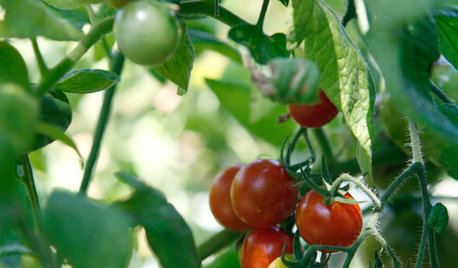
EDIBLE GARDENSSummer Crops: How to Grow Tomatoes
Plant tomato seedlings in spring for one of the best tastes of summer, fresh from your backyard
Full Story
SHOP HOUZZHouzz Products: Save a Taste of Summer
Can't bear to part with the flavors of summer peaches, berries and tomatoes? Then jam on it!
Full Story
SHOP HOUZZHouzz Products: Wood, White and Metal
Crisp yet warm, these furnishings and accessories for every room bring in nature in a most chic way
Full Story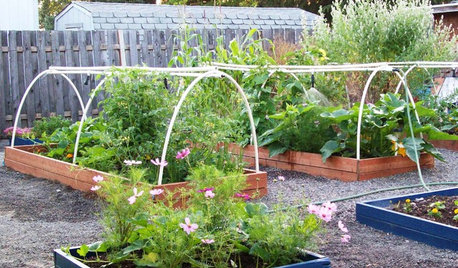
BENEFICIAL INSECTSAttract Pollinators for a Productive Edible Garden
You can lure bees, butterflies and birds into your yard with the right flowers and nesting spots
Full Story
SHOP HOUZZHouzz Products: Summer Color for the Patio
Set a sunny, happy outdoor scene with accessories and furniture in sea blue and sunset orange
Full Story
SHOP HOUZZHouzz Products: Stock Your Kitchen for Autumn
Serve hearty meals with a side of style by gathering up these fall-perfect pots, linens, serving pieces and kitchen tools
Full Story
SHOP HOUZZHouzz Products: It’s Prime Time for TV Dinners
Welcome the new television season with a chic viewing and dinner party for yourself or a few friends
Full Story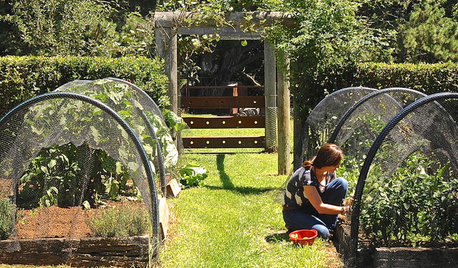
FARM YOUR YARDHouzz Call: Home Farmers, Show Us Your Edible Gardens
We want to see where your tomatoes, summer squashes and beautiful berries are growing this summer
Full Story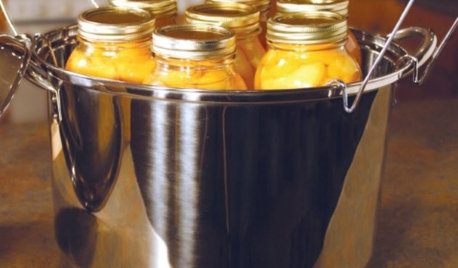
PRODUCT PICKSGuest Picks: Canning, Preserving, Steaming, Dehydrating
20 products to help make fall produce last through the season and beyond
Full Story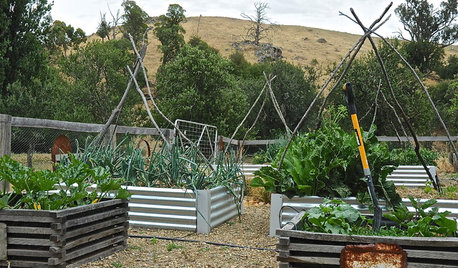
FARM YOUR YARD9 Ways to Change Up Your Vegetable Garden for the Coming Season
Try something new for edible plantings that are more productive than ever
Full Story
monica_pa Grieves